A fossilized bone discovered decades ago in northwestern New Mexico may belong to an ancestor of Tyrannosaurus rex (T. rex), according to a new scientific study. Researchers say the bone could represent a giant predator that lived several million years before the famous dinosaur and may even have been part of its evolutionary line.
The fossil was first uncovered in the 1970s in a remote part of San Juan County, New Mexico. Students from the University of New Mexico found the bone in the rugged Bisti-De-Na-Zin Wilderness, an area known for producing important dinosaur fossils.
At the time of the discovery, scientists recognized the bone as belonging to a large meat-eating dinosaur. However, the fossil remained largely unstudied for decades. A new analysis has now provided fresh insight into its identity.
Fossil dates to the late Cretaceous period
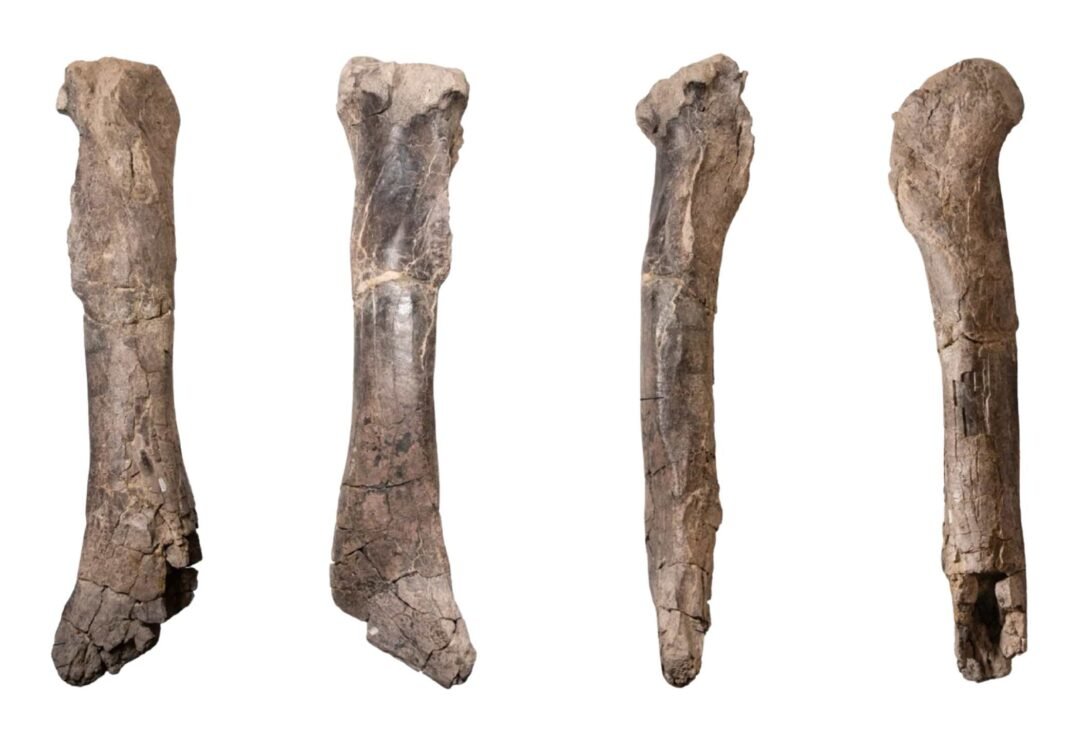
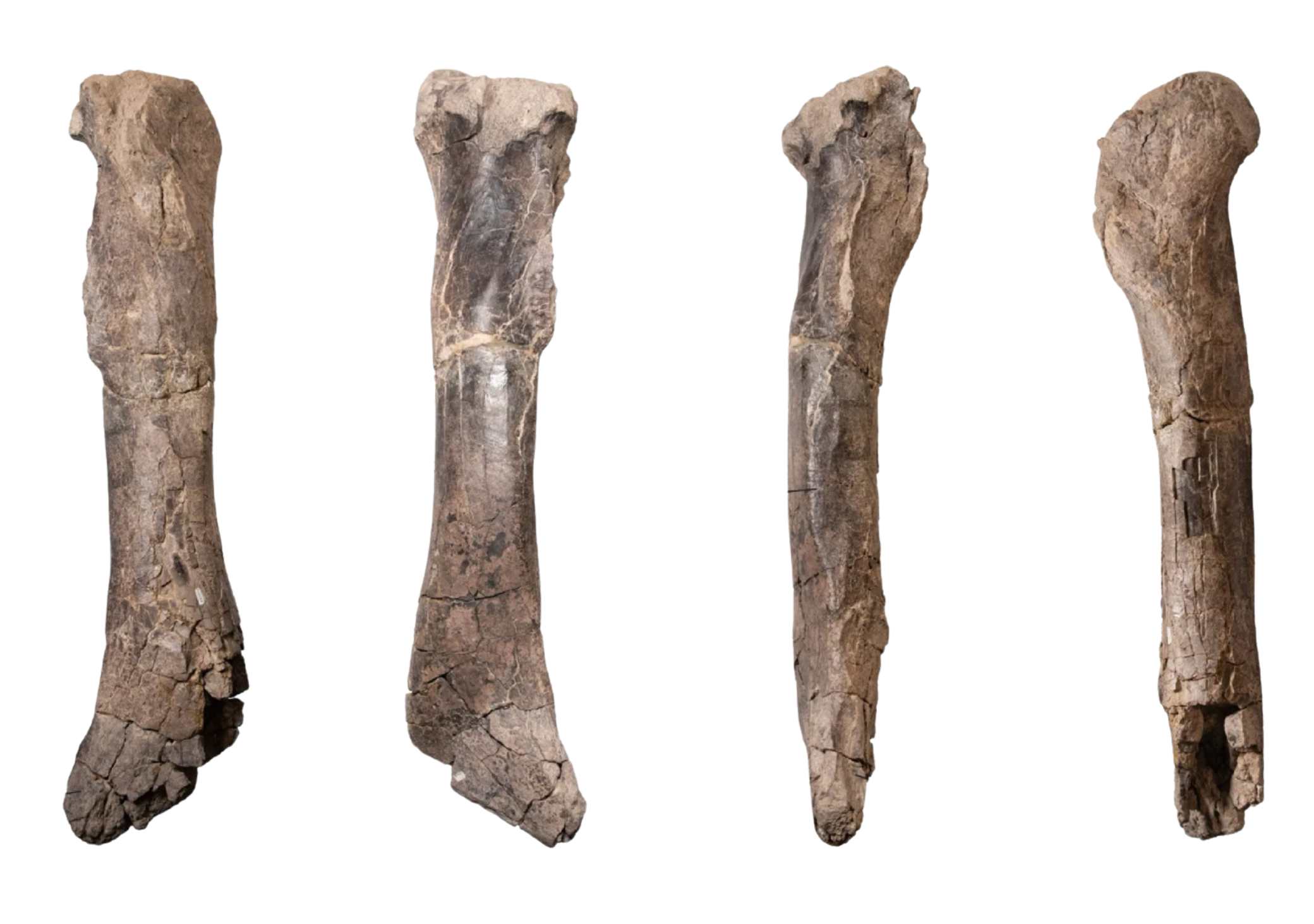
The bone is a tibia, or shinbone, from a large carnivorous dinosaur. Researchers estimate it dates to about 74 million years ago, during the Late Cretaceous Period, when dinosaurs dominated land ecosystems.
The fossil measures about 3.2 feet (96 centimeters) long and 5 inches (13 centimeters) wide. Its size indicates the animal was a powerful predator.
Scientists estimate the dinosaur weighed about 4.7 tons, roughly half the mass of the famous T. rex specimen “Sue.” Sue, one of the largest Tyrannosaurus rex fossils ever discovered, is displayed at the Field Museum in Chicago.
Despite being smaller than Sue, the New Mexico dinosaur appears to have been larger than several other tyrannosaurs known from the same time period.
Bone suggests an early tyrannosaur
The shape and structure of the tibia match those of bones seen in tyrannosaurs, the group of meat-eating dinosaurs that later produced Tyrannosaurus rex.
Researchers say the animal may have been about twice as heavy as Daspletosaurus and Gorgosaurus, two other large tyrannosaurs that lived in North America around the same time.
Based on the bone’s proportions, scientists estimate the dinosaur could have measured about 35 feet (10.5 meters) long, slightly shorter than Sue’s 40.5-foot (12.3-meter) length.
A 74-million-year-old bone discovered in New Mexico may belong to an early relative — or even an ancestor — of Tyrannosaurus rex.
The massive shinbone suggests a 4.7-ton predator that lived millions of years before T. rex and may help reveal how the iconic dinosaur evolved. pic.twitter.com/mVgxulPZ4s
— Tom Marvolo Riddle (@tom_riddle2025) March 13, 2026
Nick Longrich, a paleontologist at the University of Bath in England and lead author of the study, said the fossil fits expectations about tyrannosaur evolution.
“T. rex’s enormous size is a specialization that emerges relatively late in tyrannosaur evolution,” Longrich said. “As you go back in time you’d expect to find animals that aren’t quite as big, so this kind of tracks.” The research was published in the journal Scientific Reports.
A dinosaur known from a single bone
Scientists cannot formally name the dinosaur because only one bone has been found. Paleontologists typically require more fossil material before identifying a new species.
For now, researchers refer to the animal as the “Hunter Wash tyrannosaur.” The name comes from the rock formation where the tibia was discovered.
Longrich said the fossil may represent a dinosaur closely related to Tyrannosaurus rex and possibly part of its ancestral line.
“The fossil is consistent with this species being directly ancestral to T. rex,” Longrich said. “But we’d really need a complete skull to know if it’s directly ancestral or a close cousin of T. rex.”
Ancient ecosystem of western North America
During the Late Cretaceous, North America looked very different from today. A vast inland sea split the continent into two large landmasses.
The western landmass, known as Laramidia, hosted many dinosaur species, including tyrannosaurs. The Hunter Wash tyrannosaur likely lived on a coastal floodplain alongside plant-eating dinosaurs such as horned ceratopsians, armored ankylosaurs, and duck-billed hadrosaurs.
Anthony Fiorillo, executive director of the New Mexico Museum of Natural History & Science and a co-author of the study, said the fossil shows remarkable similarities to Tyrannosaurus bones. “This tibia, or shin bone, matches very, very well with the shin bone of Tyrannosaurus,” Fiorillo said.
Researchers say growing evidence suggests the Tyrannosaurus lineage may have originated in southern Laramidia, possibly in regions that are now New Mexico, Texas, or Mexico.
Scientists hope to find more fossils
For now, the Hunter Wash tyrannosaur remains known from a single fossil bone. Even so, researchers say the discovery provides important clues about how tyrannosaurs evolved into the massive predators that later dominated North America.
Scientists are now planning additional fieldwork in the region to search for more fossils. “We are developing our plans to expand to search for more material,” Fiorillo said.