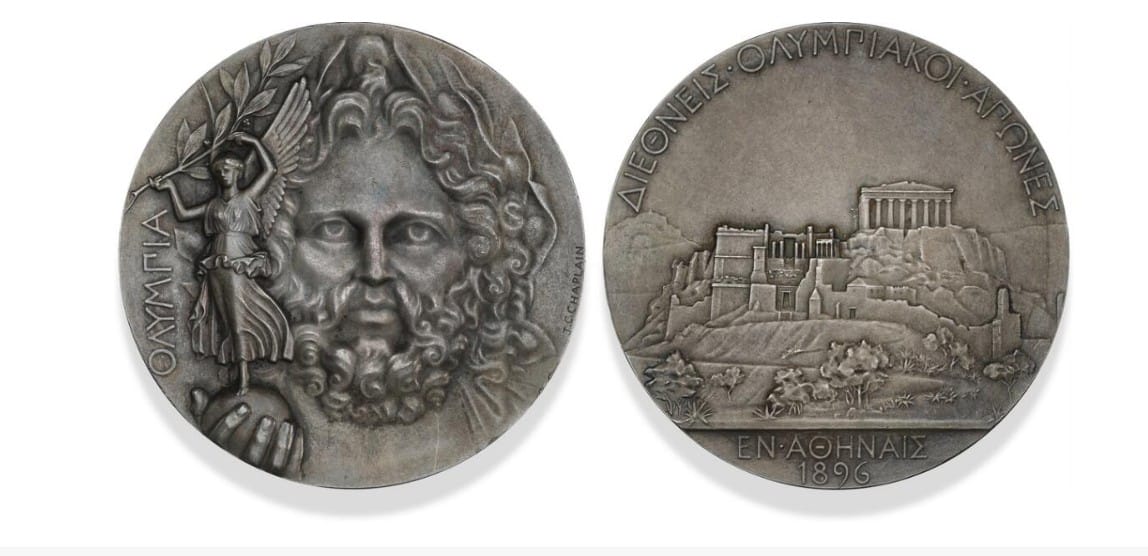
A rare silver medal from the first modern Olympic Games in 1896 in Athens, Greece has sold at auction for about $179,000, drawing renewed attention to one of the most significant artifacts from the early history of the Olympics.
Bruun Rasmussen Arts Auctioneers, a Denmark-based auction house, offered the medal, which dates back about 130 years, according to Smithsonian Magazine. The sale also included the medal’s original presentation box, which increased its appeal for collectors of historic Olympic memorabilia.
Officials have not confirmed which athlete first received the medal. However, the auction house said it may have belonged to Viggo Jensen, Denmark’s first Olympic champion in weightlifting. The buyer’s identity remains unknown.
Olympic silver medal sold at auction reflects different award system
The medal also highlights how much the Olympic award system has changed since the first modern Games in Athens. Unlike today’s Games, the 1896 Olympics awarded silver medals rather than gold to first-place winners. Second-place athletes received bronze medals, while third-place finishers received nothing at all.
That system makes surviving medals from the event especially significant because they come from a moment when the modern Olympic tradition was still taking shape.
Design details and historical value
French artist Jules-Clément Chaplain designed the 1896 medal. One side shows Zeus holding Nike, the goddess of victory, in his hand. The reverse shows the Acropolis in Athens and the inscription “International Olympic Games-Athens 1896” in raised Greek letters.
The auction house described the piece as “an excellent and beautiful” object of “great historical interest.” It weighs about 2.36 ounces, roughly as much as a large chicken egg, and measures just under two inches in diameter.
Christian Grundtvig, head of the coins and medals department at Bruun Rasmussen, has said such medals are exceptionally rare and called them a crown jewel for collectors of Olympic memorabilia.
Why the Athens 1896 Olympics still matter
The 1896 Summer Games, officially known as the Games of the I Olympiad, marked the first international Olympic Games of the modern era.
Pierre de Coubertin turned his vision of reviving the Ancient Greek tradition into reality through those Games. After the 1894 Congress in Paris, organizers chose Athens as the host city to honor the origins of the competition. The Panathenaic Stadium served as the main venue and still stands out as the only stadium in the world built entirely of marble. Businessman George Averoff funded its refurbishment for the Games.
One of the most memorable moments came with the victory of Spyros Louis, a Greek water-carrier who won the first competitive Marathon. His triumph sparked celebrations across Greece and helped establish the event as the centerpiece of the Games.
The 1896 Games included only nine sports: athletics, cycling, fencing, gymnastics, shooting, swimming, tennis, weightlifting, and wrestling. The event also looked very different from the Olympics people are familiar with today. Women did not compete, and organizers had not yet introduced traditions such as the Olympic Flame and the Olympic Rings, which appeared decades later.
Related: Rare Silver Medal From Athens 1896 Olympics Heads to Auction