Archaeologists in Mexico’s Yucatán have uncovered ancient Maya offerings at a ritual site in Yaxché de Peón, a town in the municipality of Ucú, in a find that sheds new light on early Maya symbolic beliefs and community life during the Middle and Late Preclassic period, from 1000 B.C. to A.D. 250.
The discovery was made Jan. 21, 2026, during salvage work tied to the Mérida-Progreso Multimodal Railway Bypass, known as Front 1, a project linked to the Maya Train.
The excavation is being carried out by specialists from Mexico’s National Institute of Anthropology and History (INAH) under archaeologist Manuel Pérez Rivas. Work began in June 2025 and is expected to continue until mid-2026.
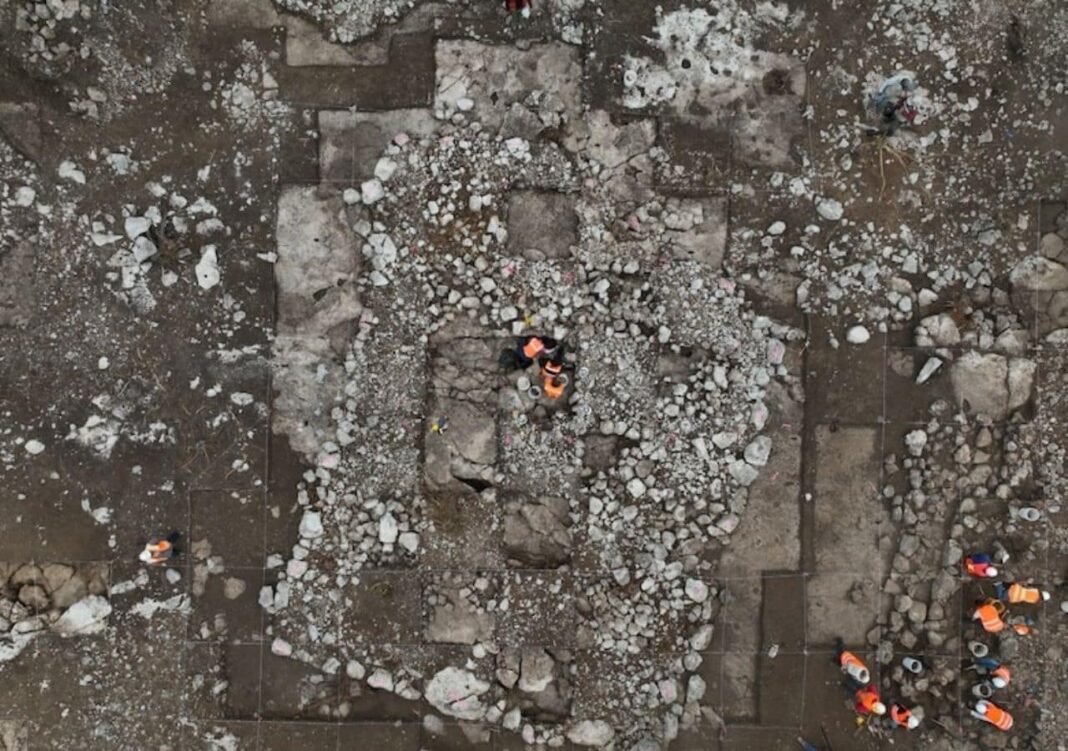
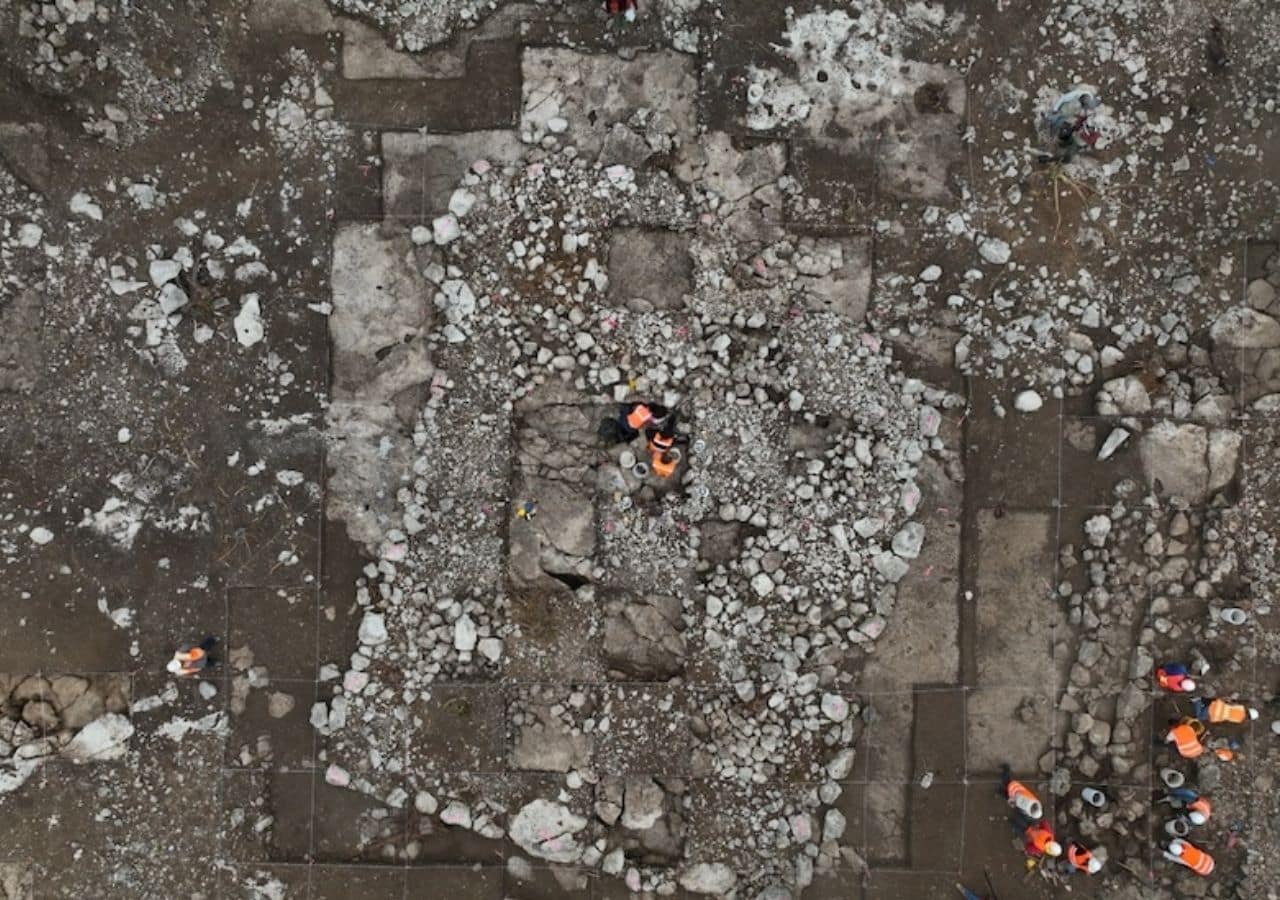
At the center of the find is a rectangular structure labeled Monument TC_17294. It measures 14 meters (45.9 feet) by 10.8 meters (35.4 feet) and stands 0.45 meters high (1.5 feet). Researchers said it was built in a single construction phase, had no residential structures above it and allowed access from all sides.
Maya offerings in Yucatán point to early public ritual use
Those features suggest the building was a semi-public gathering space, likely used for ceremonies or community decision-making, according to the research team.
Beneath the structure’s northern side, archaeologists found two ritual deposits that appear to have been placed before construction began, indicating foundation offerings.
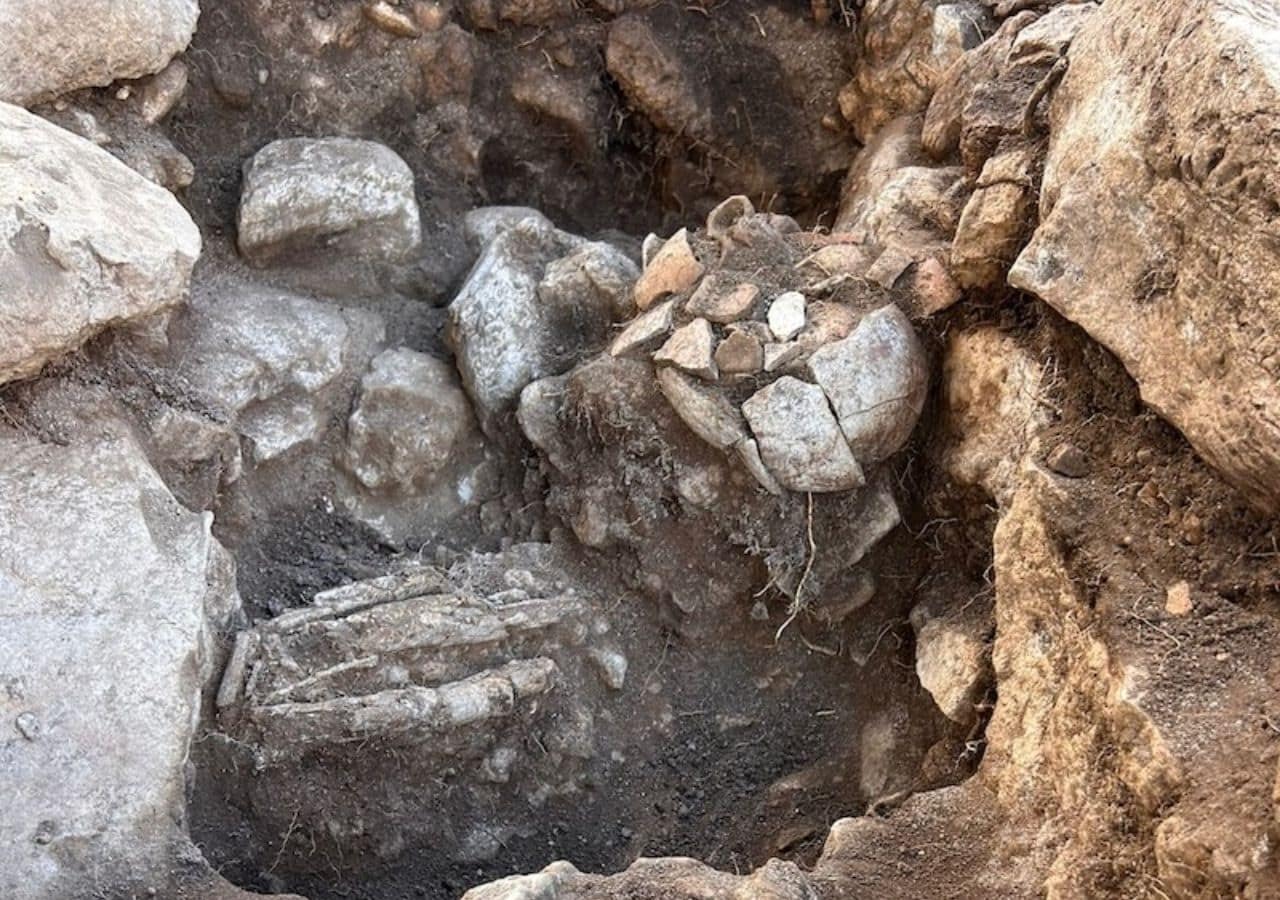
The first included a broken gourd-shaped vessel found 1.10 meters below the surface (3.6 feet). Researchers said the object is linked in Mesoamerican belief to fertility and sustenance, pointing to an agricultural community.
The team also found a cavity in the bedrock measuring 1.10 meters (3.6 feet) by 0.50 meters (1.6 feet). Inside were bone remains, possibly from a deer, ceramic fragments dated to the same period and a piece of marine shell.
Researchers said placing offerings in natural spaces reflected a ritual link between the earthly world and the underworld.
Deer remains and ceramics add context to the discovery
Project coordinator Susana Echeverría Castillo said deer remains in the deposit suggest the animal held symbolic importance in Maya thought, tied to human life, the mountains and well-being. She also said vessels containing deer bones may indicate the structure was built during a time of food abundance and community stability.
A second deposit, found about one meter (3.3 feet) to the west, contained a range of ceramics from the Middle and Late Preclassic period, deer bones and a circular limestone bead. Researchers said those materials support the view that the space was consecrated before construction.
Mexico Culture Secretary Claudia Curiel de Icaza said the find helps deepen understanding of the societies that shaped the region, especially their ideas about community order, symbolic meaning, fertility and sustenance.
The discovery of these Maya offerings in Yucatán also adds to the understanding of how early public spaces were used and how these architectural groups formed their identity.