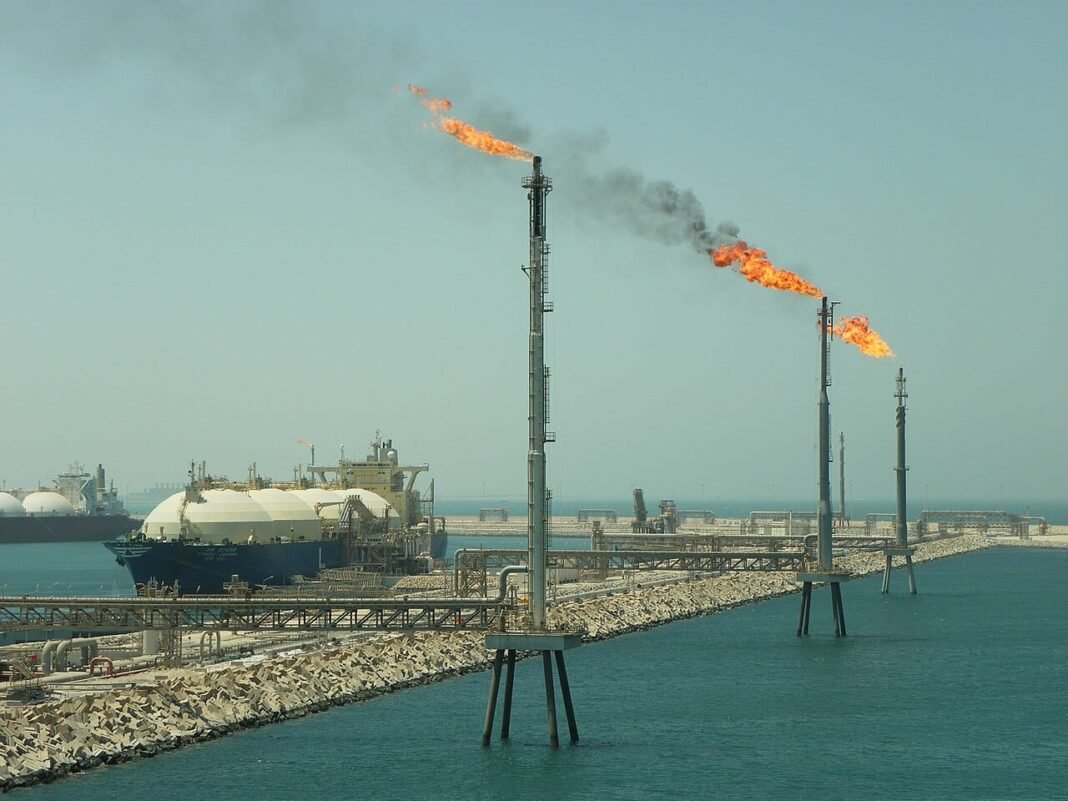
A halt in Qatar’s LNG production could have swift consequences in Greece, where households remain exposed to rising energy costs, according to Financial Times. As one of the world’s largest LNG exporters, Qatar plays a critical role in global energy supply, and any reduction in its output can push international prices higher almost immediately.
That risk is now drawing serious attention. Oil prices are edging toward $90 a barrel, while analysts cited by the Financial Times have outlined scenarios in which prices could climb as high as $150 if the disruption persists.
For Greece, which remains heavily dependent on imported energy, such a shock would quickly spread beyond international markets, driving up electricity bills, fuel costs, inflation, and pressure on household incomes.
Why a Qatar LNG disruption matters to Greece
Qatar supplies roughly one-fifth of the global LNG market, with most of its exports moving through the Strait of Hormuz, one of the most strategically important energy routes in the world. When a producer of that scale faces a halt in output, the effect is immediate. Global supply tightens, competition for available cargoes intensifies, and prices rise.
Greece does not need to import gas directly from Qatar to feel the consequences. LNG prices are set on international markets, and Greece secures supplies through global contracts and spot purchases, mainly via the Revithoussa terminal near Athens as well as newer floating storage and regasification units. If global LNG prices increase, the next shipment arriving in Greece, whether from the United States or Africa, will also cost more.
Why Greek households are exposed
The Greek electricity market makes that exposure even more serious. Gas-fired power plants still set the marginal price in the country’s power system, meaning that when natural gas becomes more expensive, electricity prices tend to rise as well.
For households, that creates an immediate and visible risk. Higher wholesale energy prices usually appear first in electricity bills and at fuel stations, but the pressure spreads much further.
Transport costs increase, food production becomes more expensive, and businesses across manufacturing and services face higher operating expenses. Those costs are then passed on to consumers, deepening the strain on household budgets.
Inflation could return
The timing is particularly sensitive. Greece had only recently benefited from a broader easing of inflation across Europe after the energy shock of 2022, when eurozone inflation climbed above 10 percent.
Since then, price pressures had moderated, with inflation in the eurozone returning to around 2.5 percent, according to Eurostat. That improvement had opened the way for the European Central Bank to begin gradually cutting interest rates through 2026.
A new energy shock could change that picture. Economists estimate that a 30 percent to 40 percent rise in oil prices could add between one and two percentage points to inflation, depending on the duration and severity of the disruption. For Greek households, that would mean renewed pressure not only from electricity and fuel costs, but also from a broader rise in the price of goods and services.
Household income could take a direct hit
The most serious concern is the effect on real income. Greek households already spend a large share of their earnings on essential living costs, leaving them especially vulnerable to another surge in energy prices. Economists estimate that a sustained increase in energy costs could reduce real household income by between 3 percent and 5 percent within a year.
That would carry clear consequences. Families would have less room for discretionary spending, while a larger share of their monthly income would be absorbed by basic expenses. In an economy like Greece’s, where private consumption accounts for more than 65 percent of GDP, weaker household purchasing power would also weigh on overall economic activity.
The wider economic risks for Greece from Qatar LNG disruption
The impact would extend beyond family finances. Greece’s goods trade deficit already exceeds €30 billion ($34 billion), and a sharp rise in energy import costs could widen that gap further. Some estimates suggest the country’s annual energy import bill could increase by as much as €3 billion, depending on how severe and prolonged the disruption becomes.
Growth would also come under pressure. As households cut spending, businesses absorb higher costs, and investment slows, economists estimate that Greece’s growth rate could fall by between 0.5 and 1 percentage point in a prolonged disruption scenario.
For Greek households, the potential cost is substantial. Higher electricity and fuel bills, renewed inflation, weaker purchasing power, and slower growth could all return at a time when economic stability had only just begun to improve. If the disruption lasts, the loss of household income could become one of the clearest signs of how global energy turmoil reaches directly into daily life in Greece.