
Researchers in Prague have found the lost manuals for the SG-41, a secret World War II Nazi machine that had remained poorly understood for decades.
The documents, uncovered nearly 80 years after the war, show how the Schlüsselgerät 41 was operated and how its complex keys were managed, ending years of uncertainty around one of Germany’s most advanced cipher devices.
The material was found in two Prague archives by researchers Eugen Antal, Carola Dahlke and Robert Jahn. Their study says the discovery includes official German operating instructions, field guidance, key-setting rules and wartime key tables from March 1945.
It also includes a 41-page Czech document describing the machine and a postwar cryptanalysis prepared by Czechoslovak intelligence.
Lost manuals reveal how the secret Nazi machine worked
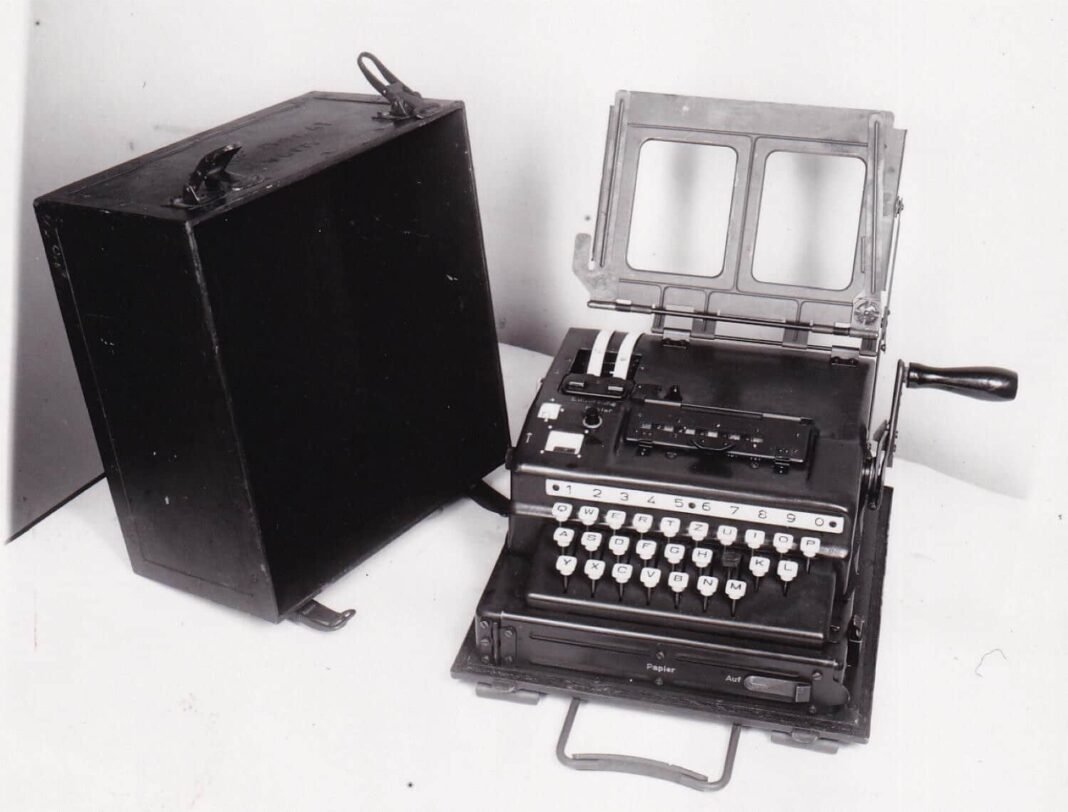
The SG-41 was developed in 1941 by German inventor Fritz Menzer. Unlike the better-known Enigma, it was a mechanical device based on the pin-and-lug system. It used six wheels with movable pins to generate values that were added to letters during encryption and reversed during decryption.
Lost Nazi encryption manuals of the Schlüsselgerät 41, a cipher machine more advanced than Enigma, have been discovered in Prague archives after 80 years. pic.twitter.com/O1lJzb8JfU
— Tom Marvolo Riddle (@tom_riddle2025) March 6, 2026
Researchers say the machine stood out for two reasons. Its wheels moved in irregular patterns instead of predictable steps, making codebreaking harder. Its sixth wheel also had a negation feature that could flip active and inactive pin settings on the other wheels, sharply changing the machine’s behavior.
The newly found records also explain how the system worked in the field. Operators used a monthly table with 26 pin-setting options, a daily key made of six letters and a disguise key that hid the starting position of each message. Each station also had its own two-digit number set on the final wheels.
Archives show how the device was used in wartime
The archives clarify the machine’s physical design as well. The SG-41 weighed about 10 kilograms (22 pounds) on its own and about 17 kilograms (37.5 pounds) with its lid and base plate.
To make it usable in the field, German engineers added a padded knee plate that allowed the device to rest on an operator’s lap and also serve as a backpack frame.
The Czech analysis found a small weakness in the Nazi machine. Some outputs appeared slightly more often than others. But the researchers said that in real language traffic, the pattern was too weak to make the system easy to break.
They concluded the machine was likely very secure in wartime use, even though some questions about the documents and other missing materials remain unresolved.