
A new claim that a Roman church holds a lost Michelangelo has stirred debate among scholars and drawn attention from authorities as Italy marks the 550th anniversary of Michelangelo Buonarroti’s birth.
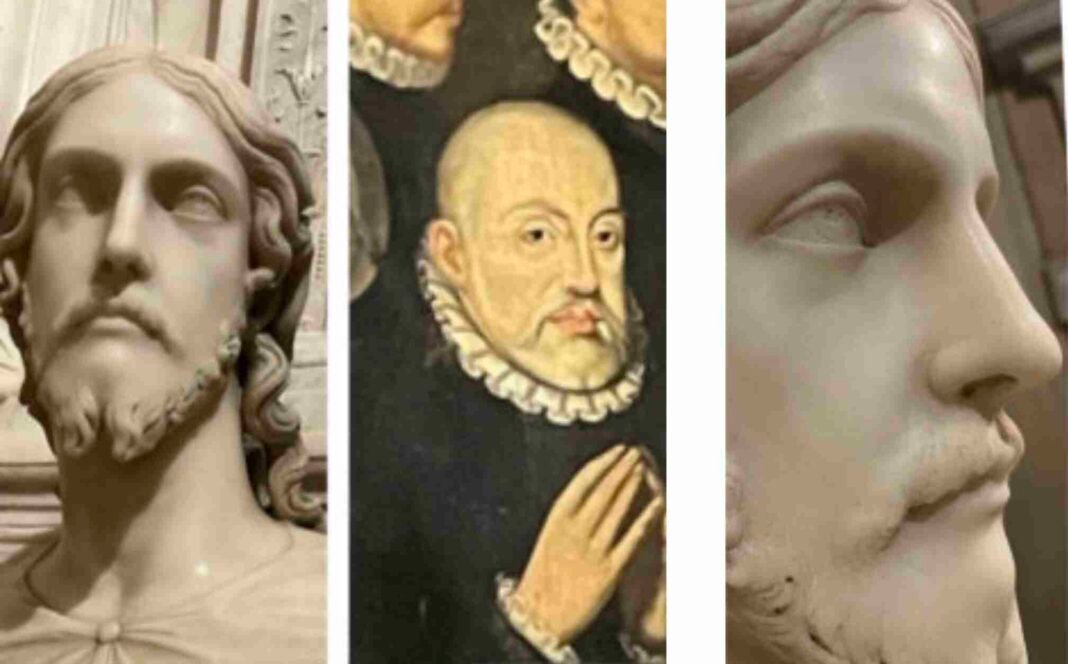
The dispute centers on a marble bust of Christ in the Basilica of Sant’Agnese Fuori le Mura, long listed by Italy’s Culture Ministry as an anonymous 16th-century work from the Roman school.
Valentina Salerno, an independent researcher, presented her attribution on Wednesday and posted supporting material on academia.edu, a commercial academic networking site that does not use peer review.
She said she traced wills, inventories and notarized records in church and state archives, as well as archives of Roman confraternities tied to Michelangelo and his circle, and concluded that early documents credited the bust to the Renaissance artist.
Research revives questions around a possible lost Michelangelo
Salerno argued that the attribution was pushed aside after a scholar rejected it in 1984, a conclusion she said was mistaken. She also suggested the bust was modeled on Tomaso de’ Cavalieri, described as one of Michelangelo’s close friends, and that it was part of the legacy the artist left to friends and students.
Researcher Valentina Salerno claims a marble bust of Christ in Rome’s Basilica of Sant’Agnese is a lost Michelangelo masterpiece, backed by 10 years of archival digs showing it was attributed to him until the 1980s. No formal art creds, but scholars like William Wallace praise… pic.twitter.com/lmNR94Onxc
— Stephen hawking (@hawking2023) March 5, 2026
The announcement comes at a sensitive moment for Renaissance experts after a drawing described as a Michelangelo sketch, though disputed by some as a copy, sold for $27.2 million at a Christie’s auction.
Several leading specialists have declined to comment on Salerno’s claims, and some members of a Vatican-linked committee connected to the anniversary have minimized the significance of her work or avoided discussing it.
Authorities respond as debate over Roman church sculpture grows
The Rev. Franco Bergamin, abbot of the order that runs the church, said the Culture Ministry was invited to Salerno’s news conference but did not take part.
Italy’s Carabinieri art squad has not offered an opinion on authenticity but said the sculpture is being protected. A sign near it warns that an alarm is active.
Lt. Col. Paolo Salvatori said the piece merits protection as part of Italy’s cultural heritage regardless of authorship.
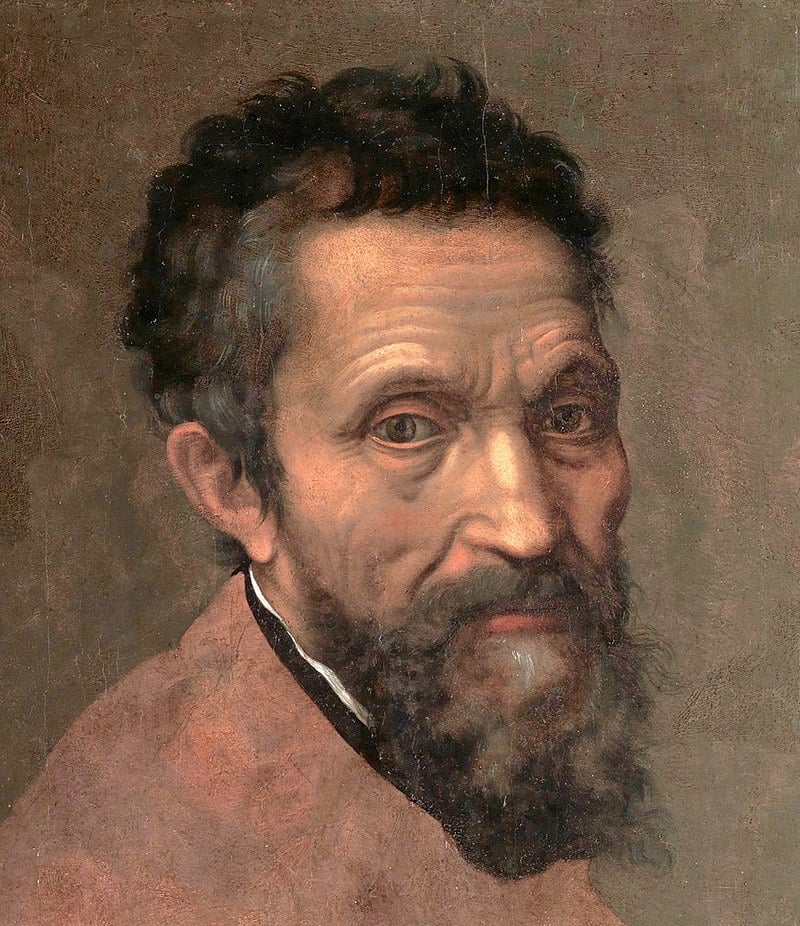
The bust has drawn massive attention before. In a 1996 article, Michelangelo scholar William Wallace cited the 19th-century writer Stendhal, who reported seeing a head of Christ at Sant’Agnese that he believed was by Michelangelo, while noting the claim never gained traction in modern scholarship.
Scholars question evidence behind the Roman church’s claim
Salerno, an actress and fiction author without formal art history credentials, said she began researching Michelangelo about 10 years ago while working on a novel.
In her online work, she described what she called a private pact among some of Michelangelo’s students and heirs to keep his works, including a chamber she said could be opened only with three keys.
Her research drew the attention of Cardinal Mauro Gambetti, who oversees St. Peter’s Basilica, and formed a scientific committee in 2025 to discuss a possible Vatican exhibition for the anniversary. No exhibition has emerged.
Wallace told the press that he considered Salerno’s document-based approach solid and said noncredentialed researchers have a history of producing serious work.
He agreed that Michelangelo did not destroy his works in a fire and likely entrusted remaining material to students, but he disputed the idea of a large hidden trove, saying the artist’s late years were dominated by major architectural duties and few surviving drawings.
Italy has repeatedly seen high-profile claims of rediscovered works, including misattributions and forgeries. The Roman church at the center of this latest debate is now guarding its bust closely as the argument over a possible lost Michelangelo continues.