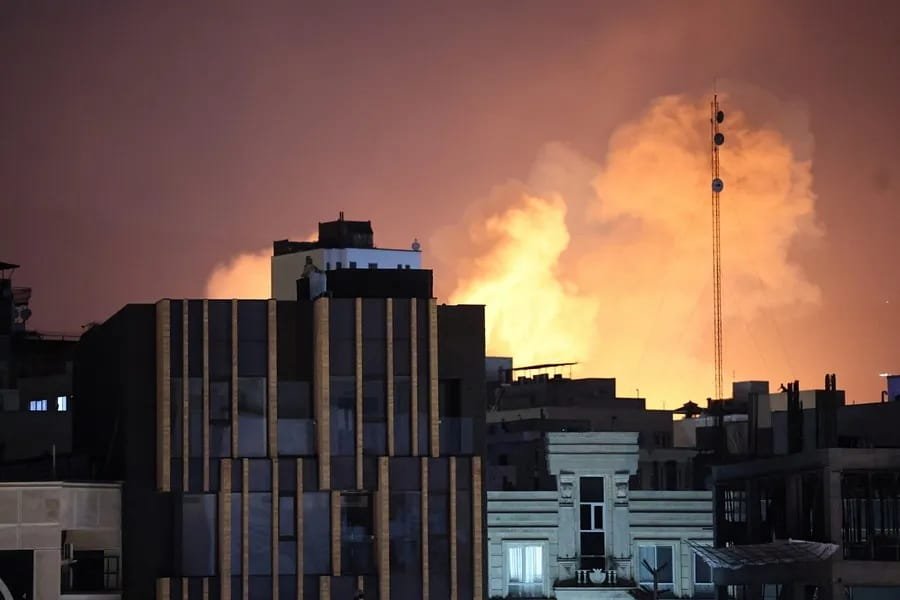
The war involving the United States, Israel, and Iran has rapidly evolved from a regional dispute into a global crisis that affects Greece and Cyprus. The drone strike on the British base in Cyprus on March 1, 2026, has brought the reality of this war to Europe’s doorstep, shifting Greek strategic calculations from distant observer to frontline concern. As the crisis enters its third day, the Greek government faces six primary challenges.
Threats facing Greece from the US-Israel war against Iran
1. Territorial security and the “Souda Bay” factor
The most pressing question for Greek national security is vulnerability. The drone attack in Cyprus demonstrated that regional targets are no longer safe from retaliatory strikes.
Regarding the potential threat to Crete and the Souda Bay naval facility, the strategic reality is stark: Iran possesses a robust arsenal of medium-to-long-range ballistic missiles, such as the Sejjil and the Khorramshahr, which have operational ranges exceeding 2,000 kilometers. Crete lies well within this strike radius.
While Greece is not a primary belligerent, its hosting of critical NATO and U.S. naval assets makes Souda Bay a high-value target in any expanded regional conflict.
2. Maritime security and Greek shipping
Greece possesses the world’s largest merchant fleet, making it uniquely exposed. The Strait of Hormuz is the “main artery” of the global energy supply; its disruption—or even the threat of it—directly imperils the Greek economy.
Four confirmed attacks have occurred on vessels within the Strait of Hormuz and the surrounding maritime region. Among the affected vessels is one Greek-owned ship operated by a company based in Vouliagmeni.
As Iranian officials and proxies threaten to render the waterway unsafe, Greek shipping companies have been advised to avoid the Persian Gulf. The physical danger to crews and vessels, combined with skyrocketing insurance premiums, threatens the viability of operations for thousands of Greek-owned tankers.
3. Energy market volatility
As an oil-importing nation, Greece is exceptionally sensitive to fluctuations in global oil prices. The Strait of Hormuz facilitates the transit of nearly 20% of global oil and LNG. Sustained volatility or a prolonged blockade will inevitably trigger a “Middle East premium” on fuel. If wholesale energy prices remain elevated, these costs will filter down to Greek households, fueling inflation and potentially reversing the recent downward trend in electricity tariffs.
4. Tourism sector vulnerability
Tourism is Greece’s “heavy industry,” and it relies heavily on a perception of regional stability. Even if Greece remains physically distant from the kinetic conflict, the psychological impact on international travelers—particularly from the U.S. and Asia—cannot be overstated. Should the Eastern Mediterranean be branded as an “unstable” zone, the upcoming summer season faces the risk of mass cancellations and a significant drop in high-value bookings.
5. Trade and supply chain disruptions
The crisis is already impacting supply chains far beyond the immediate conflict zone. Delays in shipments via the Suez Canal and the Persian Gulf are rippling through the Piraeus port, a critical hub for European trade. According to industry leaders, the combination of rerouted vessels, increased fuel consumption, and port congestion is driving up the cost of raw materials and technology imports, while export markets in the Middle East and North Africa have effectively entered a state of paralysis.
6. Migration Flows
Greek authorities are monitoring the potential for a surge in migration. Regional instability, particularly in neighboring countries, often leads to increased irregular border crossings. Turkey’s role remains a critical variable in this equation. Historically, geopolitical crises in the East have been used as leverage in migration policy, and Athens remains on high alert for any indications that demographic pressure is being weaponized to destabilize regional dynamics.