A new study is offering a fresh explanation for one of ancient Greece’s most enduring Eleusinian mysteries (Greek: Ἐλευσίνια Μυστήρια). Researchers say the secret drink used in the Mysteries may have contained a carefully prepared psychedelic derived from ergot fungus—processed in a way that reduced its deadly toxicity while preserving its mind-altering effects.
A ritual that crossed social boundaries
For more than a thousand years, the Mysteries took place in Eleusis (Greek: Ελευσίνα), a small town west of Athens. Each year, initiates from across the Greek world arrived to take part. They included politicians, soldiers, poets, and enslaved people. Inside the sanctuary, social rank carried no weight.
Ancient sources describe a demanding ritual sequence. Participants walked the Sacred Way in silence. They fasted for days. They underwent purification rites. At the heart of the ceremony, inside a vast hall known as the Telesterion, they drank a potion called kykeon (Greek: κυκεών). Its ingredients were never revealed. Breaking that secrecy carried a death sentence.
Myth, agriculture, and the promise of renewal
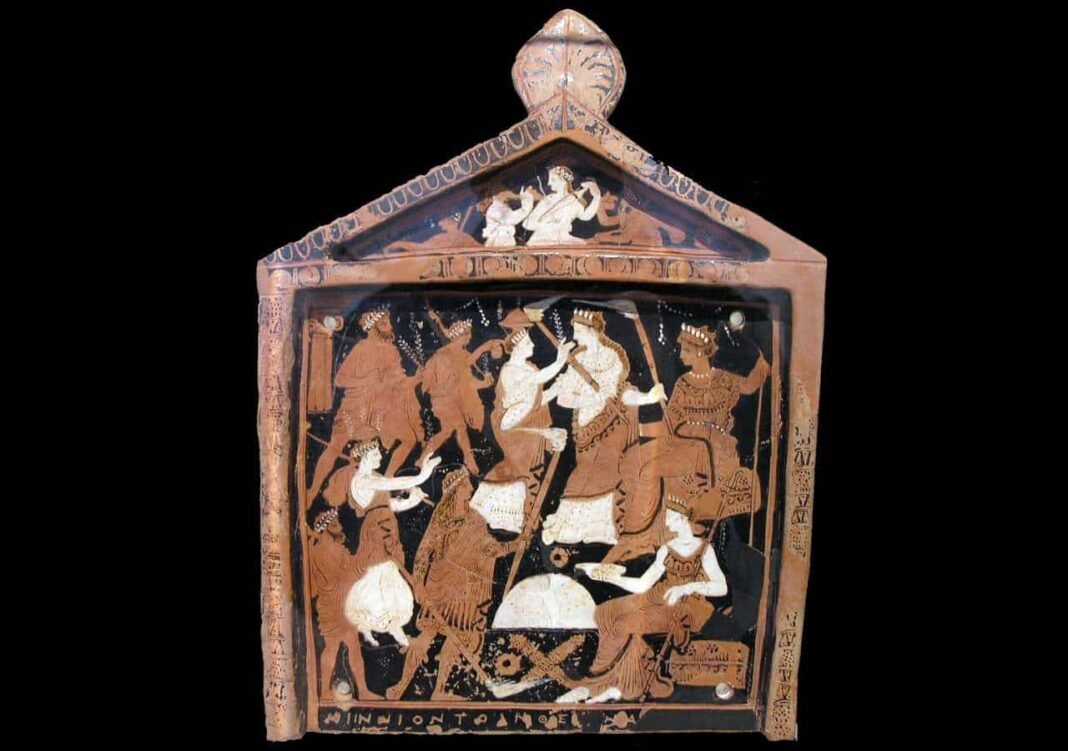
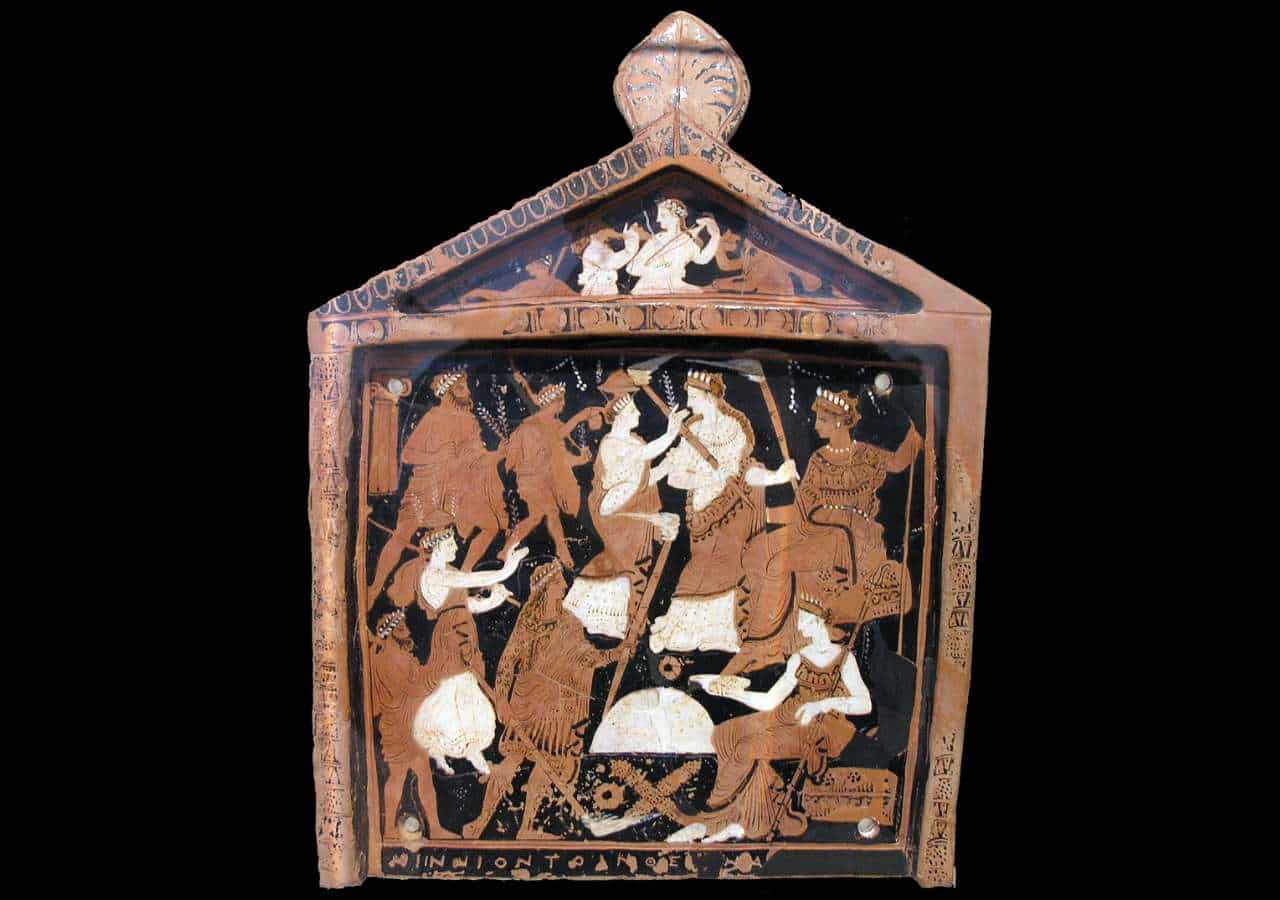
The Mysteries drew their meaning from the Homeric Hymn to Demeter, composed around the seventh century BCE. The poem tells how Demeter searched desperately for her daughter Persephone, who had been taken by Hades.
Demeter’s grief halted the growth of crops. Her reunion with Persephone restored life. The story mirrored the agricultural cycle of death and rebirth, a theme initiates symbolically reenacted each autumn.
Ancient writers refused to describe what followed the drinking of kykeon. Instead, they hinted at overwhelming light, powerful visions, and a profound inner transformation. Many said the rite changed how they understood death itself.
A controversial theory revisited
For centuries, scholars debated whether the drink was symbolic or pharmacological. In 1978, researchers proposed that kykeon may have contained ergot, a fungus that infects barley and produces ergot alkaloids—compounds chemically related to LSD.
For 50 years, the psychedelic theory of the Eleusinian Mysteries had a fatal flaw.
A new research paper may have just solved it.
The Eleusinian Mysteries were the most important spiritual rituals in the Western world for nearly 2,000 years.
Every autumn, thousands gathered… pic.twitter.com/rvqvNOxxOd
— Paul F. Austin (@PaulAustin3w) February 16, 2026
The idea drew attention, but also sharp criticism. Untreated ergot causes ergotism, a disease that led to mass deaths in medieval Europe. Skeptics questioned how such a substance could have been used safely for centuries.
Testing ancient chemistry with modern tools
The new study revisits that theory with experimental evidence. Researchers from the National and Kapodistrian University of Athens, working with international collaborators, tested whether ancient techniques could transform toxic ergot into safer psychoactive compounds.
Using a lye solution made from wood ash and water—materials available in antiquity—the team heated powdered ergot under controlled conditions. The process broke down the most dangerous compounds and produced lysergic acid amide, or LSA, along with iso-LSA. Both substances are psychoactive but far less potent than LSD.
Chemical analysis confirmed the transformation. Under optimal conditions, one gram of treated ergot produced about 0.5 milligrams of LSA, a dose known to affect perception.
Addressing safety and scale
Researchers say only a few kilograms of ergot would have been needed to supply large ceremonies. The alkaline mixture could also have been neutralized before consumption through air exposure or by mixing with barley and mint.
Geography strengthens the case. Ergot growth in Mediterranean climates tends to be localized. The fertile Thriasian plain could have supplied infected barley in controlled amounts. Archaeological evidence from Mas Castellar de Pontós, a sanctuary linked to Demeter, has already revealed ergot fragments in a ritual context.
More than chemistry alone
The authors stress that the Mysteries were not drug rituals. Fasting, expectation, myth, and collective ceremony shaped the experience. LSA’s effects on serotonin receptors, combined with that setting, could have produced intense emotional and perceptual changes.
The ancient Greeks made a psychedelic from toxic fungus, wood ash, & water — and served it to thousands every year for 2,000 years.
A paper published today in Nature showed how.
Plato drank this. Cicero drank this.
The Western world was built on a psychedelic sacrament. pic.twitter.com/9TQG644n3A
— Taylor Sterling (@FatherMcKennaa) February 14, 2026
Ancient testimonies describe just that: fear followed by release, a confrontation with mortality, and a sense of renewal.
What remains unknown
The study does not claim proof that ergot was used at Eleusis. No residue from the Telesterion has been chemically analyzed. What the research provides instead is feasibility. It shows that ancient practitioners could have neutralized ergot’s toxicity using simple methods.
The Eleusinian Mysteries ended in the fourth century CE, when the sanctuary was destroyed during the Christianization of the Roman Empire. Their central secret endured because no initiate spoke of it.
Now, modern chemistry is reopening the question. What once sounded like a myth no longer appears impossible. The most guarded secret of ancient Greece may not have been mystical alone. It may have been chemical, and science may finally be close to understanding it.