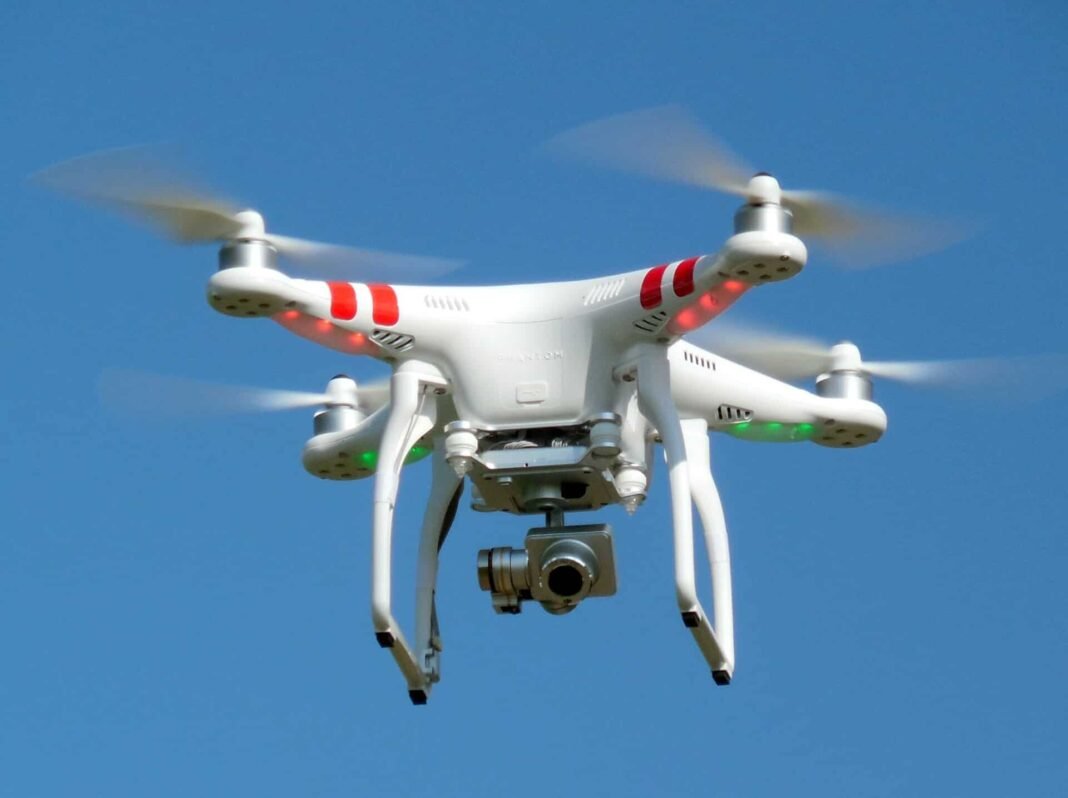

The European Commission has unveiled a new Action Plan to address growing security risks linked to drones across the European Union (EU), as authorities report a steady rise in hostile and unauthorized drone activity.
Officials say drone incidents have disrupted airports, violated restricted airspace, and threatened critical infrastructure in several EU countries. Border areas and public spaces have also seen an increase in suspicious drone operations. High-altitude weather balloons have added to the challenge, making aerial threat assessment more complex.
Drones in the EU are no longer viewed only as commercial or recreational tools. Security officials now describe them as a serious internal security concern. Smaller devices are harder to detect and easier to misuse. Researchers warn that drone technology is advancing faster than existing safeguards.
Action Plan targets EU-wide coordination
The Commission’s plan aims to enhance the way EU countries prevent, detect, and respond to drone-related threats. It strengthens cooperation at the EU level while supporting national authorities responsible for day-to-day operations.
The strategy also calls for closer coordination between civil and military authorities, especially during cross-border incidents that cannot be managed by one country alone. Officials say stronger coordination is essential as drone threats increasingly ignore national boundaries.
The Action Plan focuses on civilian internal security and complements defence initiatives already underway. It is built around four pillars: preparedness, detection, response coordination, and defence readiness.
Security and industry growth are linked
The Commission is also tying drone security policy to industrial growth. Officials argue that stronger security can drive innovation rather than restrict it.
By promoting trusted technologies and secure supply chains, the EU aims to position itself as a global leader in safe and reliable drone systems. The approach is designed to protect public safety while supporting competitiveness in Europe’s drone industry.
New measures to strengthen resilience
To boost resilience, the plan proposes a coordinated civil-military mapping of the EU’s drone and counter-drone industries. The goal is to guide investment, support innovation, and ensure systems can operate together across borders.
The Commission also plans to establish an EU Counter-Drone Centre of Excellence. The center would support research, training, and the sharing of operational best practices. A new certification scheme would assess and validate counter-drone systems used across the bloc.
⚠️Drone threats are evolving quickly and affecting critical infrastructure, putting the EU’s preparedness and response capabilities to a test.
Today, we are launching a new action plan to better protect Europe against malicious drone operations ↓ pic.twitter.com/MEN48npSFQ
— Digital EU 🇪🇺 (@DigitalEU) February 11, 2026
Another proposal calls for the creation of a Drone and Counter-Drone Industry Forum. The platform would bring together public authorities, manufacturers, and technology firms to accelerate innovation and expand production capacity.
Rules update and trusted drone label planned
A broader Drone Security Package is also in preparation. It will revise existing civilian drone regulations to reflect evolving security risks.
The package will include a coordinated assessment of drone technology supply chains and introduce an “EU Trusted Drone” label to identify equipment that meets strict security standards.
Additional measures include new guidance for operators of critical infrastructure, a maritime surveillance pilot project, and support for Member States facing high-altitude threats originating outside the EU.
Detection systems and 5G at the core
Improving detection is a central focus of the Action Plan. The Commission is promoting integrated “single air display systems” that combine data from multiple sources.
These systems are designed to help authorities distinguish lawful drone use from potential threats, particularly in sensitive or crowded areas. Detection efforts will rely on multi-sensor systems supported by artificial intelligence, including radar, radio-frequency monitoring, and optical sensors.
The plan also highlights the need to use 5G networks for real-time drone tracking, including swarm operations. The Commission plans to launch a call for expressions of interest to support live testing and rapid deployment of 5G-based detection technologies.
Discussions are also underway on creating a Drone Incident Platform to improve situational awareness and coordination during drone-related incidents.
Joint response and border protection
While operational responsibility will remain with individual countries, the EU plans to support joint procurement and coordinated deployment of counter-drone systems.
The Commission also intends to back sovereign, AI-powered command-and-control systems and is exploring the creation of Rapid Counter-Drone Emergency Response teams to assist countries facing sudden or serious threats.
A large-scale annual EU counter-drone exercise is also proposed to test cross-border cooperation and civil-military coordination.
At the EU’s external borders, the bloc’s border agency, Frontex, will continue receiving advanced drone and surveillance technologies. Additional guidance will address layered deployment and cross-border incident management.
Defence alignment and funding support
The Action Plan aligns with broader defence efforts, including the European Drone Defence Initiative and the Eastern Flank Watch project under the Defence Readiness Roadmap 2030.
The Commission is also seeking closer cooperation with Ukraine through the Drone Alliance, citing the country’s operational experience as valuable for affordable innovation and large-scale production.
Funding for drone and counter-drone development will continue through EU programmes such as Horizon Europe, the European Defence Fund, border management instruments, the European Defence Industry Programme, and SAFE loans.
Consultations and next steps
The Commission will now consult with Member States, industry stakeholders and the European Parliament to refine and implement the measures. It has also proposed appointing National Drone Security Coordinators in each country to oversee implementation.
Officials stress that the Action Plan is dynamic and will evolve as new risks emerge. The aim is to safeguard the EU’s airspace while supporting a secure and competitive drone ecosystem.