
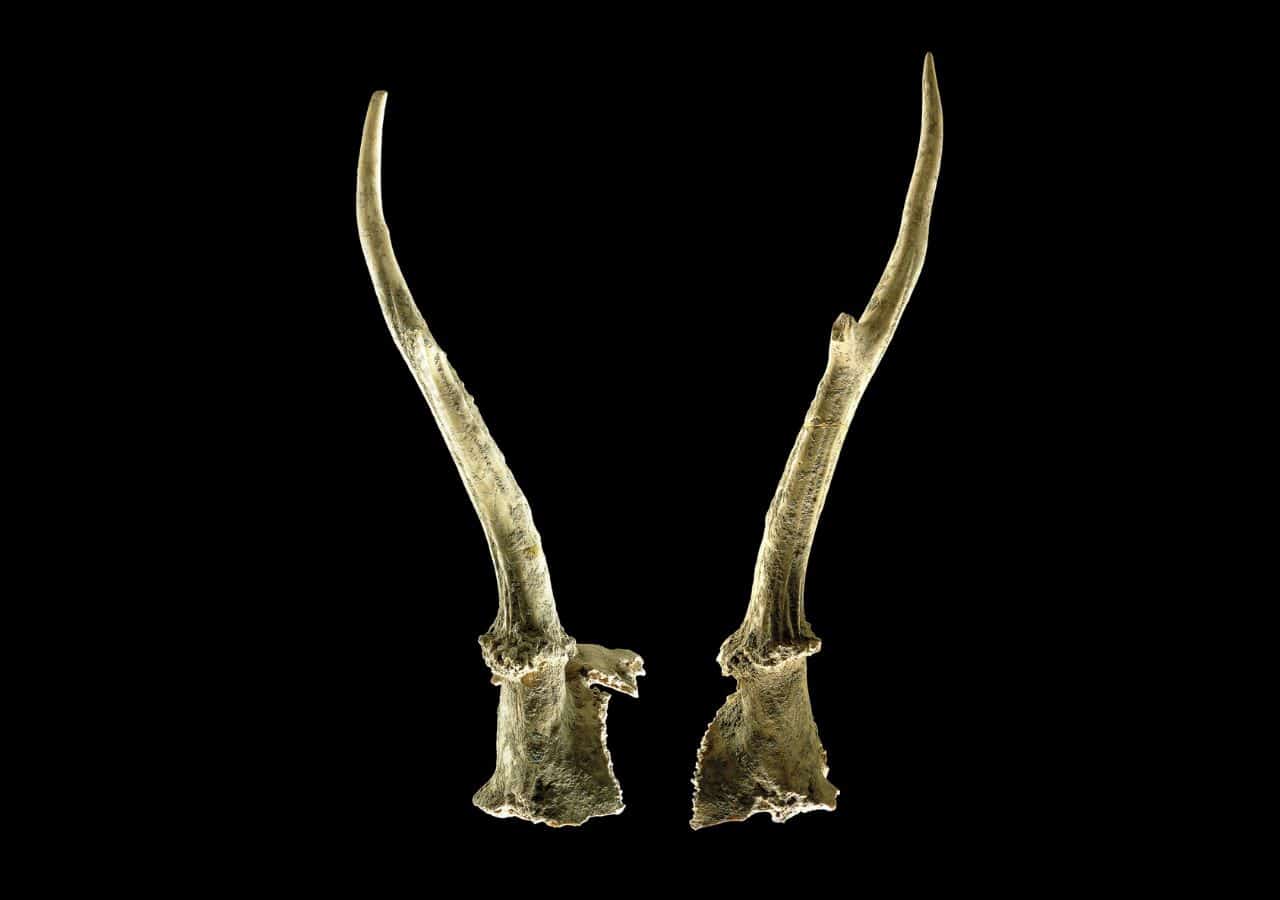
A 7,000-year-old worked fragment of a deer antler recovered from a Neolithic settlement in central Germany is offering rare insight into early exchanges between farming communities and surrounding hunter-gatherers.
Researchers say the object, shaped from the antler of a young roe deer, shows close similarities to ritual pieces known from Mesolithic burials, including the well-known shaman grave at Bad Dürrenberg.
The study, published in Praehistorische Zeitschrift, links the find to direct interaction between early farmers and hunter-gatherers, placing this evidence at a pivotal moment in European prehistory.
The antler came from a modest pit excavated in 1987 at the Eilsleben-Vosswelle site in Saxony-Anhalt. Analysis revealed cut marks, a rectangularly shaped skull fragment, and notches near the base that were likely used for fastening, suggesting the object once served as a headdress or mask. Radiocarbon dating places it between 5291 and 5034 BC.
Mesolithic links shown through deer antler traditions and hunter-gatherers
Similar pieces do not appear in Neolithic contexts, but Mesolithic sites have produced comparable antlers, often interpreted as hunting gear or shamanic regalia. Almost all of those were made from red deer, making the roe deer find from Eilsleben unusual.
Its closest match comes from the Bad Dürrenberg burial, where a woman and an infant were laid to rest about 9,000 years ago with an elaborate antler headdress and pendants of animal teeth.
Researchers at the State Office for Heritage Management and Archaeology Saxony-Anhalt note that the Eilsleben discovery strengthens the case for close contact between early farming groups and local foragers.
They point to the shared manufacturing traits seen in stone and antler tools at the site, which resemble Mesolithic techniques. They also report that the presence of a ritual-style antler piece reinforces the likelihood of cultural exchange.
Fortified Neolithic settlement offers context for cultural exchange
The settlement at Eilsleben lies at the northern edge of the loess zone and was first identified through surface finds in the 1920s. Excavations led by Dieter Kaufmann between 1974 and 1989 uncovered a multi-phase village of the Linear Pottery culture.
Evidence suggests the settlement may have been fortified with a rampart, ditch, and fence, which is uncommon for early sites of this type. Its location along a border region may explain the added defenses and the frequency of interaction with neighboring groups.
The findings also frame how early farmers faced new health risks as they adopted agriculture. Researchers explain that dental issues, exposure to animal-borne disease, heavy physical labor, and conflicts over land could have strained communal knowledge.
In these circumstances, farmers may have turned to experienced healers among foraging groups who were known for ritual roles and plant-based medical knowledge.