Archaeologists in Egypt have uncovered a previously unknown site in South Sinai that preserves thousands of years of human activity, including ancient rock art, ancient inscriptions, stone tools, and traces of repeated habitation.
The discovery was made by a mission from the Supreme Council of Antiquities during archaeological survey and documentation work in a remote desert area of the peninsula. The site has been identified as the Um ‘Irak Plateau and is already being described as one of the most important archaeological discoveries in the region in recent years.
Prehistoric paintings and engraved hunting scenes
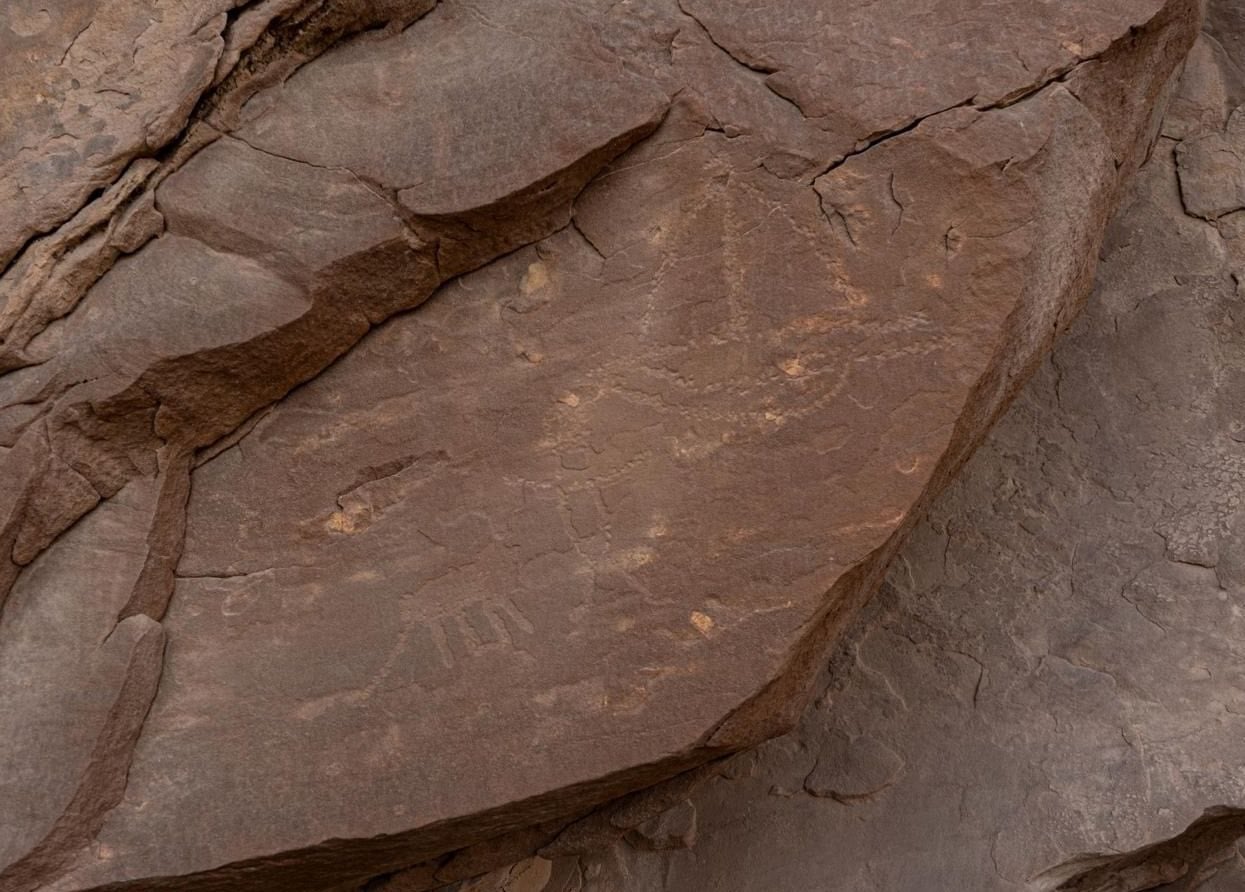
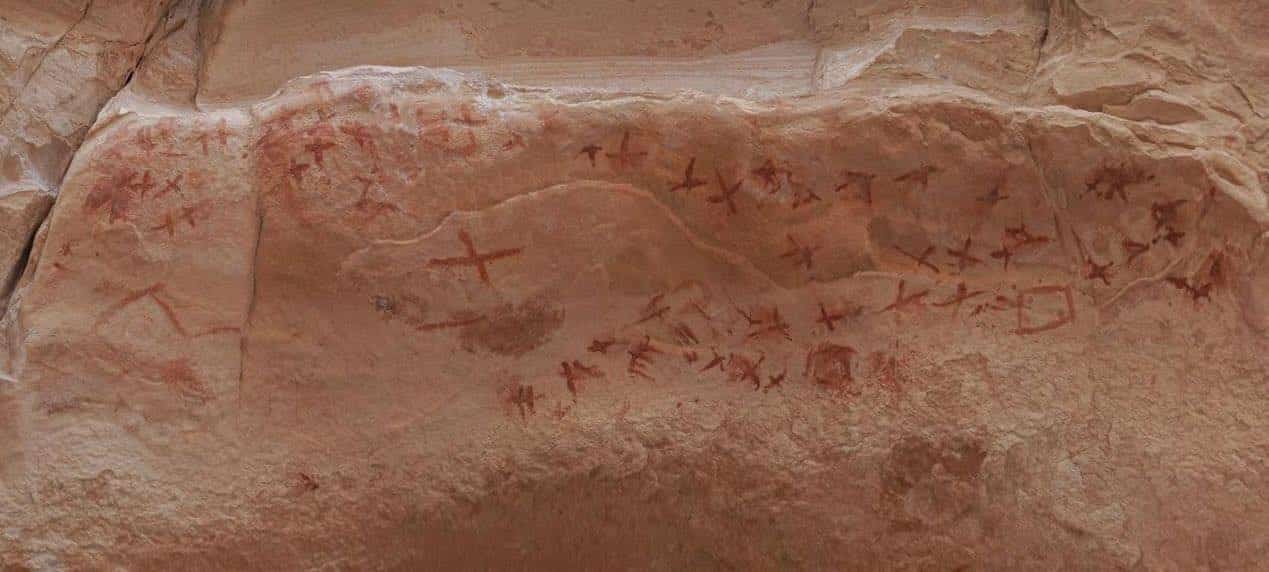
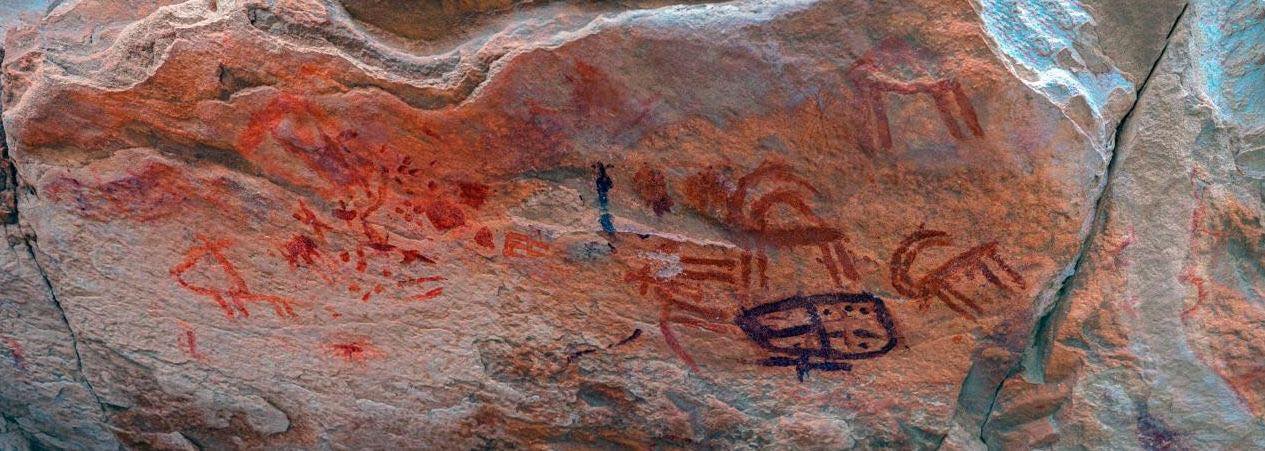
The most striking finds are extensive rock paintings and carvings spread across a natural sandstone rock shelter on the eastern side of the plateau.
The shelter extends for more than 100 meters (328 feet) and contains a large number of paintings executed in red pigment on its ceiling. These images depict animals and symbolic forms that researchers have tentatively dated to between about 10,000 and 5,500 BC.
Archaeologists also documented a separate group of drawings made in gray pigment, recorded for the first time at the site. In addition, shallow relief engravings show scenes of hunters using bows to pursue ibex, accompanied by hunting dogs. Researchers say these images reflect the daily life, skills, and economic activities of early human communities.
Evidence of long-term occupation and daily life
Inside the rock shelter, archaeologists found clear signs of repeated human use. Stone partitions divide parts of the shelter into separate living spaces. At the center of several of these areas, researchers identified traces of fire layers, indicating regular habitation over long periods.
Large quantities of animal droppings were also documented, suggesting that the shelter was later used to house both people and livestock. Experts say the space likely provided protection from rain, strong winds, and cold weather, showing how natural formations were adapted for survival.
Tools, pottery, and inscriptions span thousands of years
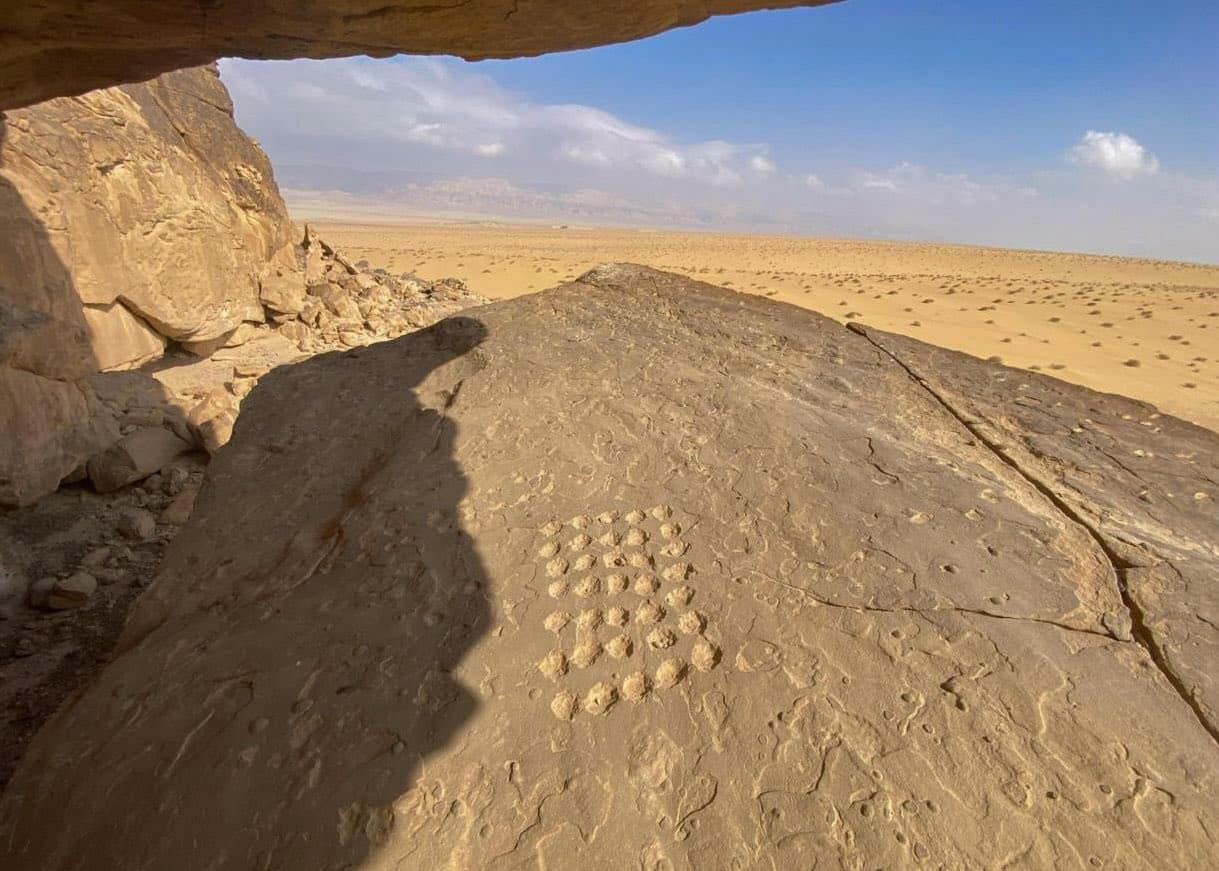
Survey work across the plateau uncovered flint tools and large numbers of pottery sherds. Some of the pottery dates to Egypt’s Middle Kingdom, while other fragments belong to the Roman period, including examples from the third century AD. These finds confirm that the site remained in use across multiple historical eras.
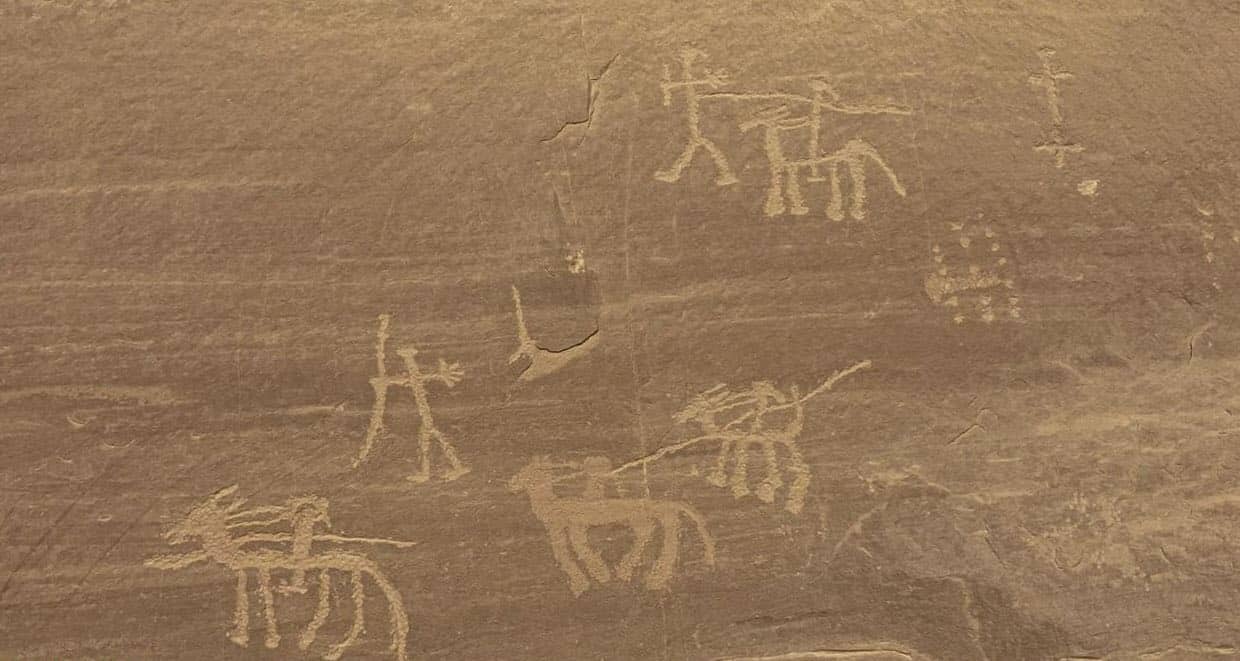
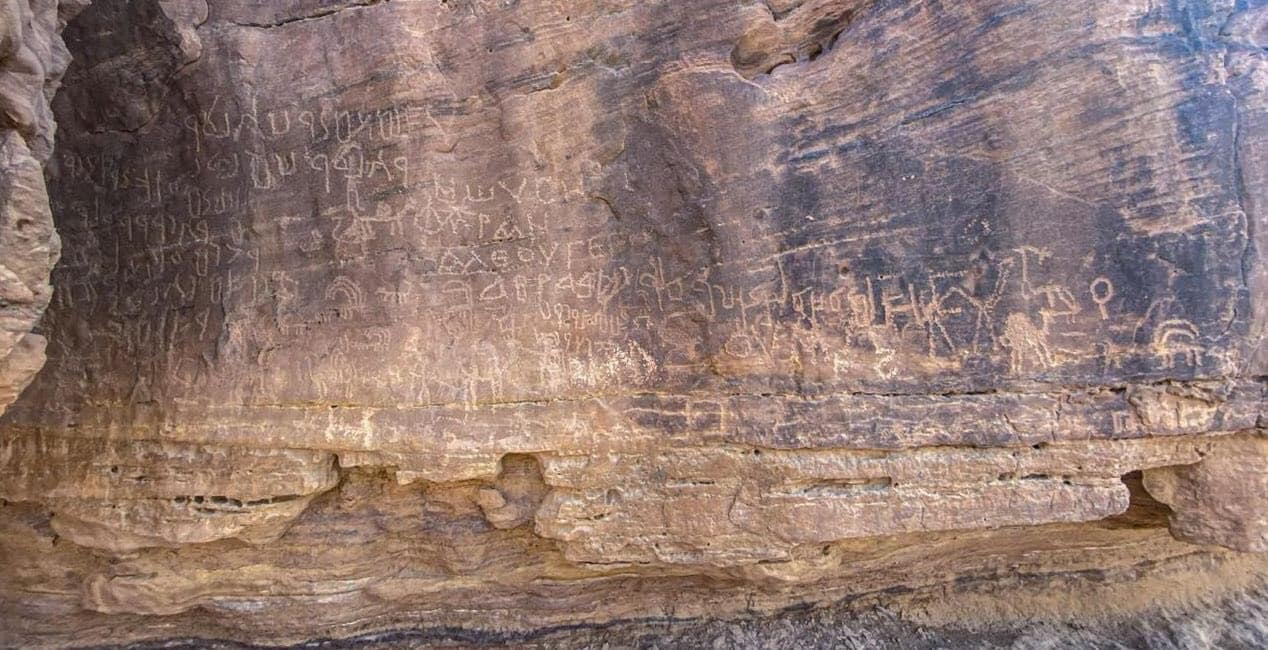
Later carvings depict camels and horses, some ridden by armed figures. Several of these scenes appear alongside Nabataean inscriptions, pointing to periods of trade, travel, and cultural interaction in the region. Archaeologists also documented Arabic inscriptions, providing evidence of continued use during the early Islamic periods and beyond.
Strategic plateau near ancient mining routes
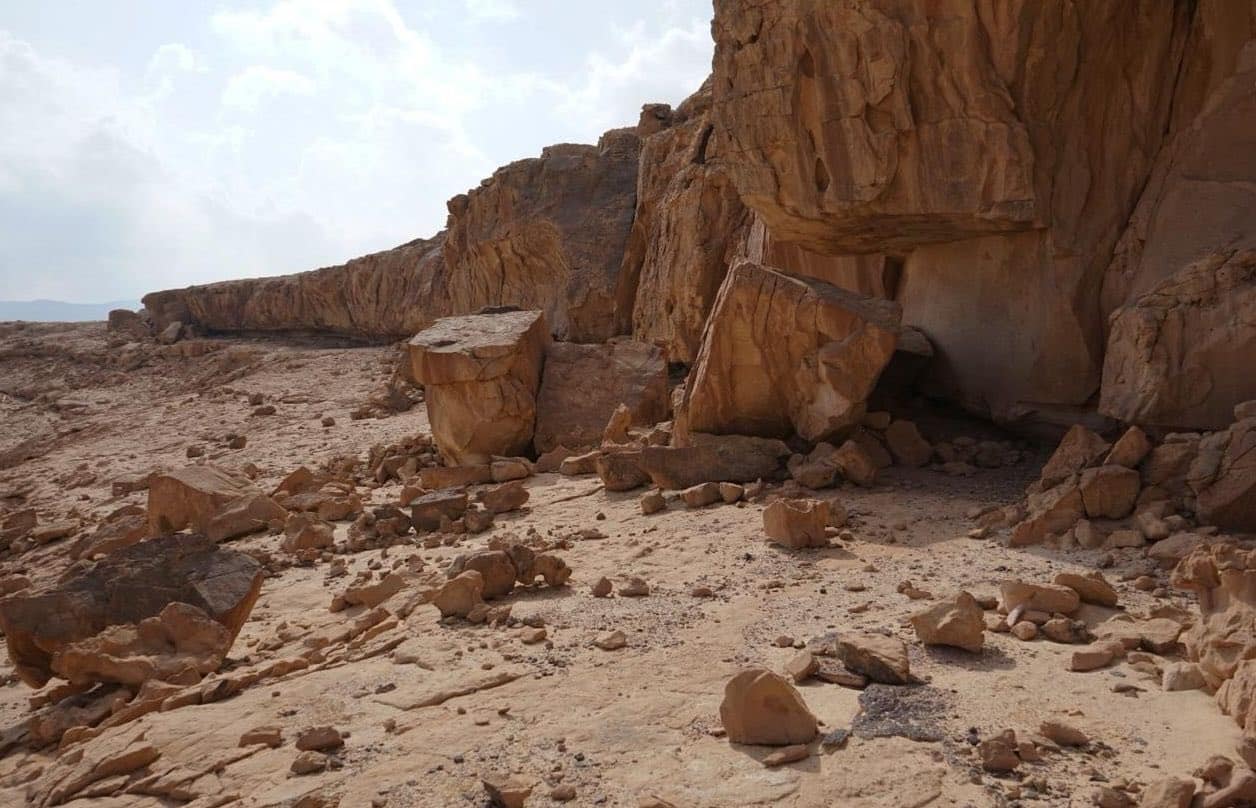
The Um ‘Irak Plateau lies in a sandy area about 5 kilometers (3 miles) northeast of the Temple of Serabit el-Khadim and nearby ancient copper and turquoise mining zones. Its elevated position overlooks a wide open area stretching north toward the Tih Plateau.
Researchers believe the plateau served multiple roles over time, including as a lookout point, a gathering place, and a rest stop for people moving through the region.
Officials highlight scientific and cultural importance
Sherif Fathy said the discovery represents a major addition to Egypt’s archaeological record and strengthens understanding of Sinai’s role as a crossroads of civilizations. He added that such discoveries also enhance Egypt’s position on the global cultural tourism map.
Hisham El-Leithy, secretary-general of the Supreme Council of Antiquities, described the plateau as one of the most important rock art sites identified in recent years. He said the wide range of artistic styles and inscriptions turns the site into an open-air museum documenting the evolution of human expression from prehistoric times through the Islamic periods.
Local cooperation and future research
Mohamed Abdel-Badei said the discovery is part of ongoing efforts to survey and document rock art across South Sinai, carried out with support from residents of the Serabit el-Khadim area. He said community involvement plays a key role in protecting cultural heritage.
Researchers say further scientific analysis is underway to refine dating, study artistic techniques, and develop a long-term plan for preserving and documenting the Um ‘Irak Plateau.