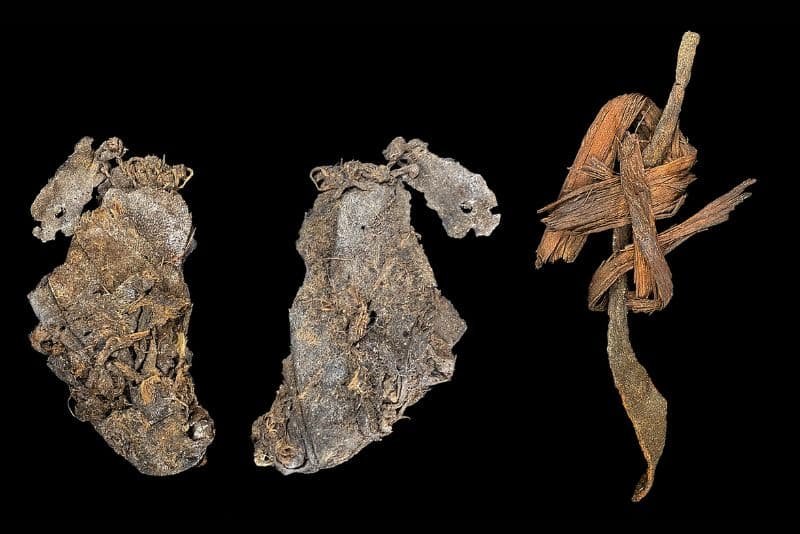
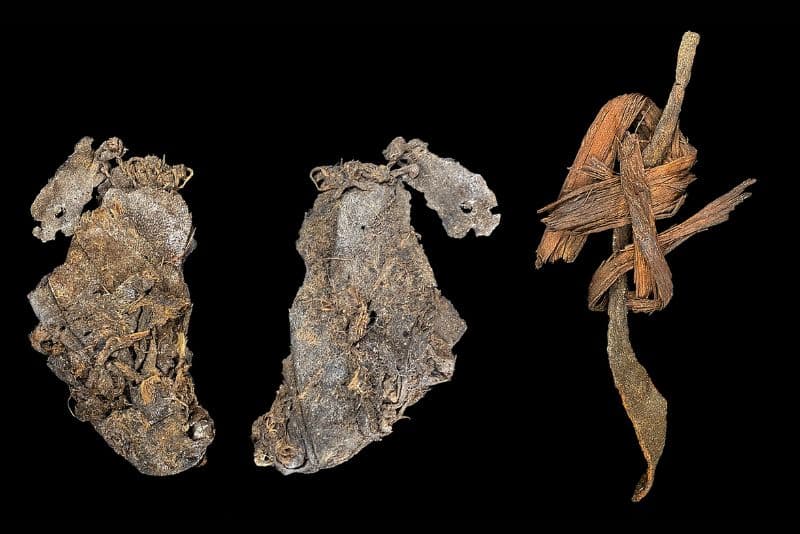
Archaeologists have identified what may be the world’s oldest known sewn animal hide among a collection of Ice Age artifacts discovered in caves in central Oregon, according to a new study. The finds date back approximately 12,000 years and originate primarily from Cougar Mountain Cave and the nearby Paisley Caves, researchers said.
The discoveries offer rare physical evidence that early communities in the region used advanced sewing and fiber technologies near the end of the last Ice Age.
Evidence of early sewing technology
The study analyzed 55 artifacts recovered from cave and rockshelter sites in the western United States. While some material originated from Nevada, researchers stated that the strongest and most complete evidence of early sewing technology was preserved at the Oregon sites.
The artifacts include hide fragments showing clear signs of stitching and bone needles with carefully shaped eyes. Together, they point to fitted clothing made using deliberate and skilled techniques far earlier than previously documented in the region. The findings were published in Science Advances.
Dating places artifacts at the end of the Ice Age
Radiocarbon testing shows the artifacts date to between about 11,700 and 12,900 years ago. That period followed a brief warming phase, when colder Ice Age conditions returned to much of North America, researchers said.
Long research history at the Oregon cave sites
Cougar Mountain Cave was first excavated in 1958 by amateur archaeologist John Cowles. The artifacts examined in the new study come from Cowles’ original collection and are now housed at the Favell Museum.
The nearby Paisley Caves, also known as the Paisley Five Mile Point Caves, were first studied by archaeologist Luther Cressman in the 1930s. The site later became central to research on early human occupation in North America and was added to the U.S. National Register of Historic Places in 2014.
Sewn elk hide offers rare physical proof
Researchers said the most remarkable artifact is a fragment of elk hide with a thread sewn through its edge. The thread connects the main hide piece to a smaller fragment tied with a knot, providing rare, direct evidence of sewn clothing from the Ice Age.
Chemical analysis confirmed the hide came from a North American elk. Researchers dated the material three separate times, each confirming an age of roughly 12,000 years.
The thread itself was made by twisting plant fibers together with animal hair, a process that reflects careful material selection and skilled workmanship, researchers said.
Bone needles made from bison and sheep
The study also examined 14 bone needles recovered from four sites. Analysis showed the needles were carved from the bones of bison and mountain sheep, animals common in Ice Age environments across the region.
Such tools are extremely rare. According to the study, only 17 archaeological sites in North America have yielded bone needles from the Pleistocene, or Ice Age. No comparable examples have been documented in South America.
Oregon caves preserve rare organic materials
The two Oregon caves hold an unusually large share of preserved Ice Age organic material. Together, they contain about 80% of all radiocarbon-dated plant and animal remains from the Ice Age found anywhere in North or South America.
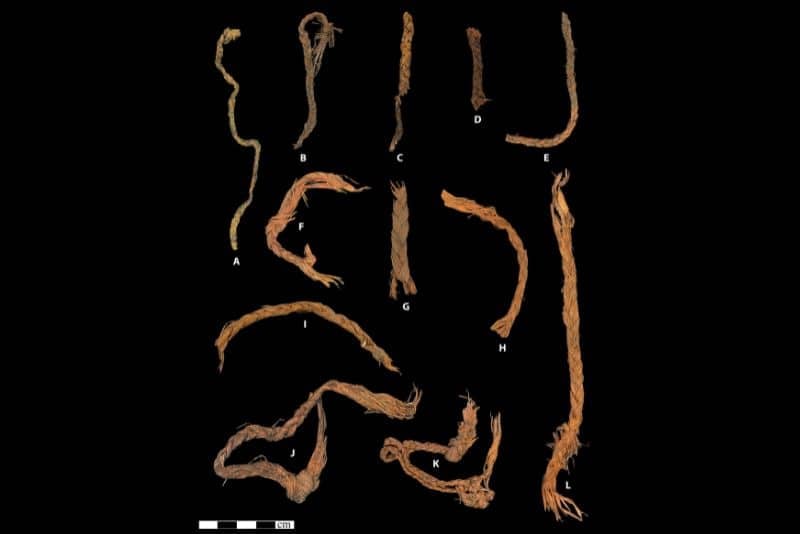
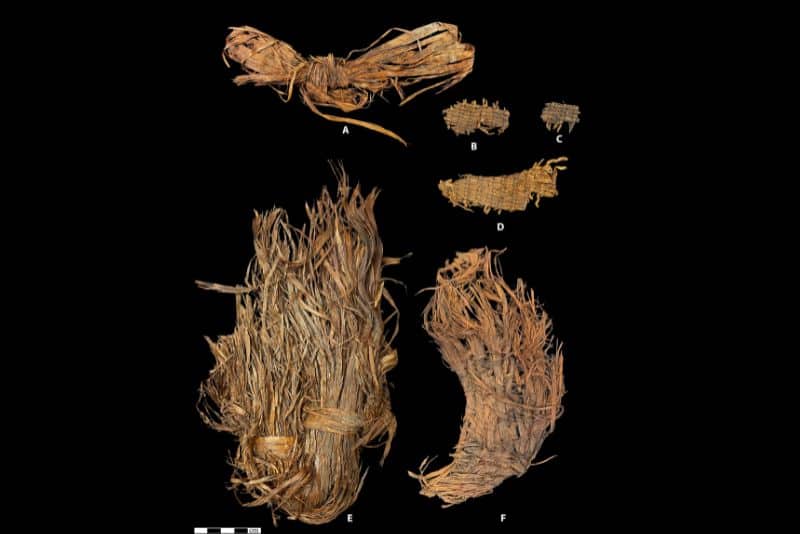
At Cougar Mountain Cave alone, researchers identified 23 fiber artifacts, 12 wooden tools, and three pieces of animal hide. Most of the fiber artifacts consist of three-strand braided rope made from sagebrush bark. Fragments of tightly woven basketry were also recovered, representing the oldest known evidence of basket-making in the Western Hemisphere.
Tools and animal remains show daily life
Stone tools were found alongside the organic remains. Researchers documented 79 stone spear points, many of which had been resharpened multiple times. Animal bones from bison, elk, and rabbits point to hunting and food processing activities at the sites.
Clothing served social and cultural roles
Researchers said the abundance of bone needles, along with finely stitched hides and decorative items, suggests clothing served more than a practical purpose.
The evidence indicates that Ice Age clothing also functioned as a form of expression and social identity. Researchers said the findings challenge long-held assumptions, confirming that people living in Oregon at the end of the Ice Age used clothing both as survival technology and as part of their cultural lives.