Scientists have used artificial intelligence to reconstruct rules of a long-forgotten Roman board game that was likely played, offering new insight into everyday life in the ancient world and pushing the origins of a known game type back by centuries.
The discovery centers on a carved limestone object identified in 2020 by archaeologist Walter Crist while examining items held by the Thermenmuseum, now known as the Roman Museum.
An unusual stone from a Roman settlement
Museum records show the stone was recovered from the Heerlen area in the late 19th or early 20th century. The location once formed part of Coriovallum, an important Roman settlement along the empire’s northern frontier.
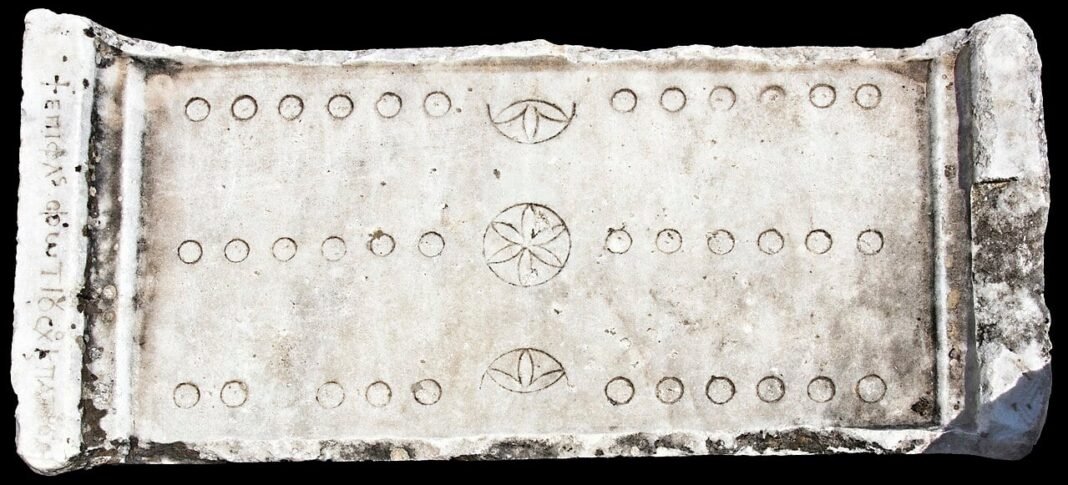
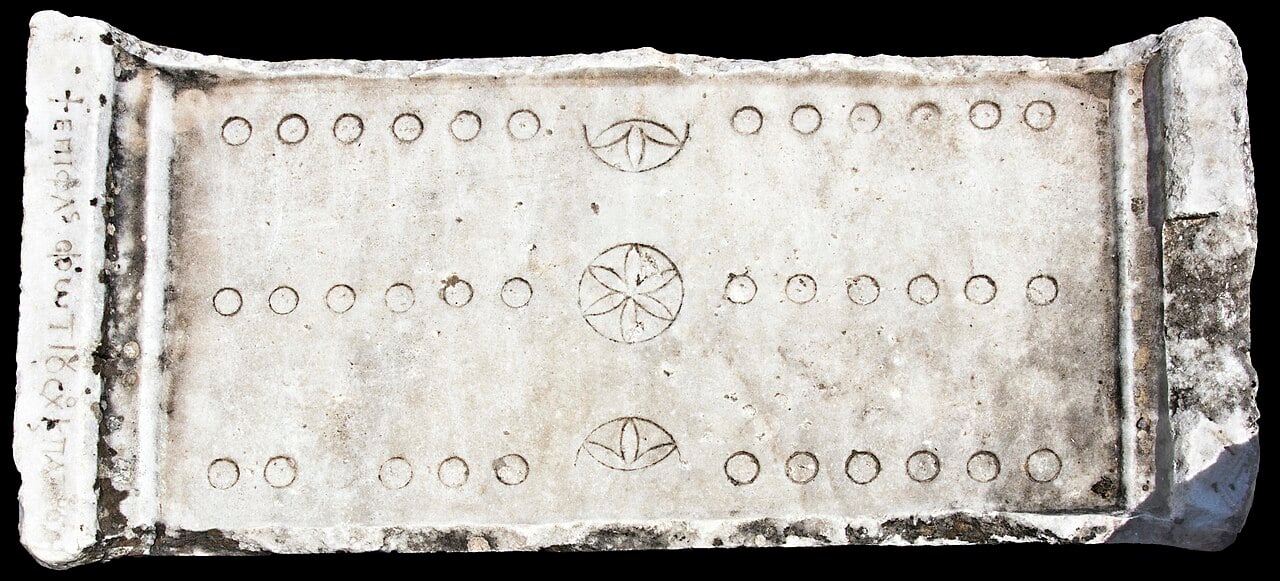
The limestone piece measures about 21 by 14.5 centimeters (8.3 by 5.7 inches). Its surface is carved with a rectangle crossed by four diagonal lines and a single straight line. The design resembles a game board, but it does not match any known Roman or ancient examples.
Scientists have used AI to unlock the rules of a long-lost Roman board game. Wear patterns on a carved stone and simulated gameplay suggest it was a blocking game—played centuries earlier than previously thought. pic.twitter.com/iiDToAvg71
— Tom Marvolo Riddle (@tom_riddle2025) February 10, 2026
Crist, who specializes in ancient games, said the unfamiliar pattern immediately stood out. Researchers say the layout hinted at a gaming practice that had gone undocumented or vanished from historical records.
Wear patterns point to repeated gameplay
Microscopic examination provided the first strong clues. Crist identified clear wear along the carved lines, concentrated in areas where a player’s piece would likely slide. The pattern suggested repeated use rather than accidental damage.
Further analysis came from high-resolution 3D scans produced by the Heerlen-based restoration studio Restaura. The scans revealed subtle differences in wear depth. Some grooves were worn slightly deeper than others, in some cases by only fractions of a millimeter.
Researchers say this uneven wear indicates that certain paths on the board were used more frequently during play. The scans also showed carefully finished edges, confirming the stone was a completed object rather than an unfinished piece.
Based on carving style and wear patterns, researchers estimate the stone was made and used between about 1,700 and 1,500 years ago, during the late Roman period.
AI simulations test ancient game rules
To determine how the game may have been played, researchers from institutes in the Netherlands, Belgium, and Australia turned to artificial intelligence. Their findings were published in the academic journal Antiquity.
The team used an AI-driven gaming system called Ludii, developed at Maastricht University. The platform allows researchers to test rules from historically documented board games on specific board layouts. Two AI players competed against each other using the carved stone as the playing surface.
After testing numerous rule sets from ancient European games, the simulations produced a consistent result. The wear patterns best matched a blocking game, in which the objective is to prevent an opponent from making any legal moves.
A game centuries older than expected
The results surprised researchers. Blocking games are only known from historical sources dating to the Middle Ages. Crist said the findings suggest this type of game was being played several centuries earlier than previously believed.
The study indicates the stone functioned as a board game in Roman times and challenges existing assumptions about when certain game traditions emerged in Europe.
A new tool for identifying ancient games
Crist said the study marks the first time AI-driven game simulations have been combined with archaeological analysis to identify the rules of an ancient board game. He said the approach gives archaeologists new tools to recognize games from past cultures, even when written evidence is absent.
The research was carried out as part of the ERC Digital Ludeme Project. Crist worked on the early stages of the project at Maastricht University and completed the research at Leiden University.
Researchers say combining artificial intelligence with traditional archaeology could transform how ancient games are studied, offering rare insight into how people spent their free time in the Roman world.