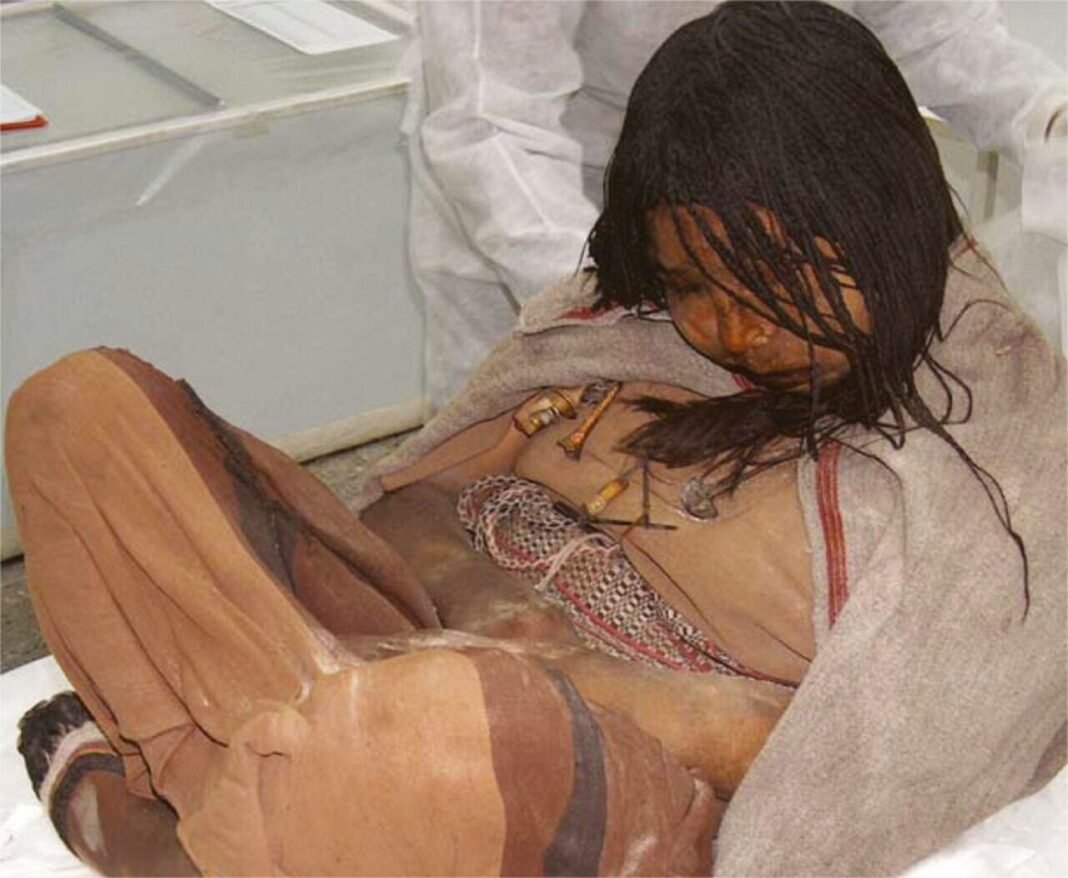
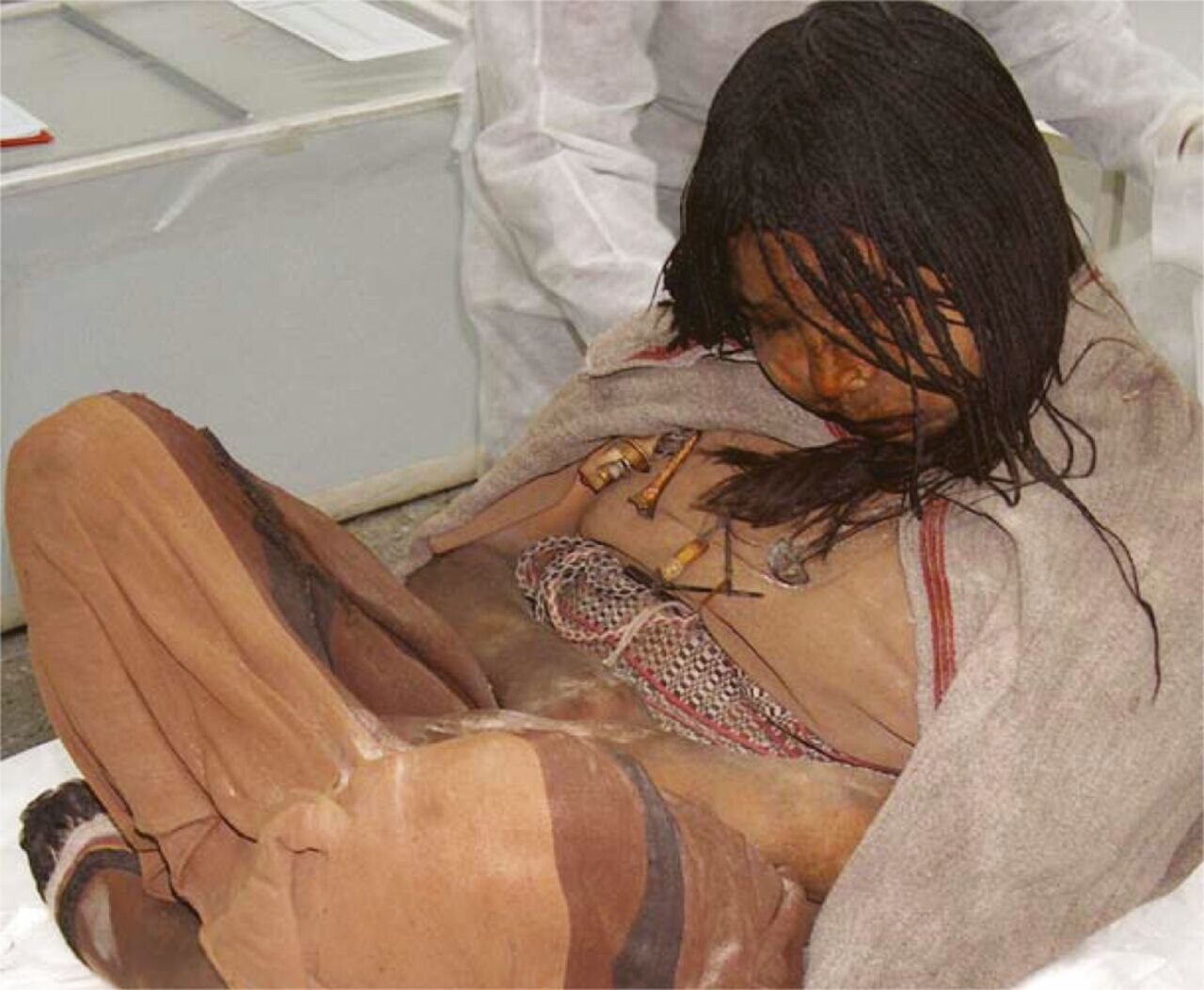
Archaeologists have uncovered the first clear case of deliberate mummification of a child as part of an Inca sacrificial ceremony, marking a major breakthrough in the study of the ancient empire’s burial practices.
The finding, based on CT scans of four naturally preserved children, offers strong evidence that Inca communities prepared the body of at least one young girl with intention and care before placing her on a high-altitude volcano.
The bodies were recovered from the peaks of Ampato and Sara Sara in southern Peru. While past discoveries suggested natural preservation due to freezing temperatures, researchers now believe one child’s remains show purposeful postmortem treatment consistent with deliberate mummification.
Scans reveal trauma and disease in sacrificed children
All four children had been sacrificed in a ritual known as capacocha, one of the Inca Empire’s most sacred state ceremonies. The work was conducted as part of an international project led by Dagmara Socha of the University of Warsaw and published in the Journal of Archaeological Science: Reports.
Scans revealed that all four children suffered fatal head trauma. One, an eight-year-old girl, had an intracranial hematoma and showed signs of Chagas disease, including an enlarged esophagus and lung calcium deposits.
These findings challenge earlier beliefs that only healthy children were selected for sacrifice, an idea rooted in colonial-era Spanish accounts.
The well-known mummy known as the Lady of Ampato, or Juanita, also showed severe internal injuries. Scans detected damage not only to the skull, but also to the chest and pelvis.
Several remains displayed signs of lightning strikes after burial, a common risk on exposed volcanic slopes. These strikes fractured bones and charred burial wrappings.
Unusual treatment of Inca child suggests deliberate mummification
Among the most unusual findings was a child labeled Ampato 4. Her CT scans revealed missing bones and internal rearrangement, with stones and fabric fragments placed inside her abdominal cavity.
Researchers said this pattern did not match natural decay. Socha explained that the treatment appeared deliberate and likely occurred after death, possibly at another location, before the final burial.
The altered condition of Ampato 4 aligns with documented Inca practices of forced resettlement, known as mitimaes, where communities relocated across the empire with sacred items, including mummies. In this context, the child’s body may have played an ongoing ceremonial role rather than serving only as a burial.
New evidence of internal modification and secondary burial suggests that sacrificed children remained active elements in state rituals. Their placement on remote summits reinforced imperial presence and spiritual control.
Fieldwork on Andean peaks resumed in 2024 with support from the Polish National Science Centre, with further analysis planned on preserved tissue, textiles and offerings.