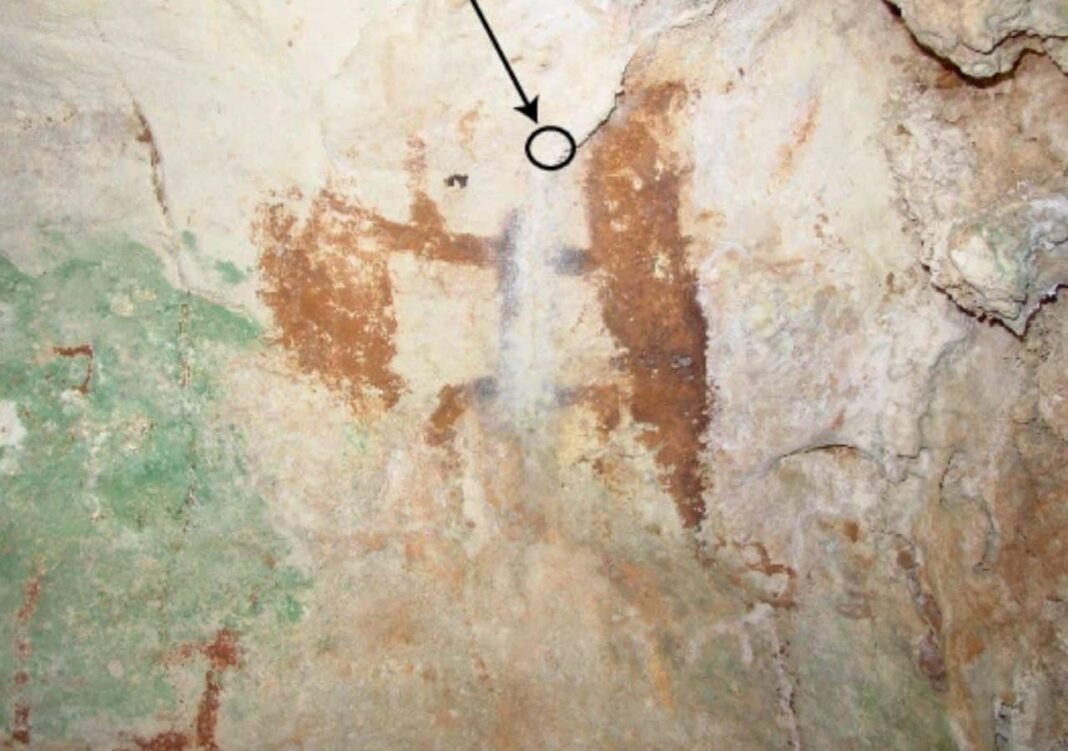
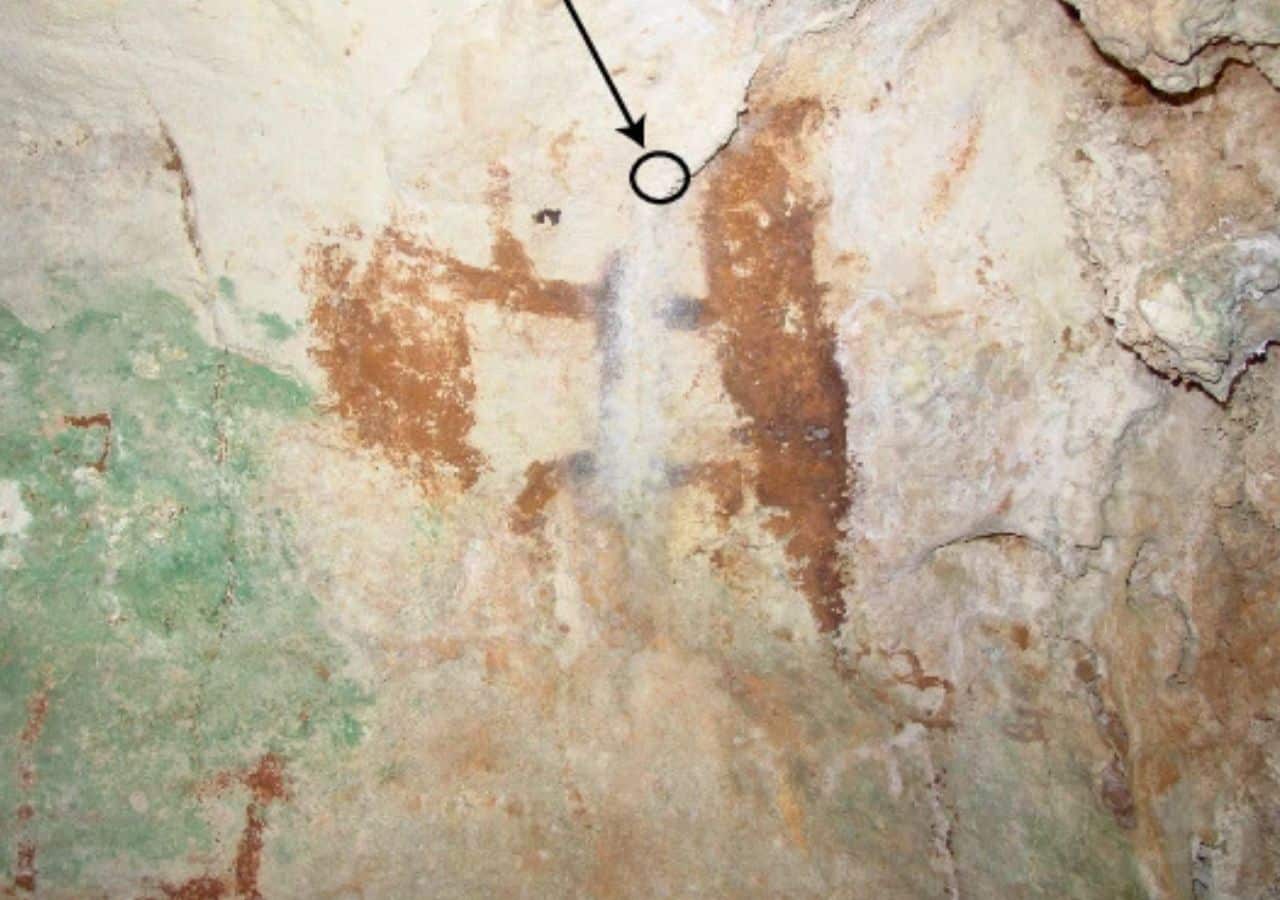
A prehistoric hand stencil found in a cave on Indonesia’s Sulawesi island has been identified as the world’s oldest rock art, shifting the timeline of human creativity and movement across the region. The artwork, created at least 67,800 years ago, predates earlier findings in the same area by more than 15,000 years and supports the theory that early humans traveled through Sulawesi before reaching Australia.
An international team of researchers from Griffith University, Indonesia’s national research agency BRIN, and Southern Cross University made the discovery in the limestone cave of Liang Metanduno on Muna, a smaller island off southeastern Sulawesi.
The team used uranium-series dating to analyze mineral deposits that had formed above and beneath the paintings. The method provided a reliable estimate of when the art was created.
Unique cave find points to ancient artistic tradition
The stencil, a partial handprint, was found near other paintings of more recent origin. Researchers noted that it had been deliberately altered to narrow the finger outlines, giving it a claw-like shape.
Archaeologist and geochemist Maxime Aubert from Griffith University explained that this form is unlike any previously recorded hand stencil globally and reflects a unique artistic tradition.
Archaeologists have uncovered the world’s oldest rock art in Indonesia, dating back 67,800 years. The find offers new insight into early human migration to Australia.#Archaeology #RockArt #HumanHistory #Sulawesi #AncientArt pic.twitter.com/mXS2PIUU5M
— Tom Marvolo Riddle (@tom_riddle2025) January 21, 2026
The study, published in Nature, presents new evidence that Sulawesi was not only home to early modern humans but also supported one of the most enduring artistic cultures on record.
The same cave appears to have been used for artistic expression over a period of at least 35,000 years, with painting activity continuing until around 20,000 years ago.
Exploring the meaning behind the art
Professor Adam Brumm from Griffith University said the meaning behind the claw-shaped hand remains unclear but may point to early symbolic thinking, possibly connecting humans with animals. He noted that other ancient images in the region show figures with both human and animal features.
Rock art specialist Dr. Adhi Agus Oktaviana from BRIN said the findings offer significant insight into the early cultural history of Indigenous Australians.
He explained that the group responsible for these paintings was likely part of a population that spread across the region and eventually reached the Australian continent.
Tracing migration through the world’s oldest rock art
Oktaviana added that the evidence supports the long-standing theory that humans arrived in Sahul, the ancient landmass combining Australia, New Guinea, and Tasmania, at least 65,000 years ago.
Two possible migration paths have been proposed: a northern route through Sulawesi and the Spice Islands toward New Guinea, and a southern path via Timor.
Professor Renaud Joannes-Boyau from Southern Cross University emphasized that this discovery marks the oldest direct evidence of humans traveling the northern corridor into Sahul.
The research is also featured in the European documentary Sulawesi: The Island of the First Images, produced by ARTE.