A mosaic unearthed on a Rutland farm has revealed a rare Roman depiction of a lost story from the Trojan War, a scene never before recorded in Britain. Archaeologists say the discovery, made during a family’s lockdown walk, is one of the most significant finds in a century and offers new insight into how classical myth circulated at the far edges of the Roman Empire.
The find began when the landowner’s son spotted pottery, tiles, and oyster shells scattered in one area of a field. Satellite imagery showed the outline of a large Roman building with an apsidal end. A small test excavation revealed the edge of a mosaic floor instead of the expected wall. Local officials were notified, and a formal investigation began.
A dining room floor that tells a forgotten tale
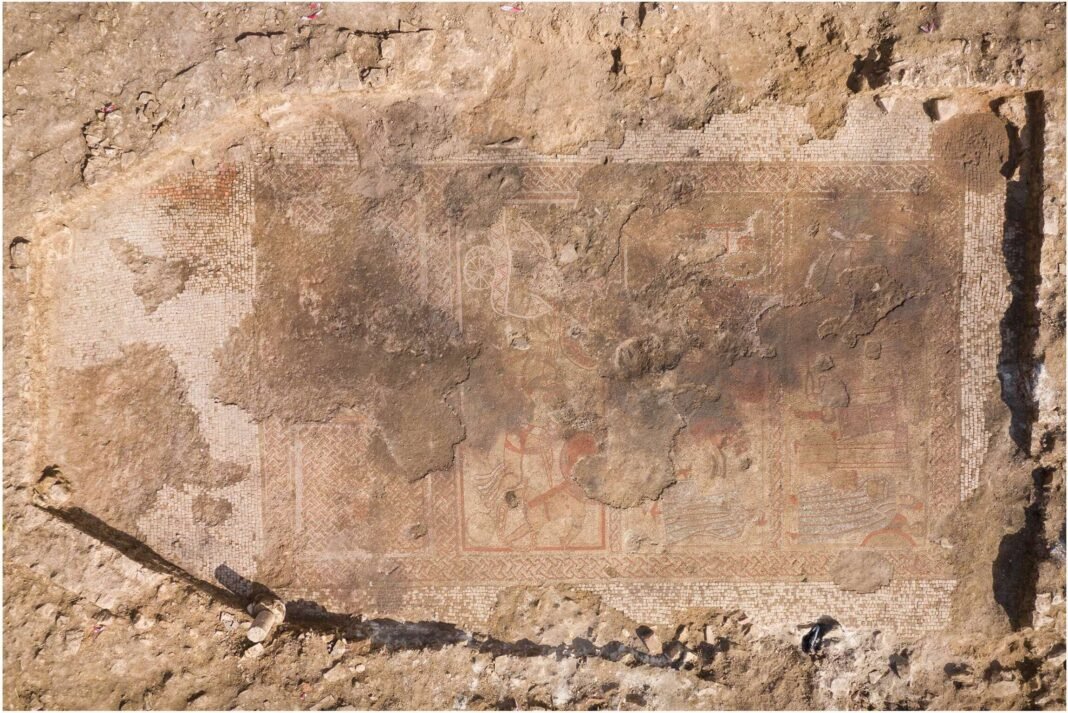
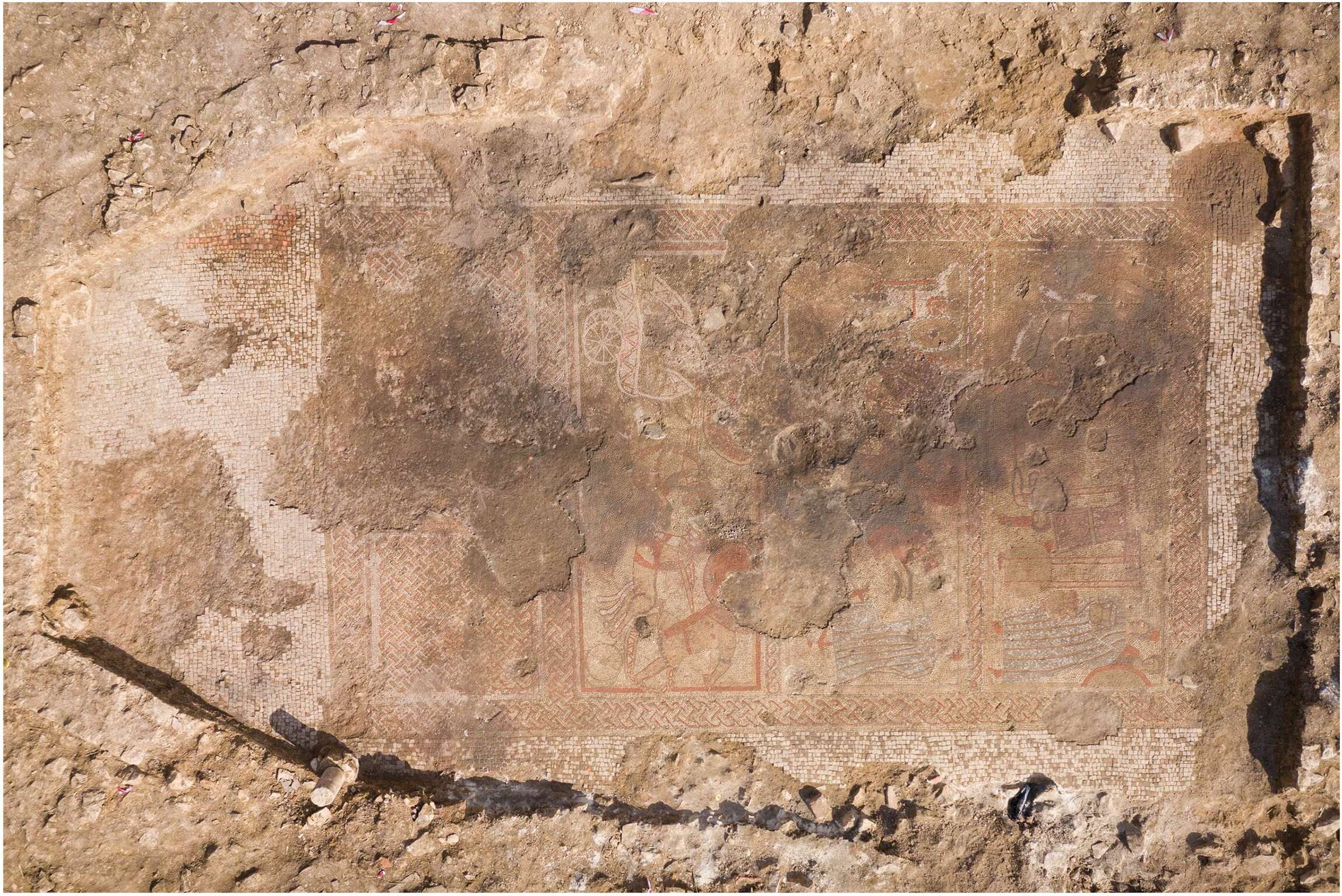
Archaeologists from the University of Leicester later uncovered the full mosaic. They found a 10-meter (32.8 feet) pavement laid inside what appears to have been a triclinium, the villa’s dining room. Instead of the geometric patterns common in Britain, the floor displayed a sequence of framed panels resembling illustrated pages.
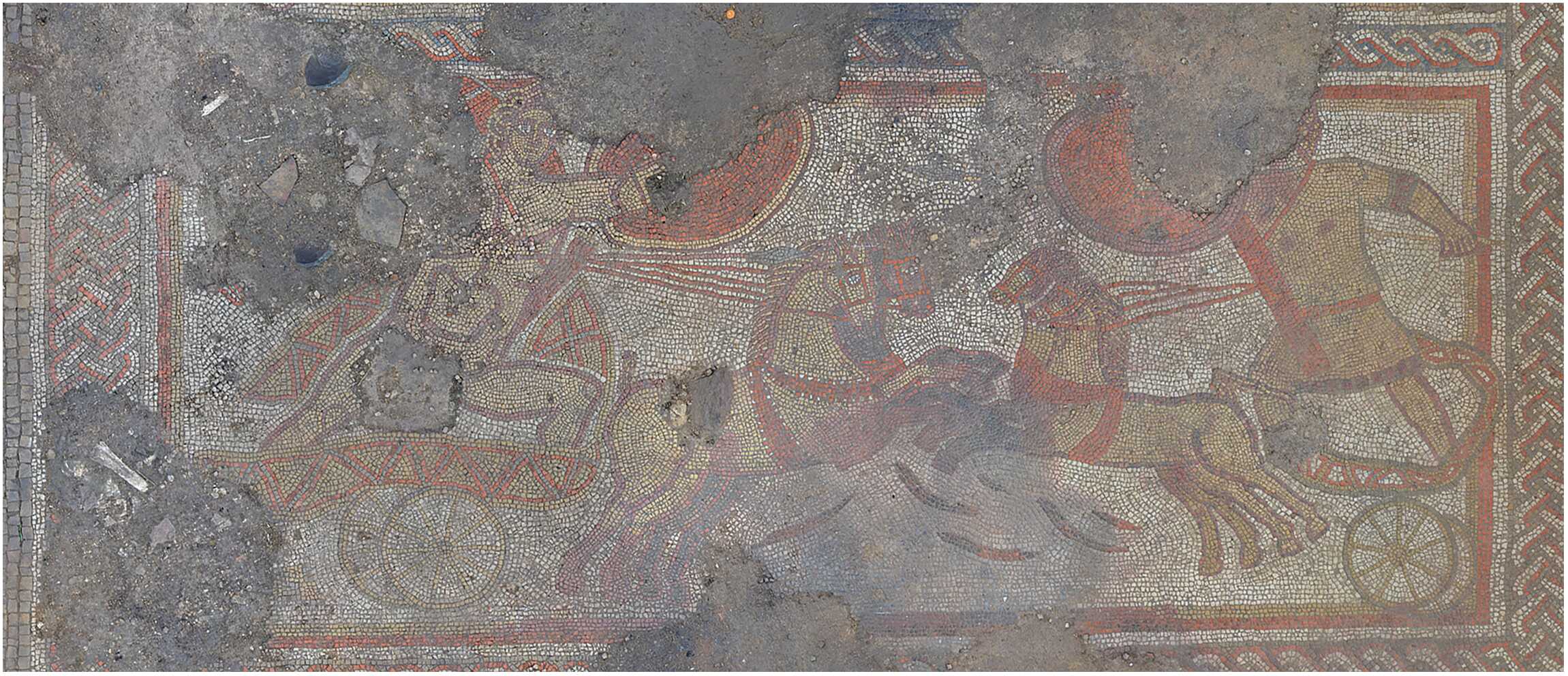
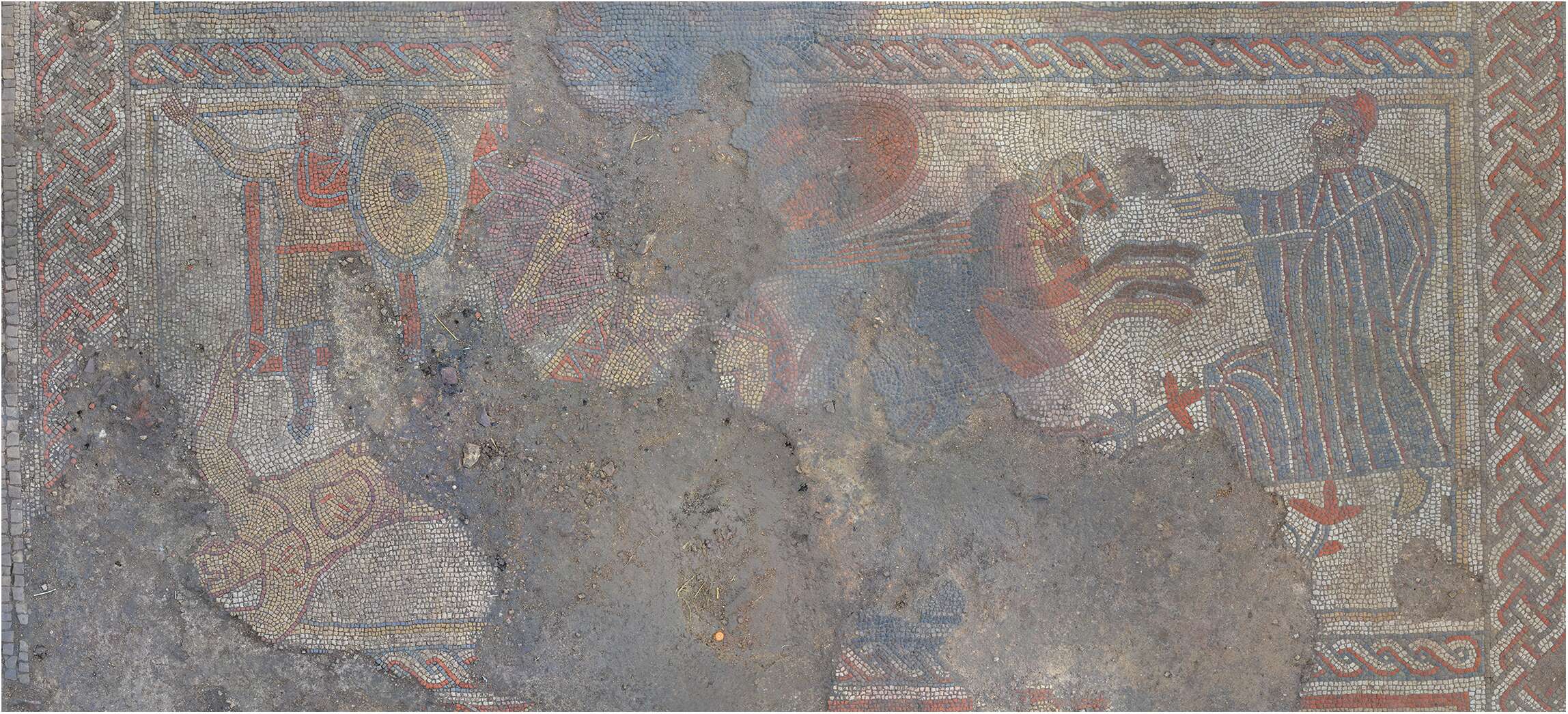
The lower panel shows Achilles and Hector charging each other on chariots. That scene does not appear in Homer’s “Iliad,” where the duel takes place on foot. The panel above shows Achilles dragging Hector’s body, but with a telling detail: a snake rises beneath the horses. In early Greek art, a serpent at this moment signals the tomb of Patroclus, where Achilles carried out the act. Later versions moved the scene to the walls of Troy. The mosaic preserves the older tradition.
A rare depiction of Hector’s ransom
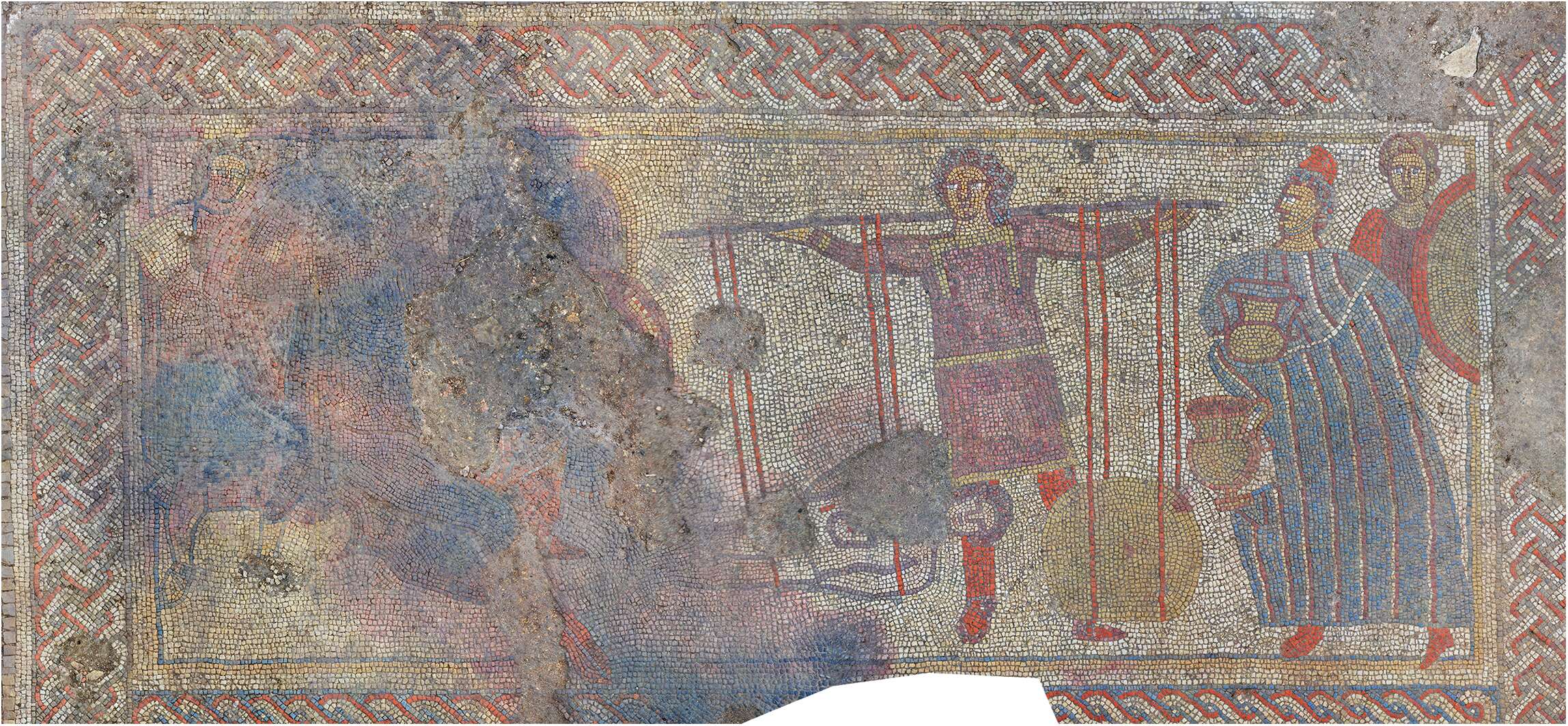
The top panel contains the image that stunned researchers. A set of weighing scales balances Hector’s corpse against a pile of gold while Priam approaches with vessels for the ransom. This motif does not appear in Homer. Instead, it belongs to a lost tragedy by Aeschylus known as “Phrygians” or “The Ransom of Hector.” Ancient scholars described the weighing scene, but visual evidence in Britain had never been found until now.
The mosaicist blended several artistic traditions. Some details resemble Attic vase painting from the fifth century B.C., while others mirror images found on Roman provincial coins. The combination suggests that myths traveled through the empire not only through books but also through a long chain of shared visual patterns.
A villa connected to distant cultural networks
Geophysical surveys later revealed that the mosaic belonged to a large villa complex with aisled halls, possible bathhouses, and outbuildings arranged around a central courtyard. The complex stood on a slope overlooking the River Chater. Pottery and coins indicate that the mosaic was laid in the late fourth century A.D. Activity continued in the building after the floor went out of use.
The British government has designated the site as a Scheduled Monument. Researchers are now studying the material and preparing a full publication. Plans are underway to exhibit images and finds at the Rutland County Museum.
Evidence of Greek influence at the edge of Rome
The mosaic gives a rare look at cultural life in late Roman Britain. Its subject — a sophisticated Greek myth told in a non-Homeric form — shows that elite households in the region still engaged with classical literature and its visual language. The choice of narrative, especially the weighing of Hector, reflects a version of the Trojan War preserved mainly through early tragedy rather than epic.
The Rutland mosaic also reveals how ancient stories moved across centuries and borders. Its panels combine details from early Greek art, imperial coin imagery, and late Roman design. The result is a visual record of a story that survived long after its original text was lost.
Archaeologists say the mosaic is more than decoration. It preserves a rare cultural thread — a forgotten narrative stitched together from distant artistic traditions, rediscovered in a field in the East Midlands after a family stepped outside for fresh air during lockdown.