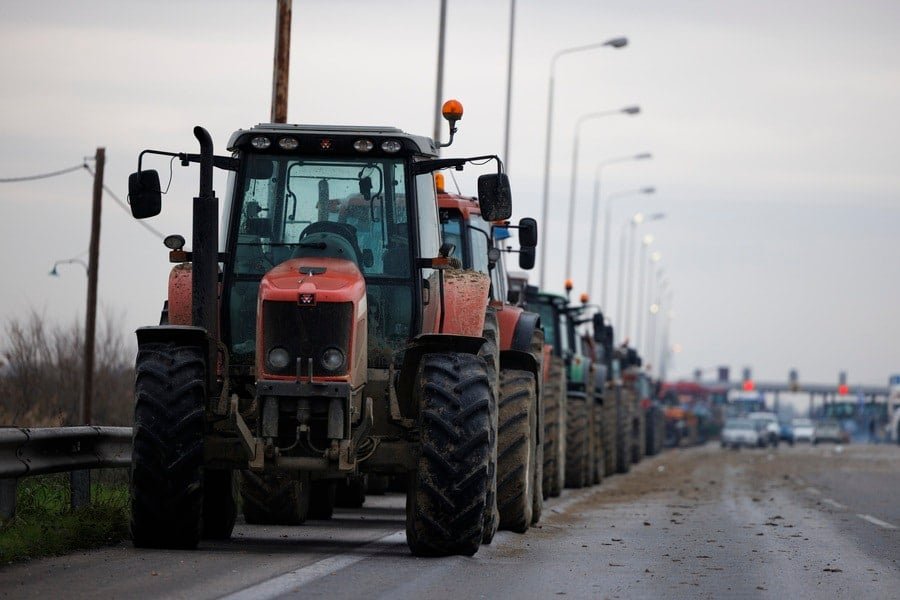
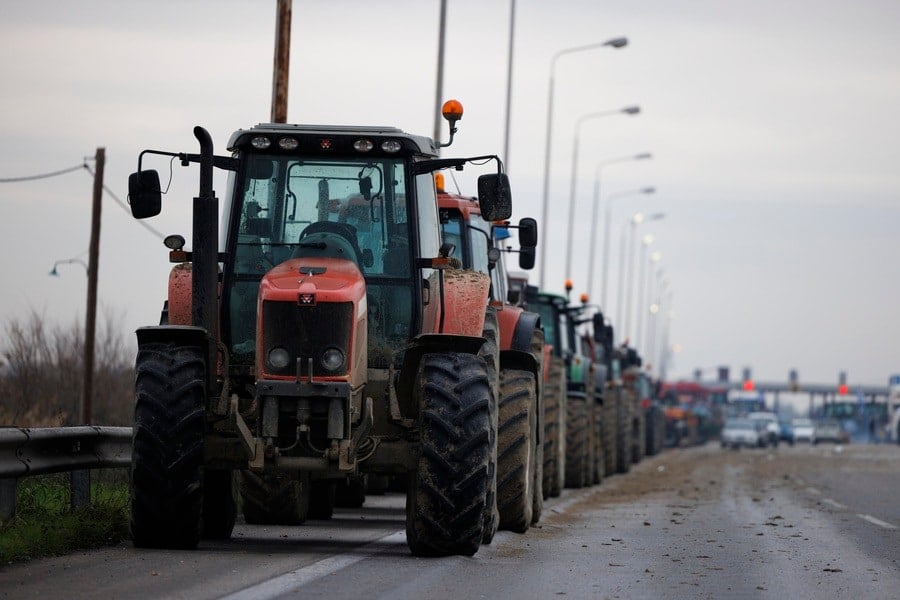
Protesting Greek farmers dramatically escalated their actions on Wednesday, heading to the Promachonas border crossing between Greece and Bulgaria to stage a major blockade. This action comes despite a direct call from Prime Minister Kyriakos Mitsotakis against “extreme actions.”
Farmers, livestock breeders, and beekeepers from the northern Serres region successfully bypassed a police blockade at the Lefkonas intersection on the A25 highway by driving their vehicles across fields, making their way toward the strategic customs office at Promachonas.
The protests center on delayed European Union subsidy payments, which have been held up amid an investigation into the corruption scandal affecting the agricultural sector. Farmers are expected to meet later today to decide on further protest actions.
Greek PM appeals to farmers
Earlier on Wednesday, Prime Minister Mitsotakis appealed for restraint and highlighted the government’s commitment to farmers, arguing that the protest measures are counterproductive.
Mitsotakis stated:
“Extreme actions, prolonged closures of national roads, closures of customs offices, closures of airports—these are actions that do not help.”
He then focused on presenting the “bigger picture,” emphasizing a major increase in financial support for the agricultural sector in the coming year.
The Prime Minister projected that total payments for farmers in 2025 will rise by over €500 million compared with 2024, increasing from €3.1 billion to €3.7 billion. He added that the ambition is to pay out €1.2 billion in aid by the end of December.
The justification for payment delays
Mitsotakis acknowledged the farmers’ dissatisfaction but firmly defended the delays, linking them directly to the ongoing efforts to combat fraud and ensure integrity in subsidy distribution:
“I fully understand the dissatisfaction of farmers who have seen some delays in payments. On the other hand, we must constantly remind ourselves that, compared to 2024, farmers will collectively see over half a billion more paid out to them.”
He stressed a clear distinction between the majority of honest producers and those implicated in fraud:
“I do not think there is anyone who wants those who have been identified with false declarations or are already being prosecuted by the courts to be paid and rewarded. Therefore, I absolutely differentiate between those farmers and livestock breeders who may not have been paid yet because cross-checks are being carried out, and those who will not be paid simply because, as a result of the controls, they are not entitled to the subsidy which they may have received in the past or which they imagine they will continue to receive.”
Related: Greece Faces Wave of High-Profile Corruption Scandals in 2025