The ancient Greek city of Argilos, a crucial but often overlooked player in the history of Macedonia, continues to unlock its secrets.
A recent excavation season, which concluded in 2025, provided archaeologists with significant insights into the city’s domestic life and commercial structure just before its eventual downfall.
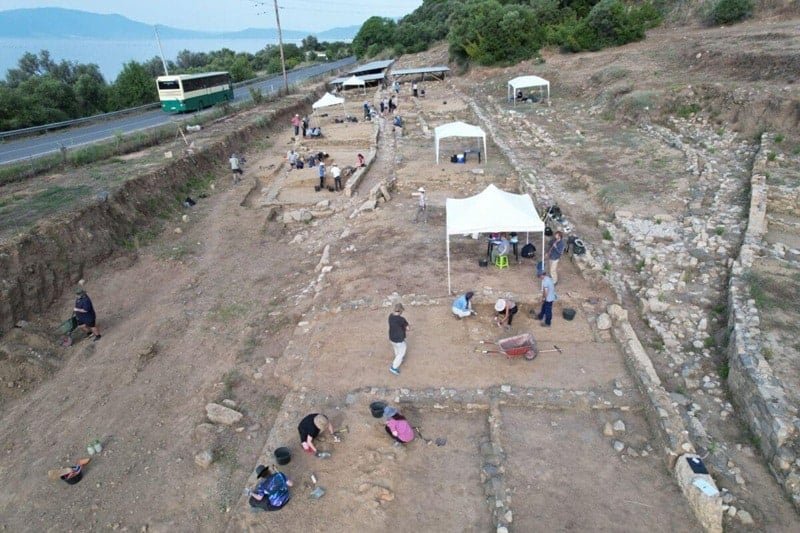
According to a recap from the Canadian Institute in Greece, fieldwork was concentrated across two key sectors:
The Angelopoulos plateau: Excavations confirmed that a large structure previously mapped served as a substantial house with an interior courtyard. This finding offers new, detailed evidence regarding domestic organization and daily life within the early Greek colony.
The Koutloudis commercial quarter: Teams focused on exposing the city’s final occupation layer. Researchers were specifically aiming to determine if this layer corresponded directly to the city’s conquest by Philip II of Macedon in 357 BC.
Furthermore, special projects uncovered the Eastern Gate, believed to be the city’s main entrance, and explored two massive drainage channels that directed water toward the Aegean Sea.

Argilos: A strategic city built on riches
These recent finds by the Canadian Institute in Greece help flesh out the story of Argilos, which was originally founded around 655 BC by settlers from the island of Andros.
The city’s location near the mouth of the Strymon River provided immense strategic and economic advantages:
Natural Resources: Argilos benefited from easy access to essential timber for shipbuilding and proximity to the vast gold and silver deposits of the Pangaio Mountain.
Trade Control: Its placement ensured control over trade routes leading deep into the Thracian interior, making it a powerful economic hub in its early centuries.
Rivalry and the Macedonian conquest
Despite its strong start, Argilos faced a defining challenge from its Athenian-founded neighbor, Amphipolis, located slightly upstream on the Strymon. This rivalry pushed Argilos into the political orbit of Sparta during the Peloponnesian War, where it famously allied with the Spartan general Brasidas in 424 BC to fight against the Athenian-led interests in the region.
Ultimately, however, Argilos could not withstand the relentless expansion of the Kingdom of Macedon. The city was absorbed by Philip II, effectively ending its life as an independent Greek city-state and ushering in a long period of decline.
The ongoing archaeological efforts, such as the detailed work carried out in the commercial and residential sectors in 2025, are crucial to understanding the town planning, political decisions, and daily habits of a vibrant colony that laid the groundwork for the future Macedonian empire.
Today, Argilos stands as one of the most informative examples of an early Greek colonial city in Northern Greece.