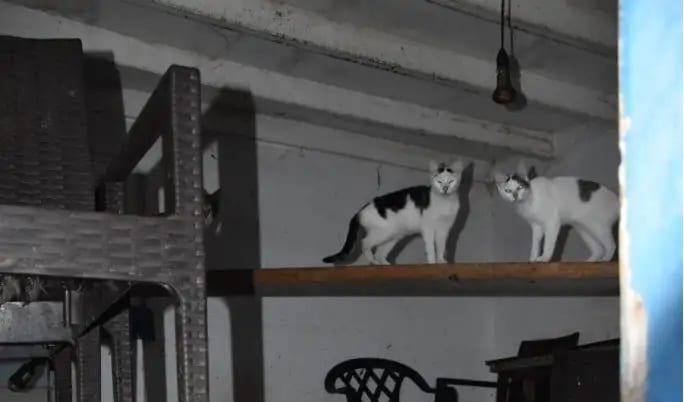
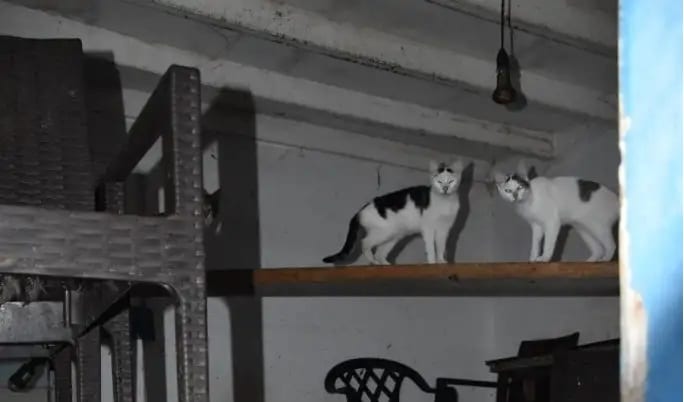
In a shocking case of animal abuse in Greece, authorities imposed a record fine of over €1.7 million (about $2 million) on a man on a Greek island for hoarding and neglecting 58 cats.
A 63-year-old resident of the Greek island of Donousa was arrested and fined following a tip-off regarding animal abuse. Police raided a fenced in property owned by the man. Officers were met with a horrific sight: an “abject scene of filth and complete chaos,” where 58 cats were found malnourished and struggling to survive.
The fine is currently set at €1,740,000 but is expected to increase as additional charges are filed for further violations, including the lack of health records and mandatory microchips for the animals. It was noted that the 63-year-old had previously drawn the attention of authorities for similar reasons in Moschato, Attica.
He is now slated to appear before the Naxos Prosecutor’s Office, where he will face felony-level charges for violating the animal protection law.
Greece adopts strict laws on animal abuse, leading to record fine for man on Greek island
In late 2020, the Greek Parliament unanimously passed a law that dramatically increased the severity of punishment for serious animal abuse:
Felony upgrade: Acts like poisoning, hanging, burning, and mutilating animals were upgraded from a misdemeanor to a felony.
Prison sentence: The maximum prison sentence for serious animal abuse was increased to up to 10 years. The minimum sentence is now one year.
Fines: Fines for animal abuse were increased substantially, ranging from €5,000 ($5,792) to €15,000 ($17,374) per animal and per incident under the 2020 law (and further increased by the 2021 law, see below).
Stricter regulations and fines (Law 4830/2021 – “Project Argos”)
This law, which came into effect in 2021, established a much tighter legal framework for companion animals, imposing substantially high administrative fines for neglect and lack of paperwork, including:
High administrative fines: The fines for acts of abuse, mistreatment, or cruelty towards animals causing intense physical pain can be as high as €30,000 ($34,748) to €50,000 ($57,912) per animal and incident.
Mandatory requirements: The law introduced requirements like mandatory microchipping, registration, and sterilization (or DNA submission) for companion animals, with separate, substantial fines for non-compliance (e.g., lack of health booklet/microchip).
Offenders registry: An electronic registry was established to record individuals convicted of animal-related offenses, prohibiting them from legally owning a pet in the future.
The massive fine in the Donousa case is a combination of the criminal charges (felony-level abuse) and the high administrative fines for the large number of animals involved, as well as the accompanying violations (lack of microchips, health booklets, etc.).