
Archaeologists in Russia have uncovered a satyr mask that provides the first definitive evidence of Greek theater in the ancient city of Phanagoria (Greek: Φαναγόρεια), on the Taman Peninsula. The terracotta mask, dating to the 2nd century BCE, offers rare insight into the cultural and religious life of the Bosporan Kingdom.
Details of the artifact
The Phanagoria Archaeological Expedition, supported by the Oleg Deripaska “Volnoe Delo” Foundation, discovered the fragment in the central part of the settlement. Measuring nearly 30 centimeters (11.8 inches), it preserves the left side of a satyr’s face, complete with exaggerated cheekbones, a large ear, and a thick beard. Faint traces of paint survive, including a blue-outlined eye and reddish beard and mustache.
Researchers say the mask’s size, stylistic details, and strap perforations confirm it was an authentic stage prop rather than a votive object.
Masks in ancient theater
In Greek theater, masks were indispensable. They allowed actors to shift roles and project emotions to large open-air audiences. Colors and facial exaggerations identified characters: a fiery red beard, for example, often signaled a hot-tempered nature.
Greek theatre masks were made of stiffened and painted linen so none have survived to the present day. We only know what they looked like because theatre was so popular in Greek and Roman times that models of actors and masks were made in other materials such as terracotta, stone… pic.twitter.com/7vstBLhbDH
— Archaeo – Histories (@archeohistories) October 12, 2024
The satyr mask fits the iconography of Dionysus’s companions, usually portrayed with wild hair and horseshoe-shaped mustaches. Its discovery points to a vibrant theatrical and ritual life in Phanagoria, where performances formed part of Dionysian festivals.
In Athens, Greece, where theater was first institutionalized in the 6th century BCE, masks became a hallmark of tragedies and comedies performed at the Theater of Dionysus. The Phanagoria mask shows that even distant colonies adopted these traditions, adapting them to their own local contexts while staying connected to the cultural heart of Greece.
Dionysian cult and politics
The cult of Dionysus flourished during the reign of Mithridates VI Eupator (120–63 BCE), who embraced the deity as his patron. At that time, processions, masks, and images of Dionysus and his attendants appeared widely on coins, ceramics, and votive objects.
The link between theater and Dionysus was universal in the Greek world. Festivals such as the City Dionysia in Athens combined religious rites with competitions in drama, underscoring how performance served both sacred and civic purposes. The Phanagoria find demonstrates that this connection extended far beyond mainland Greece.
From text to evidence
Until now, evidence of theaters in the Northern Black Sea region has come only from written accounts. The Greek writer Polyaenus described how the general Memnon sent a singer to the Bosporus in the 4th century BCE. Crowds rushing to theaters to hear him revealed both their numbers and military strength.
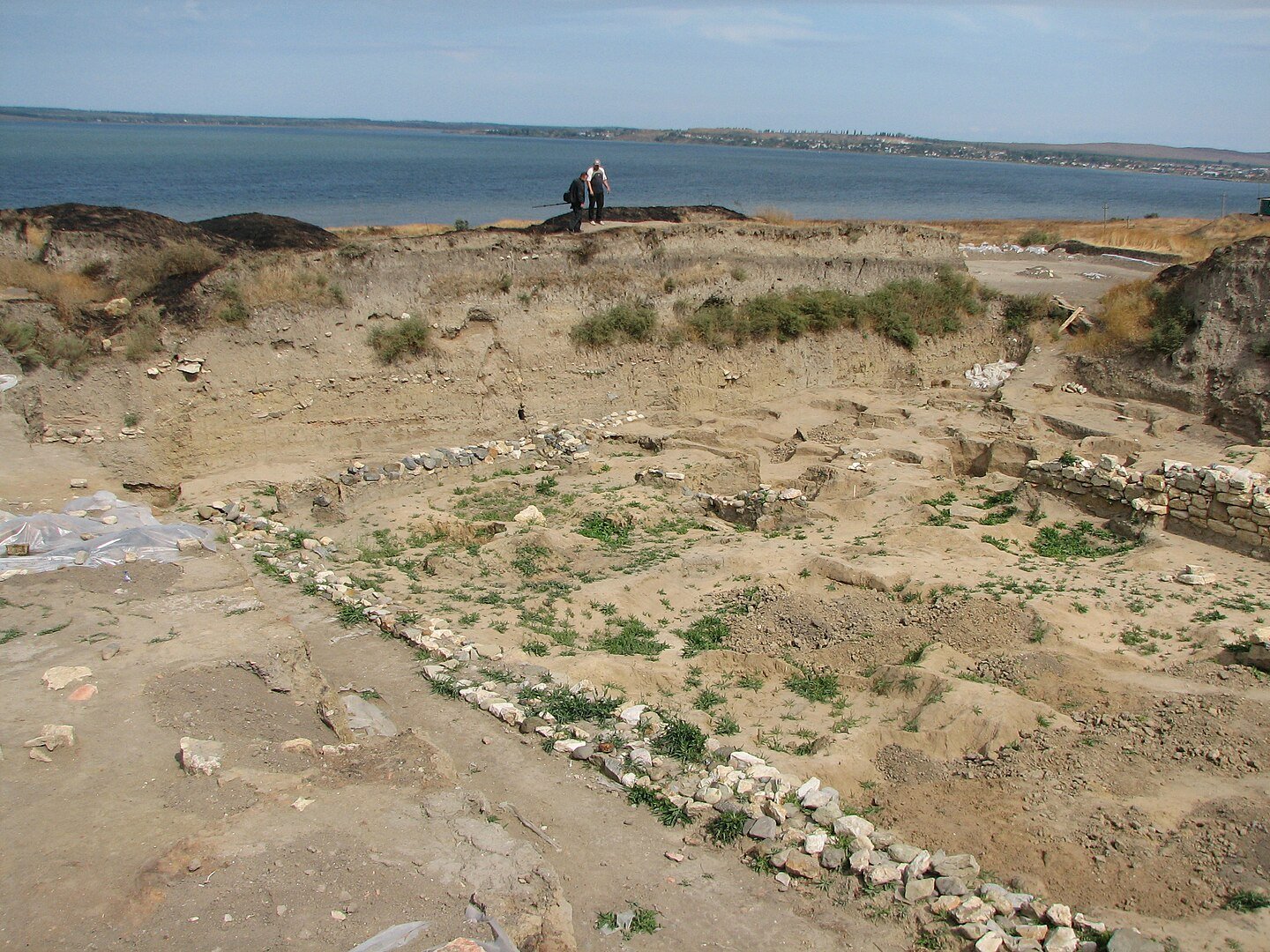
Dr. Vladimir Kuznetsov, head of the Phanagoria Expedition, said the find finally provides physical confirmation. “There is no doubt that Phanagoria had a theater,” he said. “We suggest it was located on a hill with a commanding view of the sea and the city of Panticapaeum—modern Kerch—the capital of the Bosporan Kingdom.”
Phanagoria’s wider history
Founded around 543 BCE by colonists from Teos, Phanagoria became one of the most important cities in the region, a hub of trade and politics that at times rivaled Panticapaeum across the strait. In 63 BCE, it served as Mithridates’s stronghold in his final resistance against Rome.
Excavations and legacy
Excavations at the site, ongoing since the 19th century and expanded in recent decades, have revealed a royal palace, early Christian basilicas, vast necropoleis, and inscriptions that shed light on governance and daily life. The newly discovered satyr mask now adds a cultural layer to the city’s profile, linking it to the theatrical traditions of the wider Greek world.
For archaeologists, the mask not only proves the presence of a theater in Phanagoria but also illustrates how deeply Greek cultural institutions—born in Athens and other city-states—were transplanted and sustained across the Mediterranean and Black Sea.


