
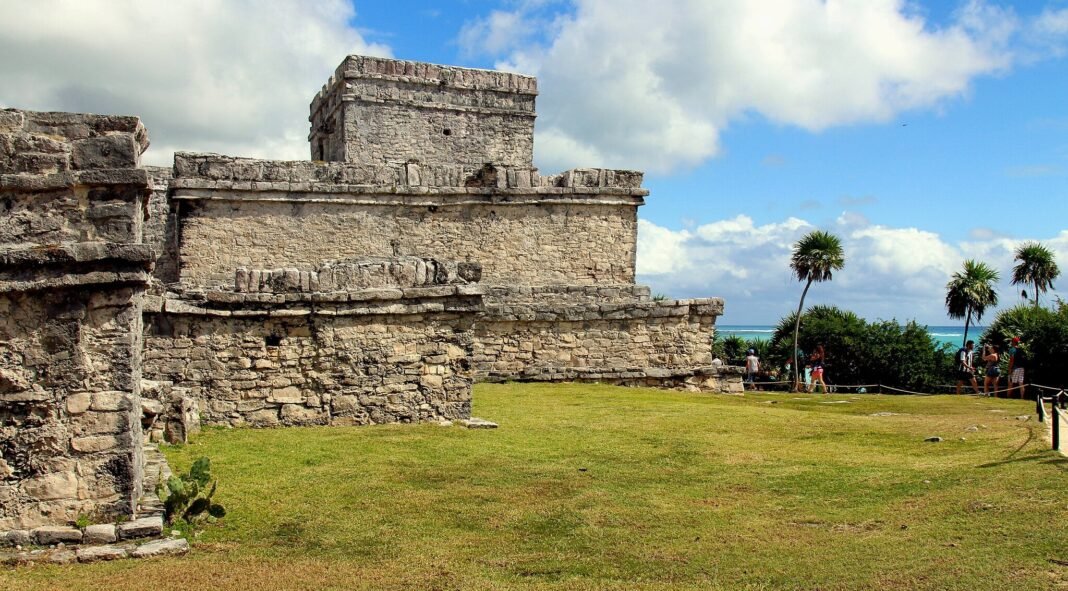

Archaeologists have recovered ancient human remains from an underwater cave along Mexico’s Caribbean coast. Researchers estimate the skeleton to be about 8,000 years old. The discovery is providing new insight into burial practices among early communities in the region.
Divers located the skeleton deep within an underwater cave system, part of a network of sinkhole caves known as cenotes. The site lies between the resort towns of Tulum and Playa del Carmen.
Reaching the chamber required experienced cave divers and specialized equipment. Researchers swam about 656 feet (200 meters) through narrow underwater passages before reaching the cave’s interior section. The skeleton rested roughly 26 feet (8 meters) below the water’s surface.
Evidence suggests intentional burial
Experts say the position of the body points to a deliberate burial. The skeleton was found resting on a mound of sediments inside a small interior chamber of the cave. Archaeologists interpret this setting as evidence that early inhabitants intentionally placed the body there as part of a funerary practice.
Researchers believe the cave was dry when the burial took place. Geological evidence indicates the placement likely occurred near the end of the last Ice Age, when sea levels were much lower than today. As glaciers melted thousands of years later, rising waters flooded the cave system and preserved the remains underwater.
Archaeologists have discovered 8,000-year-old human remains inside an underwater cave in Mexico’s cenote system between Tulum and Playa del Carmen.#Mexico #underwatercave #underwaterarchaeology pic.twitter.com/Fq8sFs0kZ9
— Tom Marvolo Riddle (@tom_riddle2025) March 4, 2026
The find represents the eleventh prehistoric human skeleton discovered in similar cave environments along Mexico’s Caribbean coast over the past three decades. Scientists say these submerged caves have become one of the most important sources of information about early populations in the region.
Cenote caves preserve ancient history
The skeleton was discovered inside a cenote cave system, a natural sinkhole formed when limestone bedrock collapses and exposes underground rivers and chambers. Over time, rising sea levels flooded many of these caves, sealing archaeological remains beneath the water.
Previous discoveries from nearby caves have revealed some of the oldest human remains found in North America. Certain skeletons recovered from the same regional cave network have been dated to around 13,000 years ago.
Researchers say the finds show that humans occupied the Yucatán Peninsula much earlier than once believed.
Thousands of years ago, the region looked very different from today’s tropical coastline. During the late Ice Age, the landscape likely consisted of open plains with rocky cliffs rather than dense jungle and beach environments.
Scientists believe caves in the area may have served multiple purposes for early communities. They could have provided shelter, access to freshwater, or spaces used for ritual and burial practices.
Discoveries add to debate about early migration
Finds from the underwater cave systems also contribute to ongoing research into how the first people reached the Americas.
Genetic studies suggest that many early populations migrated from Asia during the Ice Age. Researchers believe these groups crossed a land bridge known as Beringia, which once connected Siberia and Alaska, where the Bering Strait lies today.
Some archaeological evidence has also raised the possibility that certain early populations moved northward from parts of South America.
Scientists say each discovery from the cave systems adds valuable information to the complex story of human migration into the Americas.
Underwater caves hold artifacts from many periods
The cenote caves have preserved traces of human activity from different historical periods. Divers exploring the system have recovered objects from later centuries, including a small cannon and rifles dating to the 19th century.
Researchers say these finds show that the caves continued to attract human activity long after prehistoric times.
The underground network stretches for hundreds of miles through narrow passages and chambers. Large sections remain unexplored, and divers frequently encounter fossils and other remains that have not yet been recovered.
Concerns grow over threats to fragile cave systems
Scientists and conservation groups warn that the fragile underground landscape faces growing pressure from modern development. Construction associated with the Maya Train has affected parts of the cave network.
The railway project involved clearing jungle areas and installing support structures in locations above underground caves and rivers. Researchers say such work could damage delicate cave formations and archaeological sites hidden beneath the surface.
Advocates for cultural and environmental preservation are calling for stronger safeguards. Authorities are now working toward designating the wider cenote region as a protected area.
Scientists say continued exploration by cave-diving specialists will likely reveal more discoveries in the years ahead. Each find helps researchers better understand how early people lived and buried their dead on the ancient landscape of the Yucatán Peninsula.

