A set of ancient tools uncovered in central China is shifting the timeline of early human innovation. Researchers have confirmed that prehistoric populations in East Asia were crafting stone tools with attached handles as far back as 70,000 years ago. The discovery marks the earliest known use of handle implements in China and offers new insight into the region’s technological development.
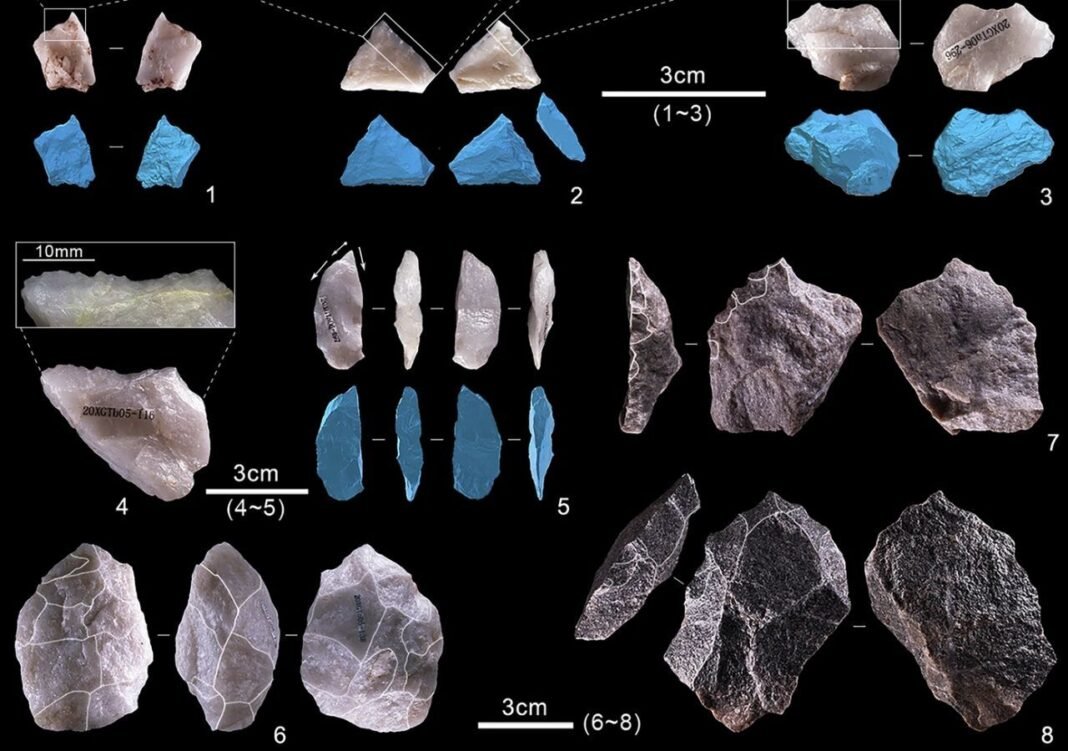
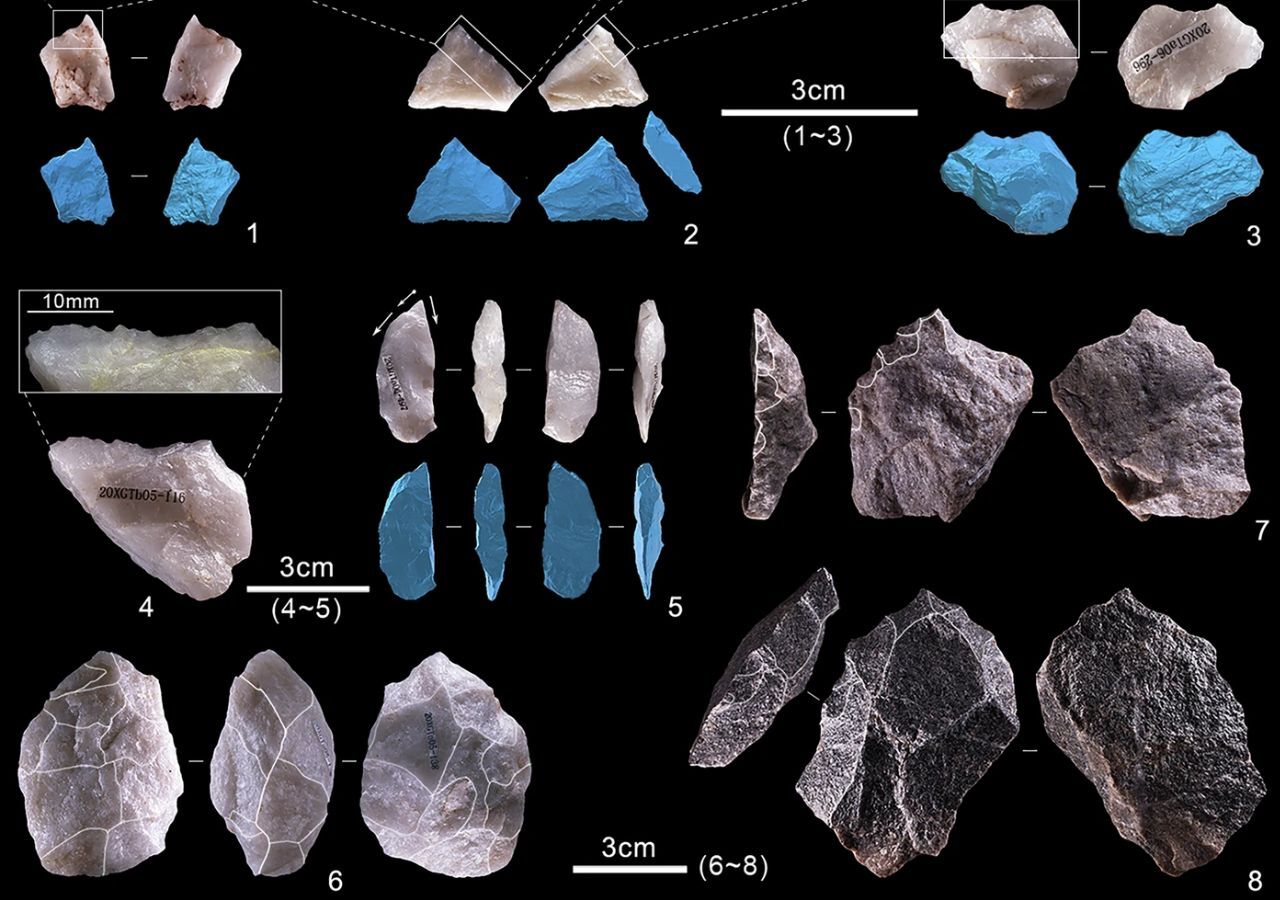
The international research team, led by the Institute of Vertebrate Paleontology and Paleoanthropology under the Chinese Academy of Sciences, identified 22 hafted tools at the Xigou site in the Qinling Mountains.
Microscopic wear patterns and structural modifications show the tools were designed to be mounted onto wooden or bone handles, forming more advanced instruments such as knives, scrapers and borers.
Earliest evidence of complex toolmaking confirmed
Yang Shixia, corresponding author of the study, explained that both tool design and detailed surface analysis confirmed these items had been intentionally modified for attachment. She noted this is the first time such early evidence of hafting technology in East Asia has been supported by technical and physical proof.
Researchers dated the Xigou site using multiple luminescence methods, which measure the last time sediment grains were exposed to sunlight. Their findings place the site securely between 160,000 and 72,000 years ago.
🚨 70,000-year-old handle implements found in China are rewriting the history of human innovation.
Archaeologists say this is the earliest evidence of advanced toolmaking in East Asia. 🔍🪓#Archaeology #China #HumanEvolution #AncientTools #ScienceNews pic.twitter.com/UJVtPOAv9R
— Tom Marvolo Riddle (@tom_riddle2025) January 28, 2026
Over 2,600 stone artifacts have been recovered, most made from quartz and quartzite. These materials were once thought unsuitable for precise toolmaking.
At the site, early humans employed two main methods for crafting flake tools. One involved removing smaller flakes from larger pieces, while the other used a centripetal striking technique to chip flakes from stone cores. The result was a diverse toolkit, including points, scrapers and perforators.
Handle implements in China reveal adaptive innovation
Some tools retained direct signs of being fixed to handles, showing either insertion into a carved slot or side attachment. This method mirrors how modern knife blades are fitted to handles and suggests deliberate efforts to improve function and grip.
The discovery challenges the long-standing view that prehistoric populations in East Asia were slow to adopt complex behaviors. Similar developments, such as bone tool shaping and use of pigments, have been documented in Africa and Europe during the same period.
Yang said the findings not only extend the known timeline for such technology in East Asia but also demonstrate that ancient populations in the region were highly adaptive.
She emphasized that early humans in China responded to changing environments by developing flexible tool-making strategies, positioning East Asia as an active contributor to the broader story of human evolution.