

Archaeologists in Poland have uncovered striking evidence that ancient women may have led secret societies and played a central role in drinking rituals nearly 5,500 years ago.
The discovery, published in the journal Praehistorische Zeitschrift, comes from excavations at Sławęcinek in central Poland and sheds new light on gender dynamics in Neolithic Europe.
Łukasz Kowalski of the Nicolaus Copernicus University in Toruń led the study. The team found a set of ceremonial drinking vessels at the site, including a decorated funnel beaker, five collared flasks, and two ceramic glasses.
The vessels date to between 3500 and 3350 BC and were recovered from a pit in the western part of the settlement.
A 5,500-year-old drinking set unearthed in central Poland
Researchers applied advanced protein and lipid analysis to the vessels and found traces of dairy products inside several of them. The results pointed to a curd-enriching dairy process, suggesting the beverages were low in lactose.
Kowalski and his colleagues noted that the high ratio of curd proteins to whey proteins matched cheese and cheesemaking residues rather than whole milk. Animal bones recovered from the same pit suggest the area also served as a feasting site.
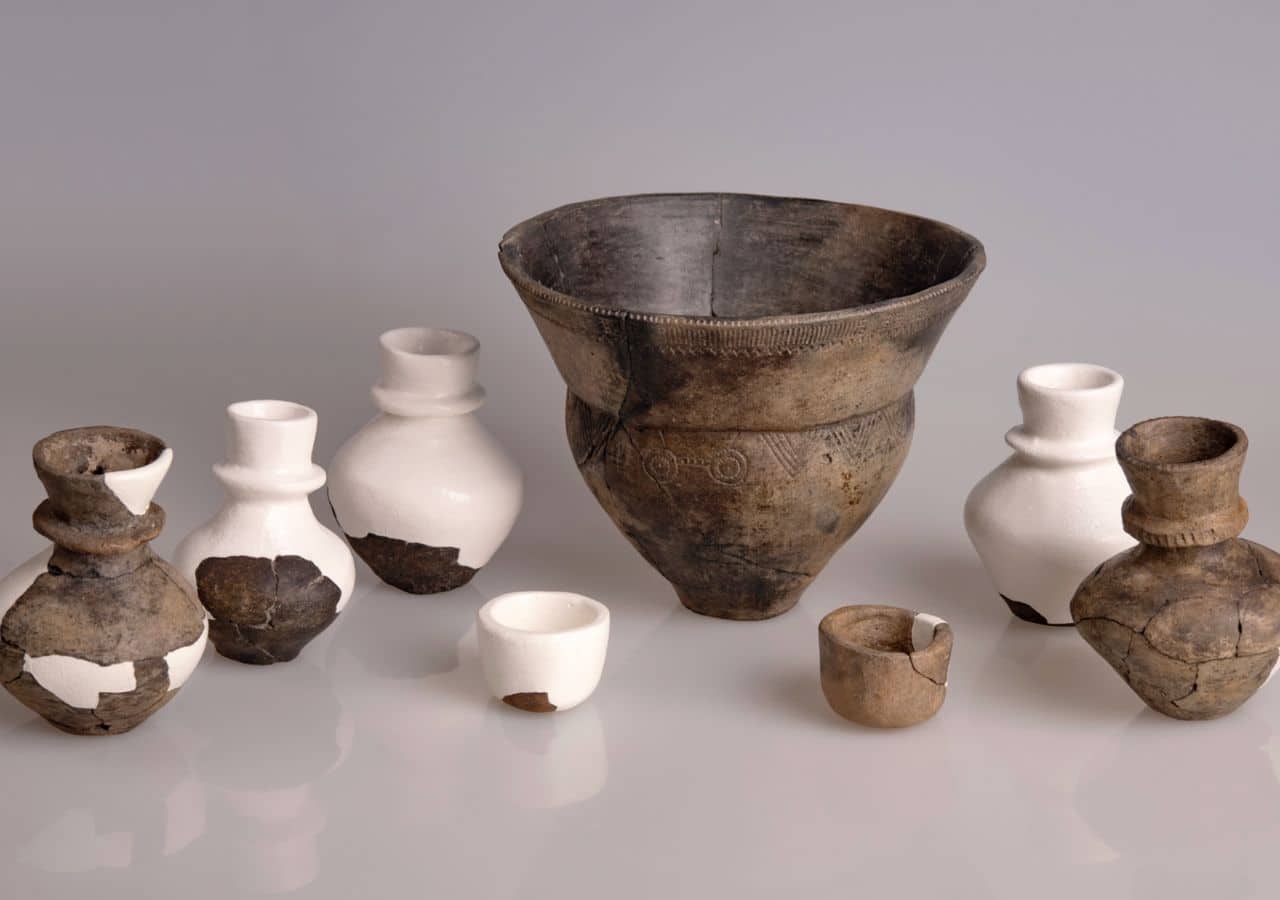
One vessel stood out beyond its contents. A funnel beaker from the drinking set carries a repeated motif that researchers believe may depict a four-wheeled wagon. The image, etched using a needle technique, shows two wheels connected by horizontal lines, with angled lines extending outward that may represent the sides of a wagon box.
The dates for the vessel overlap with the earliest known evidence for wheeled transport from southern Poland, Iraq, and northern Germany, placing it among the oldest such depictions in the world.
Beaker engraving may be among world’s oldest wagon images
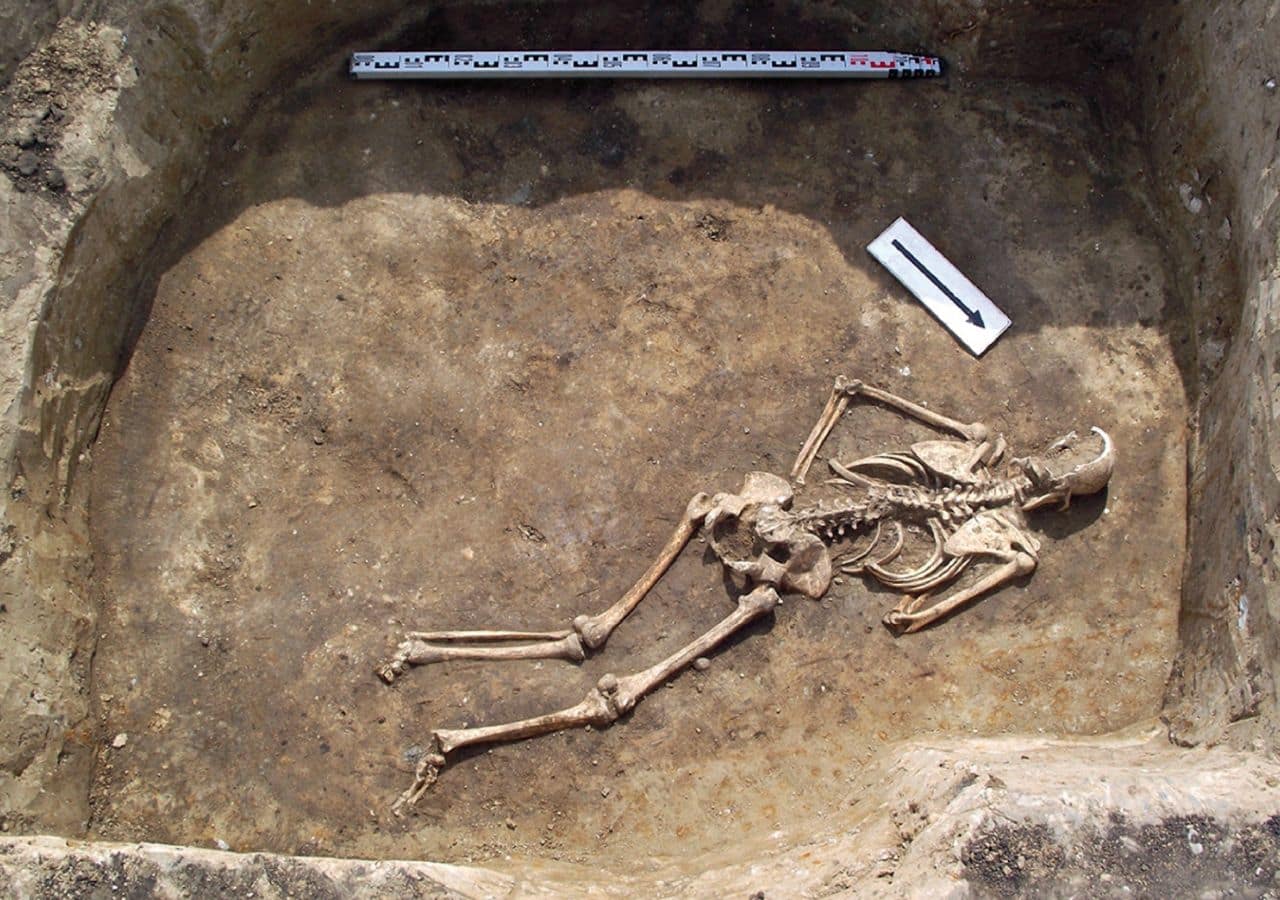
The site also contained several female burials, with no male skeletal remains recovered anywhere at the settlement.
Two women were buried in pits near the western household, and one pit contained nearly 400 animal bones and hundreds of pottery fragments, pointing to a funeral feast.
Kowalski and his colleagues observed that collared flasks, which were traditionally associated with male burials in the region, turned up in female burial contexts at Sławęcinek.
That shift, they argued, points toward a cooperative social structure in which traditional gender roles were breaking down.
Female burials hint at women-led secret societies in Poland
The combination of female burials, funeral feasting, and dairy-based drinking rituals all clustered around the domestic sphere of the household led researchers to raise the possibility that women held formal ritual authority at the site.
Kowalski said the findings suggest the existence of secret societies led by women during the second half of the fourth millennium BC, a pattern supported by ethnographic records from groups such as the Fang people of western Africa.
Earlier research had already hinted at such societies based on the deposition of ceramic amphorae in watery locations across the region.
The study argues that power in Neolithic Europe was not solely a male domain and that women actively shaped the social and ritual life of their communities.


