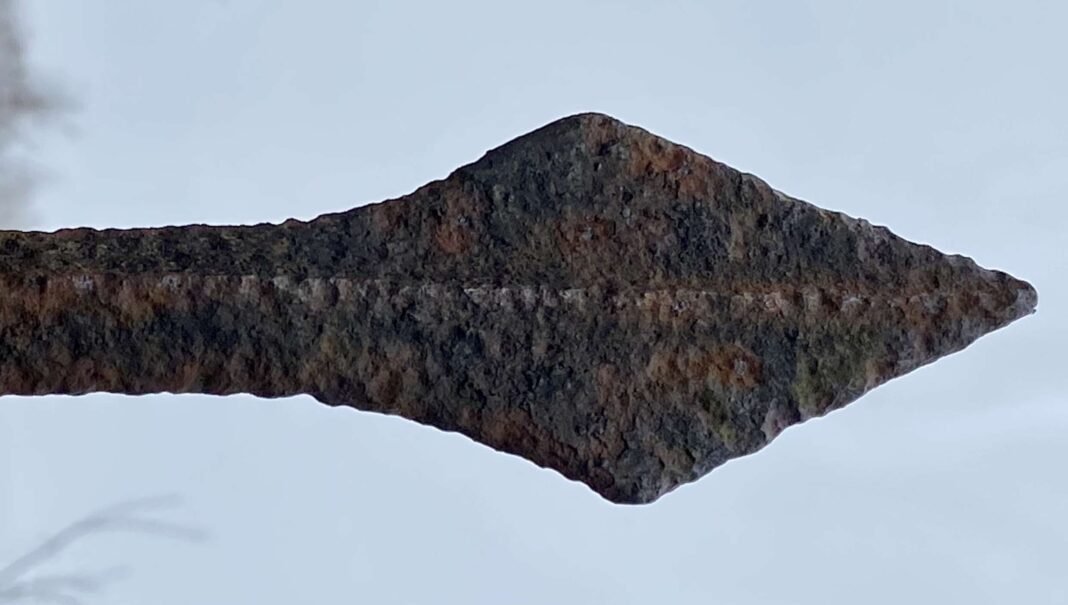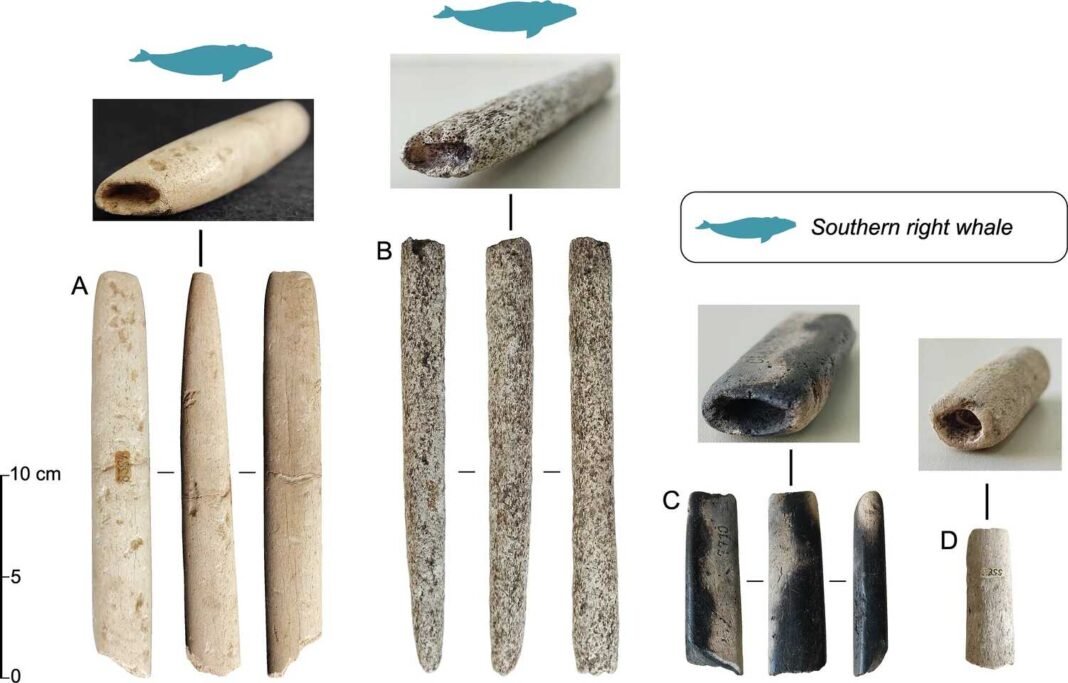
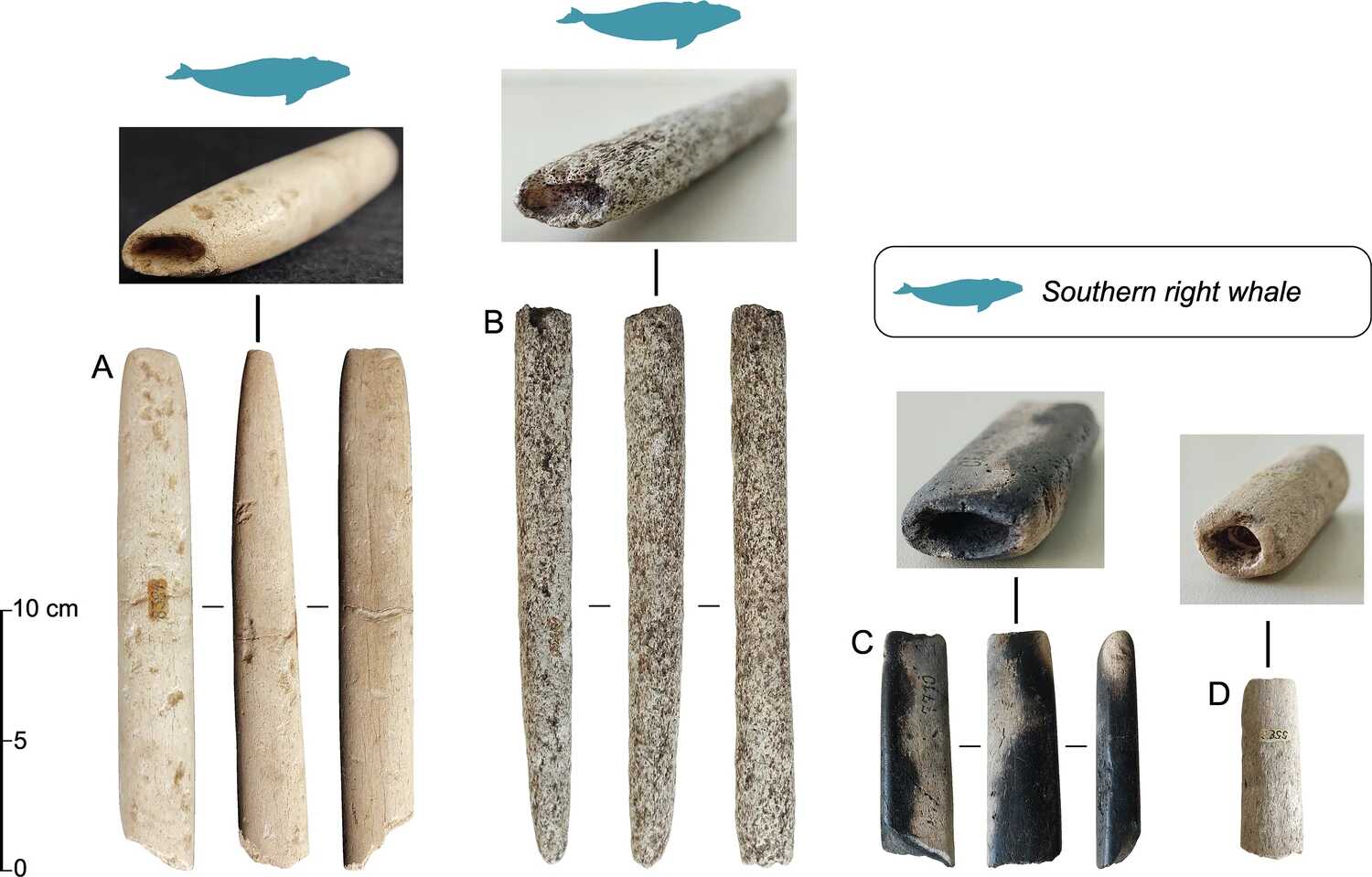
Archaeologists have identified whale-bone harpoons dating back 5,000 years in southern Brazil, offering new evidence that Indigenous communities hunted massive marine animals long before the invention of metal tools or advanced boats. The findings suggest these early populations crafted harpoons from whale bones, using them to hunt species including humpbacks and blue whales.
The artifacts were recovered from sambaquis, large mounds made of shells, bones and other marine remains, located near Babitonga Bay. These sites were partially dismantled between the 1940s and 1960s during coastal development.
Around 9,000 items were collected from the area and stored in a local museum. Among them were whale bones buried near human remains, largely overlooked for decades.
Rediscovery sparks breakthrough in ancient hunting practices
Years later, a team of researchers from Spain and Brazil re-examined the collection. When museum staff brought out boxes containing the whale bones, archaeologist André Carlo Colonese immediately recognized their importance.
He said he could tell from the shape and carving that some of the bones were harpoons, noting their size and design matched tools used in large-scale hunting.
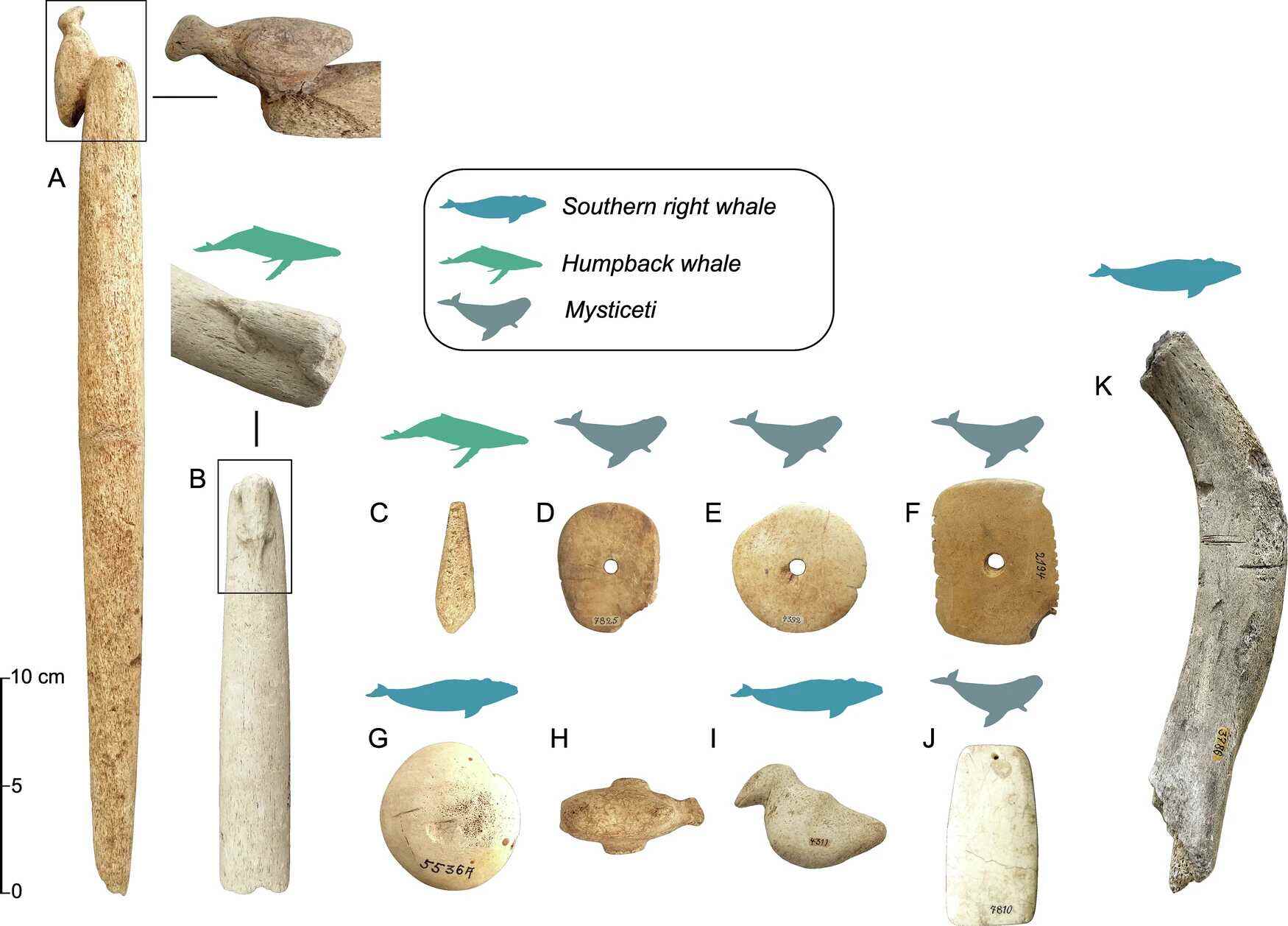
Using advanced analysis techniques, the team confirmed the harpoons had been carved from the bones of several large whale species, including southern right whales, humpbacks, sei whales and blue whales. Due to the size of the animals they targeted, the tools were also substantial in length. Some were longer than the forearm of lead researcher Kristina McGrath.
McGrath, affiliated with the Autonomous University of Barcelona, said the evidence shows these ancient groups had the skill, tools and strategies to hunt large whales far earlier than previously believed. Until now, researchers thought organized whaling began with postglacial North American societies about 2,500 years ago.
Whale-bone harpoons challenge previous assumptions
Earlier theories proposed that communities in Brazil scavenged whale carcasses that had washed ashore, as it seemed unlikely they could hunt from log rafts without metal weapons.
However, the discovery of purpose-made whale-bone harpoons challenges that assumption. Colonese said that for coastal communities dependent on the sea, a whale would have represented not only food but fuel and raw materials. He described a communal event where people shared meat and blubber, collected oil for long-term storage and used the remaining bones.
The study also offers ecological insights. Co-author Marta Cremer pointed to the high number of humpback remains found at the site, which suggests the species once lived farther south than their current breeding grounds.
She said the rise in recent sightings in southern Brazil may reflect a long-term recolonization process and emphasized that understanding past whale distribution is critical to ongoing conservation.