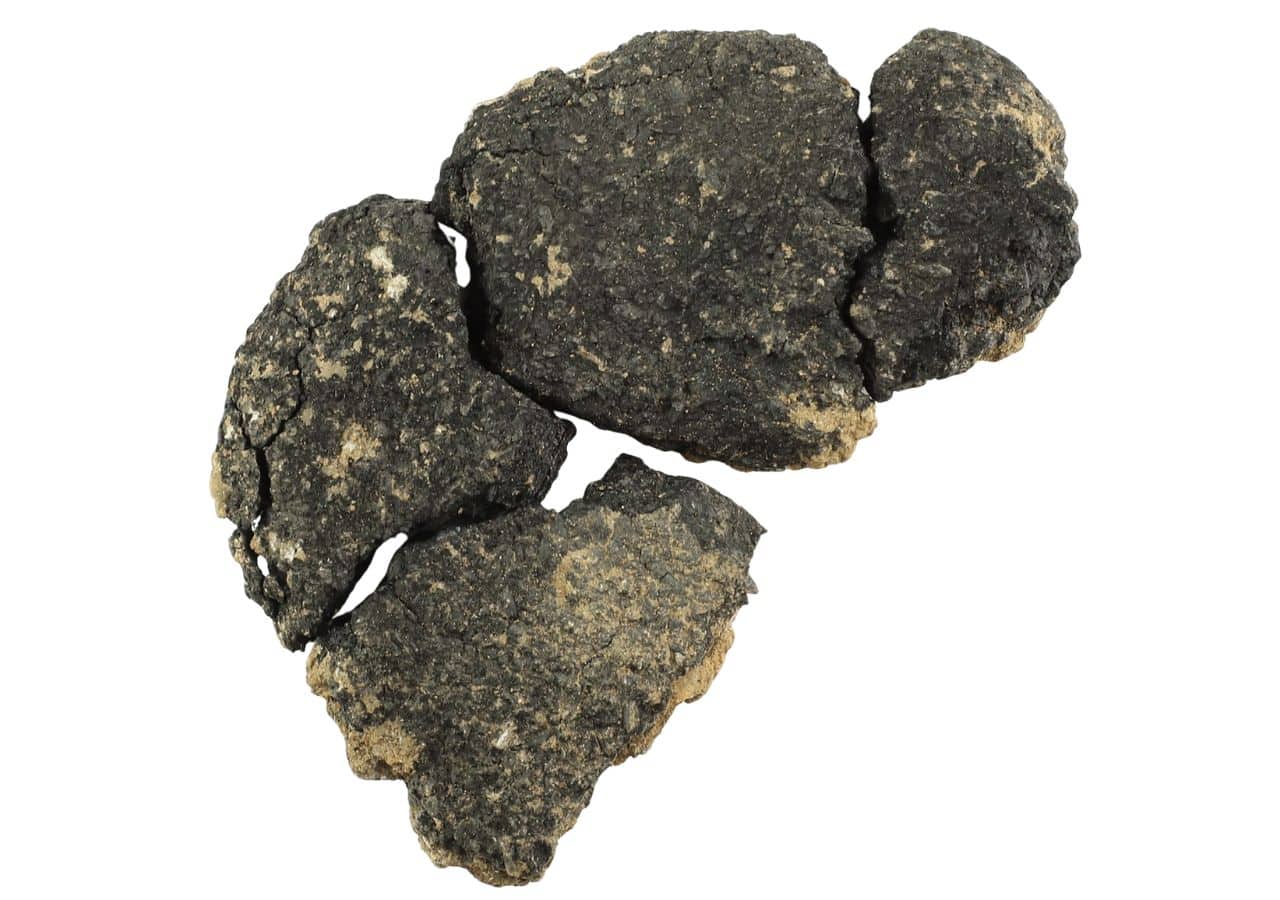
A 5,000-year-old loaf of bread unearthed at an archaeological site in Turkey is giving researchers a rare window into Bronze Age rituals and food culture. The carbonized bread, found at Küllüoba Höyük in the Eskişehir province, dates to 3200-3000 BC and appears to have been placed as a ritual offering rather than discarded as kitchen waste.
Salih Kavak of Gaziantep University led the study, published in PLoS One, which combined microscopic imaging, chemical analysis, and radiocarbon dating to examine the find in detail.
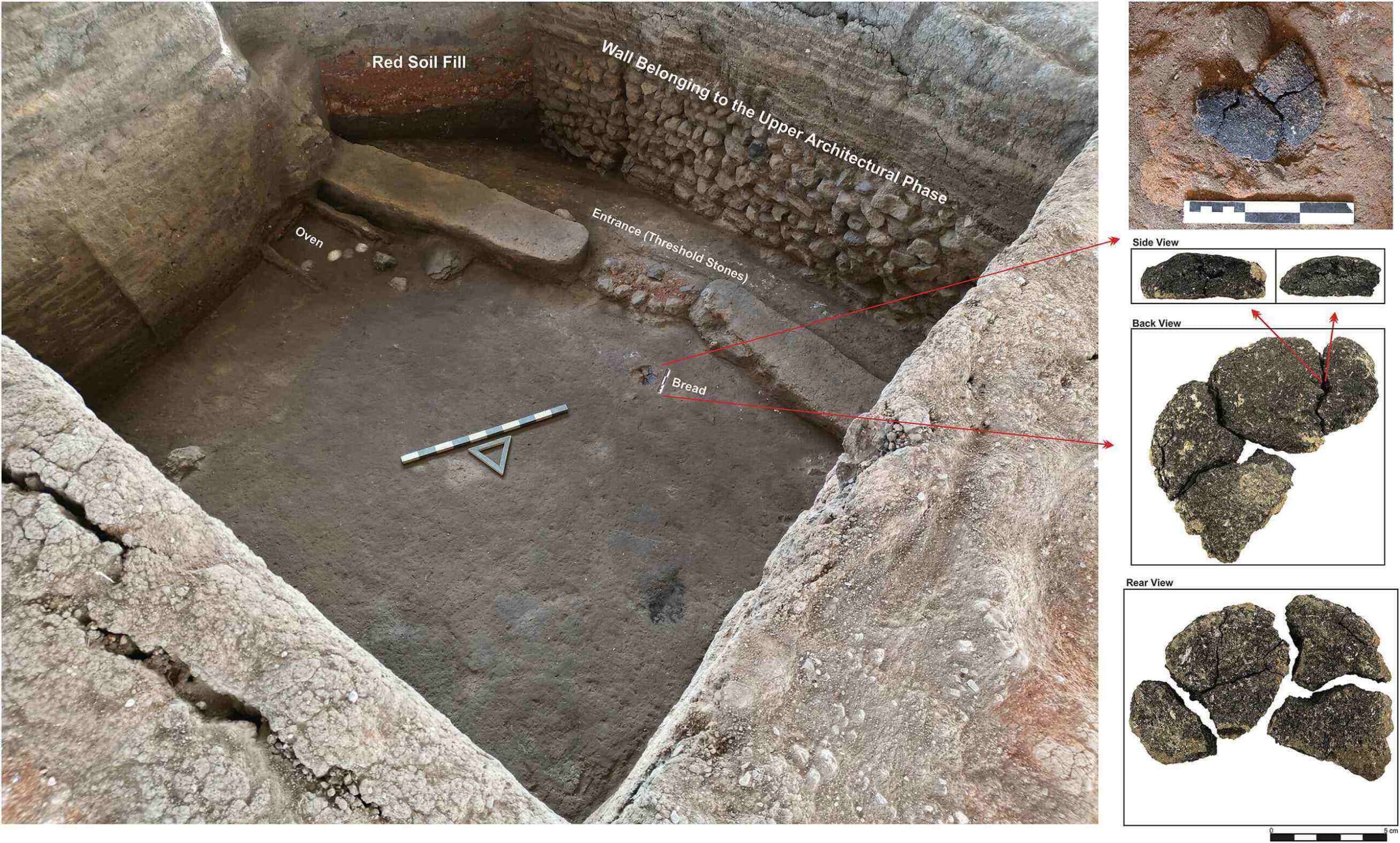
The bread was discovered near a doorway in a two-room structure during 2024 excavations. A thick layer of sterile red soil had covered it, preserving the loaf through thousands of years of subsequent occupation.
A piece was missing from its edge, suggesting it may have been deliberately broken before placement. Researchers believe the bread was intentionally burned and left as part of a closure ritual tied to the abandonment of the structure.
Deliberately burned loaf points to ancient abandonment ritual
The oval loaf measures 12 centimeters (4.7 inches) in diameter and 2.5 centimeters (1 inch) thick. Scanning electron microscopy revealed it was made primarily from coarsely ground emmer wheat, with a small amount of lentils mixed in.
The combination points to a nutritionally rich and deliberately varied recipe. Rachis fragments, which are parts of the grain stalk, were also found inside the bread, indicating the flour was not sieved before use.
Air voids of various sizes were visible inside the bread’s structure. Researchers say this suggests the dough was kneaded and possibly leavened, marking a notable step in early food technology.
Chemical analysis through infrared and Raman spectroscopy detected traces of proteins, carbohydrates, and lipids. Thermal analysis indicated the bread was baked above 150 degrees Celsius (302 degrees Fahrenheit). Together, these findings paint a clear picture of a relatively advanced baking process for its time.
Bronze Age bread in Turkey reveals more than just food
Radiocarbon dating placed the 5,000-year-old bread between 3100 and 2907 BC with high confidence. This positions it among the earliest known bread remains from Anatolia.
Archaeobotanical samples from the surrounding area supported the microscopic findings. Emmer wheat dominated the plant remains at the site, while barley, though abundant, did not appear in the bread itself. Lentils, peas, and bitter vetch were found in smaller quantities across the site.
Kavak and the research team noted that bread at many other archaeological sites turns up in domestic settings such as hearths or storage areas.
The ritual context at Küllüoba sets this find apart and offers direct evidence that bread carried symbolic and cultural meaning in early Bronze Age societies, not just nutritional value.