An isolated 4,000-year-old burial in Sudan’s Bayuda Desert is offering rare insight into the funerary rituals and daily realities of a little-known Nile civilization. The grave, analyzed in a new study by Dr. Monika Badura and her colleagues in Azania: Archaeological Research in Africa, contained a combination of objects rarely found together in the ancient Kerma cultural sphere.
A unique fire-filled vessel
One of the most striking finds was a clay jar decorated with a faded black stripe. Inside were the remains of a bonfire, including charred animal bones, coprolites, and insect fragments. Dr. Henryk Paner, a co-author of the study, said fire is rarely documented in Kerma burials, calling this an unusual and “mysterious” ritual that may have involved a funeral feast.
Symbolic inverted bowl found above the body
The second vessel was an inverted clay bowl placed above the deceased. Similar bowls appear in Kerma, A-Group, and C-Group burials. Researchers believe the upside-down placement may have symbolized the “emptying of life,” marking the individual’s transition into the realm of ancestors.
Blue faience beads signal wider Nubian networks
The grave also held 82 blue faience beads near the man’s neck. The small, disk-shaped ornaments match bead types found in C-Group and other Kerma contexts. Their presence suggests either shared cultural traditions or broad trade links across Nubia during the early second millennium BC.
Skeletal evidence shows a life of hard physical labor
Analysis of the remains showed the individual was a man between 30 and 40 years old, with a robust build and a height of about 164.2 centimeters, or roughly 5 feet 4 inches.
Flattened lumbar vertebrae and heavy wear on the left talus point to intense, repetitive physical labor. Signs of inflammation and thickened bone tissue in the skull indicate periods of nutritional stress, disease, or past trauma.
Pottery fragments hint at funerary customs
Ten pottery fragments were recovered from the burial area—seven near the mound and three from the grave-pit fill. Dr. Paner noted that similar sherd scatters appear in Kerma cemeteries dating to the Old Kush I and II periods. The fragments may represent ritual vessel smashing or breakage that occurred after the burial, possibly by treasure hunters.
Environmental clues preserved in the jar
Analysis of the jar’s contents also revealed traces of the local environment at the time of burial. Charcoal remains showed the presence of drought-tolerant species such as Acacia and Ziziphus. Seeds from grasses and fruits point to grassland communities, while Cleonini beetle remains—linked to amaranth plants—suggest the region may have been more diverse and possibly more humid than today.
A Middle Kerma burial in a remote desert landscape
The grave lies at cemetery BP937, about 21.5 kilometers (13.4 miles) east of the Marawi Dam and roughly 2.6 kilometers (1.6 miles) from a volcanic crater. Ceramic typology places the burial in the Old Kush II period, from 2050 to 1750 BC. Radiocarbon dating of calcined bone produced a calibrated range of 1775 to 1609 BC, confirming a Middle Kerma cultural affiliation.
A region long overlooked by archaeology
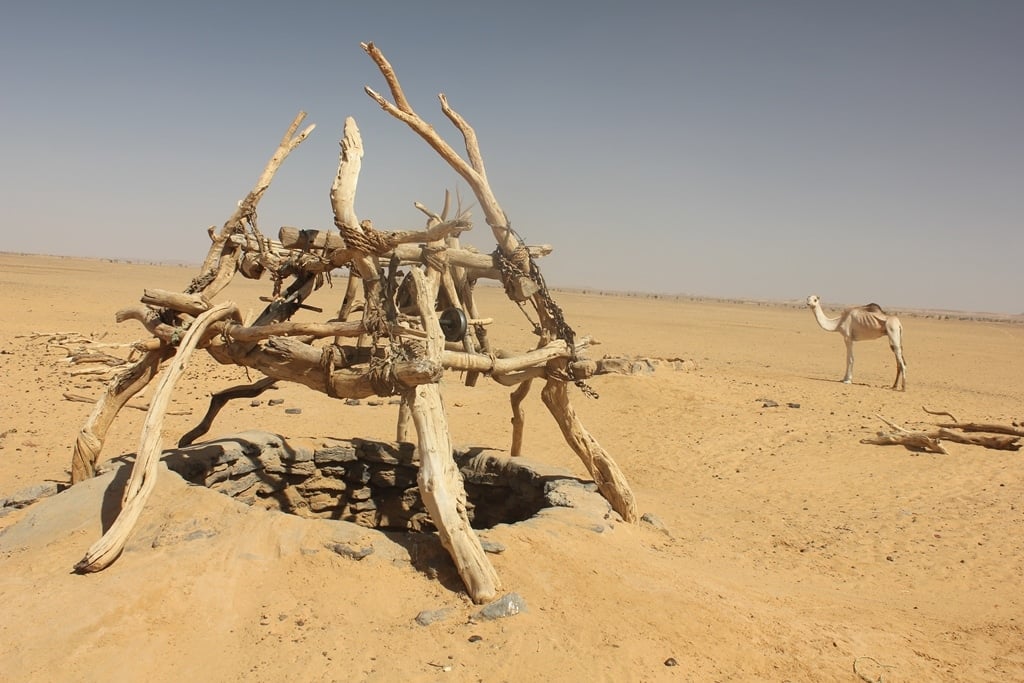
The Bayuda Desert covers about 140,000 square kilometers (54,054 square miles) within the Great Bend of the Nile. Despite its size, it received limited research attention until the early 2000s.
A major effort began in 2017 when the University of Wrocław and the Archaeological Museum in Gdańsk launched the project “Prehistoric Communities of the Bayuda Desert in Sudan—New Boundaries of the Kingdom of Kerma.” The project continues to redefine the ancient history of the region.
Ongoing conflict limits future excavations
Dr. Paner said future research will focus on the materials already recovered from the grave, as Sudan’s civil war makes new fieldwork difficult. Even under these constraints, the burial at BP937 provides an exceptional window into the lives, rituals, and environment of a largely forgotten Nile civilization.