Researchers are using 3D analysis to uncover lost connections among ancient artifacts, revealing how fragments of Egyptian mummy masks once fit together in their original burial settings.
The study applies advanced measurement techniques to ancient artifacts scattered across museum collections, offering a data-driven way to restore historical context. The findings were published in the journal Heritage Science and focus on cartonnage mummy masks removed from tombs decades ago.
Many Egyptian objects entered museums during the 1800s and early 1900s with little documentation. Excavation records were often incomplete or missing. As a result, pieces from the same object were separated and sent to different institutions.
For decades, curators relied on visual inspection to suggest links between fragments. That process depended heavily on individual judgment and could not always be verified.
From fragmented museum collections to data-driven reconstruction
The new research replaces visual comparison with measurable evidence. Researchers used metrological analysis to record precise dimensions and surface geometry from mask fragments. They created detailed three-dimensional scans of each piece.
The team measured curvature, edge profiles, thickness, and surface features. Each fragment produced a digital model that could be compared against others.

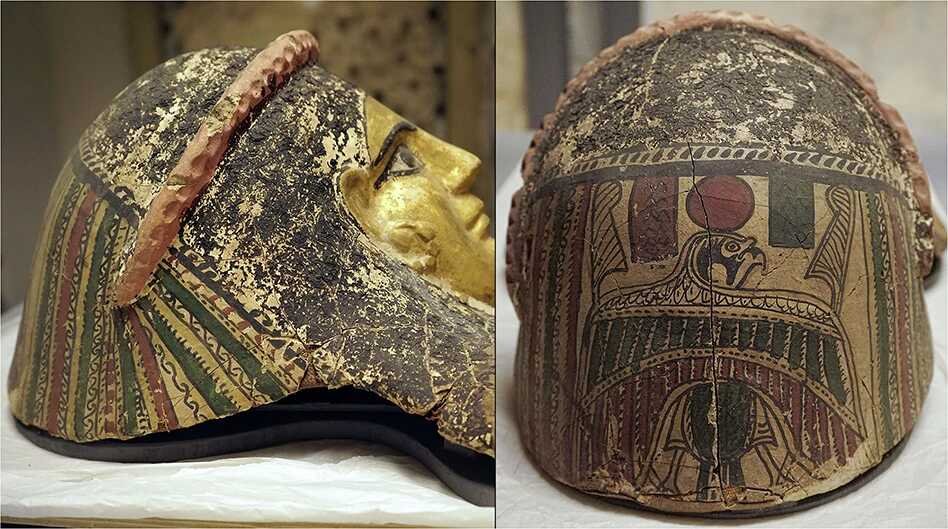
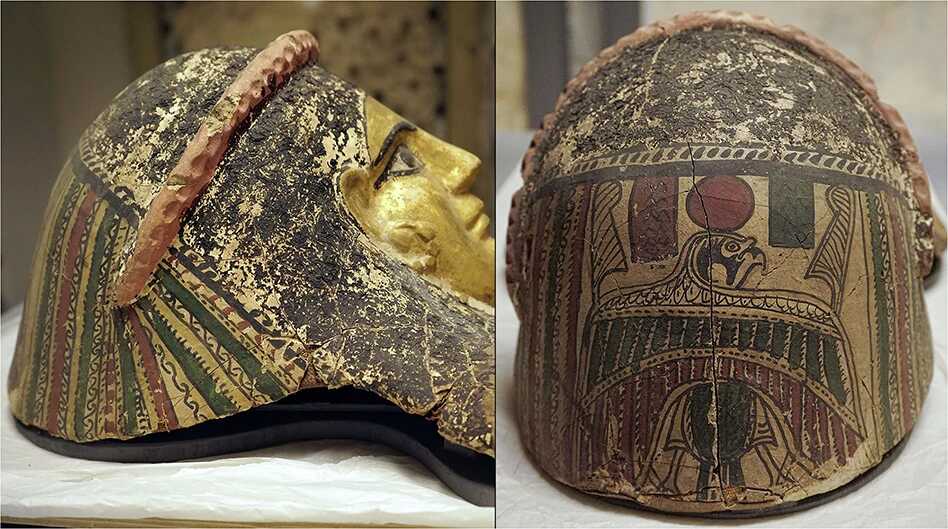
The study focused on cartonnage mummy masks, which were made from layers of linen or papyrus coated with plaster and paint. Craftspeople molded these masks to cover the face and upper torso of the deceased.
Over time, many masks broke into fragments. Some pieces still preserve painted decoration, while others retain only the underlying structure.
Researchers analyzed fragments held in different museum collections. When pieces belonged to the same original mask, their broken edges aligned closely with little variation. The team measured this alignment by calculating distance values between digital surfaces. Small values indicated a strong physical match.
How 3D analysis of ancient artifacts identifies physical matches
In one case, fragments stored in separate museums showed matching curvature across the forehead and cheek areas. Their edge shapes fit within narrow tolerance limits. Digital overlays confirmed that the fracture lines aligned, supporting the conclusion that the fragments came from a single mask.
The study also addressed how to assign provenience. The authors explained that shared manufacturing traits, including layer thickness and surface preparation, can link fragments to a specific burial context. When excavation archives contain partial descriptions or photographs, digital models allow researchers to test those records against surviving pieces.
The authors said the method provides a repeatable framework that other scholars can verify. It reduces uncertainty tied to early collecting practices and allows museums to collaborate through digital comparison. The research shows how quantitative methods and 3D analysis can reshape the study of ancient artifacts and restore connections lost to history.