Archaeologists have confirmed the first evidence of intentional cranial modification in the northern region of the Huasteca, revealing that square-shaped skulls were part of ancient cultural practices in what is now Tamaulipas, Mexico.
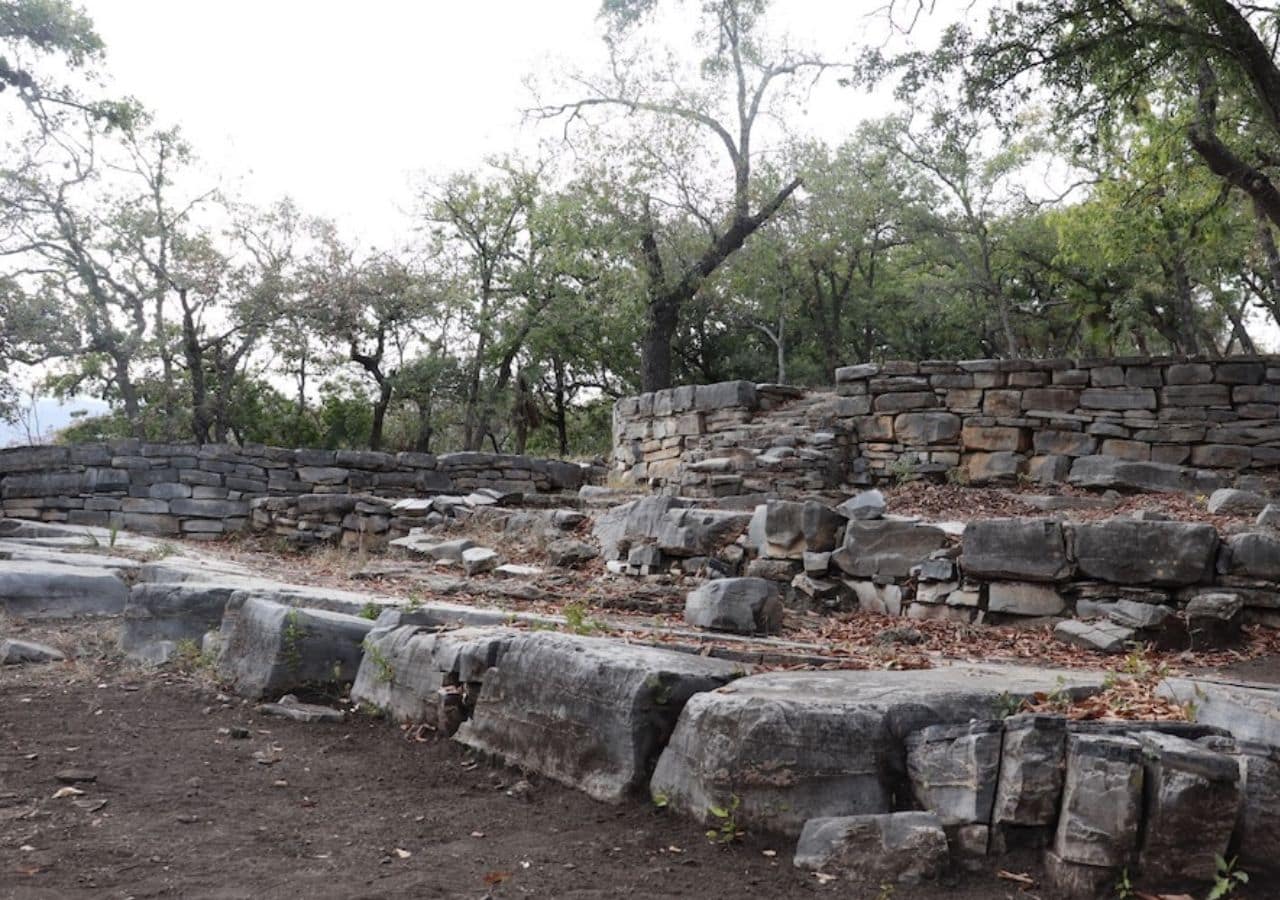
The discovery centers on the remains of a man over 40 years old, who lived during the Classic period of Mesoamerica between 400 and 900 AD. His skull, found at the Balcón de Montezuma Archaeological Zone in the Sierra Madre Oriental, shows a rare form of cranial shaping. Researchers say this variant, which gives the skull a squared appearance, differs from other known forms across Mesoamerica.
Physical anthropologist Jesús Ernesto Velasco González explained that the skull displays a type known as tabular erect, but with an unusual flat upper surface not previously documented in this region. This squared structure is the result of compression from the back of the head to the top, producing a geometric shape instead of the more common conical forms seen elsewhere.
Scientific analysis supports local origin of deformation
Velasco González and archaeologist Carlos Vanueth Pérez Silva are leading renewed research at the site through the National Institute of Anthropology and History (INAH). Their project revisits work first carried out in the 1990s and applies updated methods to study early settlement patterns in the area.
In addition to new excavations, researchers examined human remains and reviewed earlier collections. They confirmed that this distinct cranial modification had not been recorded before in northern Huasteca sites. Though similar shapes have been found in Veracruz and the Maya region, the version at Balcón de Montezuma presents different proportions.

Stable oxygen isotope analysis helped confirm that the man with the modified skull was not a migrant. According to the results, he was born, lived and died in the same mountainous area where the remains were found.
Velasco González said this rules out a direct connection to other regions such as El Zapotal in Veracruz, where comparable skull shapes have been seen.
Cultural significance of square-shaped skulls in ancient Mexico
Still, the practice may have carried symbolic or cultural significance beyond physical appearance. Cranial modification was common in ancient Mesoamerica and often reflected identity, social ties or status. Techniques involved applying pressure during infancy using boards, wraps or cradles.
Tonantzin Silva Cárdenas, director of INAH Tamaulipas, emphasized the importance of building on past research. Materials recovered since 2010 have allowed scientists to expand on earlier findings and better understand the cultural connections of this mountain community.
Researchers believe the site had ties to both Mesoamerican lowlands and populations as far north as the present-day southern United States.